
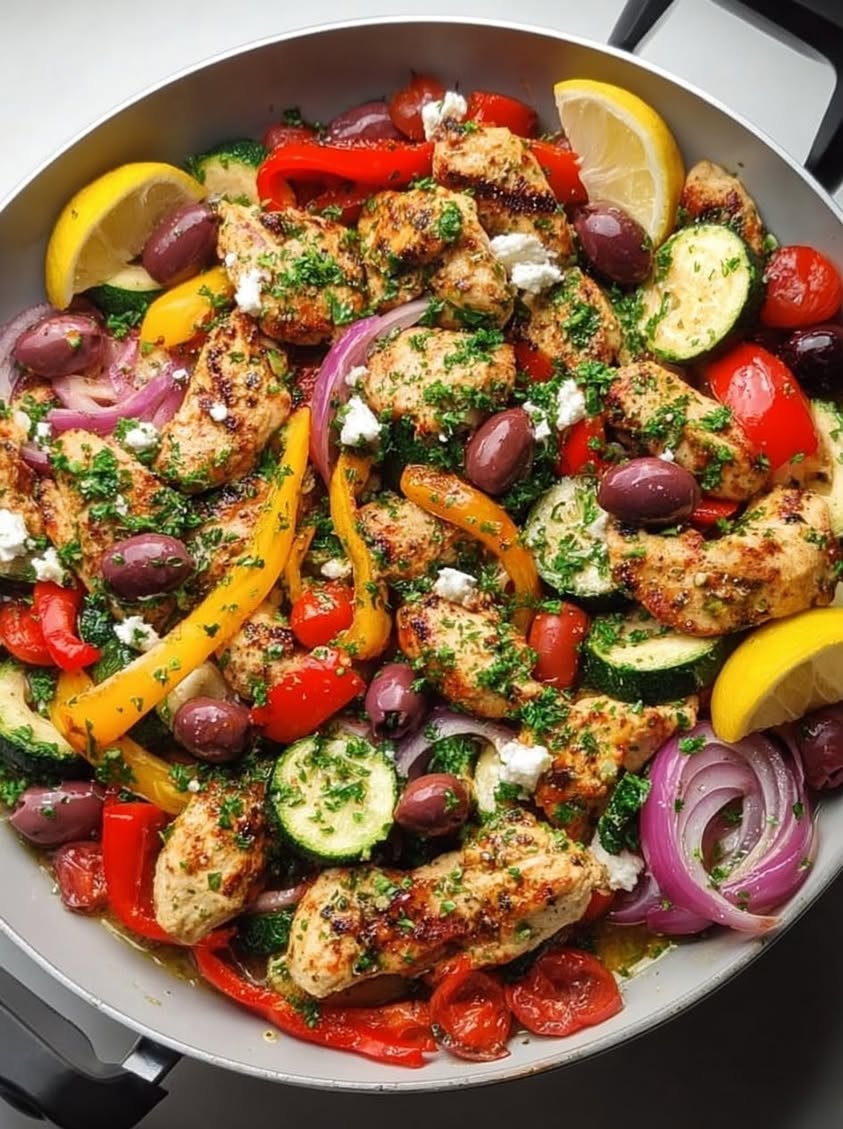
Sun-Kissed Mediterranean Chicken Stir-Fry: A Zesty One-Pan Feast
Imagine the vibrant flavors of a coastal Mediterranean kitchen, all captured in a single, sizzling pan. This Sun-Kissed Mediterranean Chicken Stir-Fry delivers exactly that experience. It transforms simple, wholesome ingredients into a dazzling weeknight dinner. Ultimately, you get a meal that feels both gourmet and incredibly approachable.
The magic of this dish lies in its brilliant harmony. Juicy chicken, sweet bell peppers, and briny olives mingle with fresh herbs and a generous splash of lemon. Consequently, every bite bursts with sunny, robust flavor. This recipe proves that healthy eating does not require sacrificing taste or spending hours in the kitchen.
Furthermore, this Sun-Kissed Mediterranean Chicken Stir-Fry is your ticket to a stress-free dinner. It comes together in about thirty minutes from start to finish. Therefore, it is perfect for busy evenings when you crave something nutritious and delicious. Let us dive into this simple method for bringing Mediterranean sunshine to your table any night of the week.
Quick Recipe Highlights
- Flavor Profile: This dish offers a bright and balanced taste. You will experience the savory depth of chicken and olives, perfectly contrasted by the zesty punch of fresh lemon. Additionally, aromatic herbs like oregano and parsley create a fragrant, complex backdrop.
- Texture: Expect a delightful contrast in every forkful. The chicken stays tender and juicy, while the bell peppers retain a slight crispness. Meanwhile, the kalamata olives add a pleasant, meaty bite that complements the softer vegetables.
- Aroma: As the dish cooks, the kitchen fills with an irresistible scent. First, the garlic and herbs release their fragrance. Then, the caramelizing chicken and vegetables create a savory base note that is utterly mouthwatering.
- Visual Appeal: This stir-fry is a feast for the eyes with its vibrant color palette. Sunny yellow bell peppers, deep purple olives, green herbs, and golden-brown chicken create a beautiful, appetizing plate. It looks as good as it tastes.
- Skill Level Needed: This is a beginner-friendly recipe designed for success. If you can chop vegetables and cook chicken in a pan, you can master this dish. The steps are straightforward and require no advanced techniques.
- Special Equipment: You need only a large skillet or wok and a sharp knife. A good, heavy-bottomed pan ensures even cooking and proper searing. No fancy gadgets are necessary for this simple, rustic meal.
Recipe Overview
- Difficulty Level: We rate this recipe as easy for several key reasons. The preparation involves basic chopping and no complicated techniques. The cooking process is a simple sequence of adding ingredients to one pan. Consequently, even novice cooks can achieve fantastic results with minimal stress.
- Category: This versatile dish fits multiple meal categories beautifully. It serves perfectly as a quick weeknight dinner or a healthy lunch option. Moreover, you can easily scale it up for a casual weekend gathering with friends and family.
- Cuisine: This stir-fry draws direct inspiration from the coastal regions of Greece and Southern Italy. It uses hallmark ingredients like olives, lemon, oregano, and olive oil. However, it applies the quick-cooking stir-fry method, creating a delightful fusion of technique and tradition.
- Cost: Preparing this meal is remarkably budget-friendly. Chicken thighs offer great flavor at a lower cost than breasts. Bell peppers, onions, and garlic are inexpensive pantry staples. Overall, you can feed a family of four a restaurant-quality meal for a fraction of the price.
- Season: While delicious year-round, this recipe truly shines in the spring and summer. Its bright, fresh flavors mirror the season’s produce. Furthermore, the quick cook time means you will not heat up your kitchen on a warm evening.
- Occasion: This adaptable dish suits many occasions perfectly. It is ideal for a fast family dinner after a long day. Simultaneously, it feels special enough for a casual date night at home when served with a nice glass of wine.
Why You’ll Love This Recipe
First and foremost, the taste and texture of this Sun-Kissed Mediterranean Chicken Stir-Fry are utterly captivating. Each component brings something unique to your palate. The chicken provides a savory, protein-rich base, while the lemon cuts through with acidity. Meanwhile, the olives contribute a salty, briny depth that makes the flavors pop. Fresh herbs tie everything together with their aromatic freshness. Consequently, you experience a symphony of Mediterranean flavors in a single, satisfying bite that never feels boring or one-dimensional.
Next, consider the sheer convenience and preparation benefits. This entire meal cooks in one pan, which means minimal cleanup. You can go from fridge to table in about half an hour, making it a lifesaver on busy weeknights. The ingredient list is simple and flexible, often using items you already have on hand. Therefore, you can whip up a impressive dinner without a last-minute grocery run. It is the perfect solution for when you want a wholesome, home-cooked meal but lack the time or energy for a complex project.
Furthermore, the nutritional advantages of this dish are significant. It is packed with lean protein from the chicken, which helps keep you full and supports muscle maintenance. The colorful bell peppers and onions provide a wealth of vitamins, antioxidants, and fiber. Cooking with heart-healthy olive oil adds beneficial fats. This balanced combination makes the meal both nourishing and deeply satisfying. You can feel good about serving it to your family, knowing it fuels their bodies with quality ingredients.
Additionally, this recipe holds tremendous social and entertaining value. It is easy to double or triple for a crowd, cooking just as simply in a larger pan. The vibrant, colorful presentation always looks impressive on a buffet or dining table. Guests will appreciate the bright, familiar flavors that appeal to a wide range of tastes. It is a fantastic, stress-free option for casual entertaining because you can spend time with your guests instead of being stuck in the kitchen. Ultimately, it is a dish that encourages sharing and conversation.
Finally, the cost-effectiveness and accessibility are major wins. You can create this restaurant-worthy meal on a tight grocery budget. Chicken thighs, peppers, and onions are typically affordable staples. The recipe is also highly adaptable based on what is seasonal or on sale. If kalamata olives are pricey, you can use a smaller amount or substitute another olive variety. This flexibility ensures you can enjoy delicious, healthy food without straining your finances. It proves that eating well does not have to be expensive or complicated.
Historical Background and Cultural Significance
The concept of a “Mediterranean stir-fry” is a modern, fusion interpretation of classic culinary traditions. While stir-frying as a high-heat, quick-cooking technique has strong roots in East Asian cuisine, the flavors here are purely sun-drenched Mediterranean. The combination of olive oil, lemon, olives, and oregano directly echoes the foundational elements of Greek and Southern Italian cooking. These regions have relied on these bright, preservative-friendly flavors for centuries, using them to enhance simple, locally-sourced ingredients like poultry, seafood, and vegetables. This recipe essentially takes a timeless flavor palette and applies a contemporary, efficient cooking method to fit modern lifestyles.
Culturally, the ingredients hold deep significance around the Mediterranean basin. The olive tree is a historic symbol of peace, wisdom, and prosperity, and its oil is a cornerstone of the diet. Lemon trees thrive in the sunny climate, providing essential vitamin C and a signature tartness that cuts through rich dishes. Oregano grows wild on hillsides, its pungent aroma defining the scent of the region’s cuisine. When you cook with these elements, you are connecting with a food tradition that prioritizes freshness, seasonality, and the celebration of simple, high-quality components. This dish honors that philosophy in a quick, accessible format.
The evolution of this specific recipe likely stems from the global popularity of both Mediterranean diets and quick-cooking techniques. As home cooks sought ways to incorporate healthier, flavor-packed meals into their busy schedules, the fusion was a natural progression. The stir-fry method perfectly suits the Mediterranean emphasis on not overcooking vegetables, preserving their texture and nutrients. This adaptation shows how culinary traditions are not static; they evolve and cross-pollinate to meet new needs and contexts. Today, this Sun-Kissed Mediterranean Chicken Stir-Fry represents a beautiful marriage of efficient technique and iconic flavor.
Regional variations of this concept are endless, reflecting the diversity of the Mediterranean itself. In Provence, you might find herbes de Provence and niçoise olives. A Turkish version could include sumac and mint. In coastal Italy, capers and white wine might replace the olives and lemon juice. The core principle remains: quick-cooked protein and vegetables elevated by bold, aromatic staples native to the region. This adaptability is a testament to the strength of the Mediterranean culinary template. It provides a framework that encourages improvisation based on what is fresh and available, which is the very heart of rustic, home-style cooking.
Ingredient Deep Dive
Chicken Thighs: Boneless, skinless chicken thighs are the ideal protein for this Sun-Kissed Mediterranean Chicken Stir-Fry. Historically, darker meat was often more accessible and valued for its flavor in rustic cooking. Nutritionally, thighs contain slightly more fat than breasts, which translates to incredible juiciness and a richer taste that stands up to bold seasonings. They are also more forgiving during cooking, resisting dryness. When selecting, look for thighs with a pink hue and firm texture. For storage, keep them refrigerated and use within 1-2 days of purchase, or freeze for longer storage. If you prefer white meat, chicken breasts work but require careful monitoring to prevent overcooking.
Bell Peppers: Vibrant bell peppers, especially red and yellow, add sweetness, color, and crucial vitamins. They are New World vegetables that became integral to Mediterranean cuisine after Columbus’s voyages. They are excellent sources of Vitamin C and antioxidants. Choose peppers that feel heavy for their size with smooth, taut skin and no soft spots. Store them in your refrigerator’s crisper drawer. For a variation, you can use poblano peppers for a mild kick or add a spicy pepper like a banana pepper. Their crisp-tender texture after stir-frying provides a satisfying contrast to the tender chicken.
Kalamata Olives: These dark purple olives from Greece are a non-negotiable for authentic flavor. They have a protected designation of origin, much like fine wines. Their distinct, winey, and slightly smoky taste comes from being cured in a brine of sea salt and red wine vinegar. They are a good source of healthy monounsaturated fats. Always buy them with pits if possible, as they retain more flavor; pitting them is simple with a knife. Store opened olives in their brine in the refrigerator. If unavailable, other brine-cured black olives like Gaeta can substitute, though the flavor profile will shift slightly.
Fresh Lemon: The lemon provides the essential “sun-kissed” acidity. Lemons have been cultivated in the Mediterranean for over a thousand years. Both the zest and juice are used here, maximizing the bright, aromatic citrus oils. Lemons are packed with Vitamin C. Select lemons that are heavy, firm, and have a vibrant yellow skin. Avoid any with a dull color or soft spots. You can store them at room temperature for a week or in the fridge for longer. For a different citrus note, try a Meyer lemon for sweeter juice or finish with a splash of white wine vinegar in a pinch.
Fresh Herbs (Oregano & Parsley): Using fresh herbs is key. Mediterranean oregano is more robust and floral than the dried version. Flat-leaf (Italian) parsley has a cleaner, brighter taste than curly. Historically, these herbs grew wild and were used for both flavor and preservation. They add micronutrients and fresh flavor without calories. Choose bunches with perky, vibrant green leaves and no wilting or yellowing. Store them stem-down in a glass of water in the fridge, covered loosely with a bag. Dried oregano can work in a pinch, but add it early to bloom in the oil. Never substitute dried parsley, as it lacks flavor; simply omit it if fresh is unavailable.
Common Mistakes to Avoid
- Crowding the Pan: Adding all the chicken at once is a common error. The pieces will steam instead of sear, resulting in pale, boiled-tasting meat. Always cook in batches if your pan is not large enough to give each piece ample space. This ensures you get those desirable golden-brown edges that add deep flavor.
- Using Dried Herbs Exclusively: While dried oregano has its place, relying solely on dried herbs will leave your stir-fry tasting dusty and flat. The fresh oregano and parsley are crucial for that bright, garden-fresh aroma and taste. If you must use dried oregano, use half the amount and add it with the garlic to wake up the oils.
- Overcooking the Vegetables: Bell peppers should retain a slight crunch. Adding them too early or cooking them until they are completely soft results in a mushy, less vibrant dish. Add them at the specified time and stir-fry just until they are tender-crisp and brightly colored.
- Neglecting the Lemon Zest: The recipe calls for both lemon juice and zest. The zest contains potent aromatic oils that provide a powerful lemon fragrance without extra acidity. Skipping the zest means missing a key layer of flavor. Always zest your lemon before you juice it for maximum efficiency.
- Using Pre-Crushed Garlic in a Jar: The flavor of fresh garlic is incomparable to the processed, often acidic taste of jarred garlic. Taking the minute to freshly mince a clove makes a dramatic difference in the overall freshness and authenticity of the dish’s flavor profile.
- Adding the Lemon Juice Too Early: If you add the lemon juice when the chicken is still cooking, the acid can “cook” the meat further, making it tough. Furthermore, the bright flavor will dissipate with prolonged heat. Always add the lemon juice at the very end, off the heat, to preserve its vibrant zing.
- Skipping the Resting Time: Letting the cooked chicken rest for a minute after searing allows the juices to redistribute. If you immediately slice into it or add it back to the pan, those precious juices will run out, leaving the meat drier. A brief rest ensures every bite is succulent.
- Using a Low-Quality Olive Oil: Since olive oil is a primary flavor carrier, using a bland or old oil will negatively impact the dish. Opt for a good-quality extra virgin olive oil for finishing. You can use a more neutral, light olive oil or avocado oil for the initial high-heat searing.
Essential Techniques
The Sear (Maillard Reaction): Achieving a proper sear on the chicken is the first critical technique. This is not just about browning; it is about creating the Maillard reaction, a chemical process that develops hundreds of new flavor compounds. To master it, ensure your pan is properly preheated before adding the oil, and then the chicken. The chicken should sizzle loudly upon contact. Do not move the pieces for a minute or two, allowing a crust to form. The common pitfall is impatience—flipping too soon. Visual cues for success are golden-brown, caramelized edges and the chicken releasing easily from the pan when shaken.
Stir-Frying (Controlled High Heat): Stir-frying is about cooking ingredients quickly over high heat while constantly moving them. This technique preserves texture, color, and nutrients. The key is having all your ingredients pre-chopped and within reach before you start cooking. Use a tossing motion with a spatula to keep everything moving. The pitfall is letting ingredients sit and stew, which makes them soggy. Success is visible when vegetables are brightly colored and tender-crisp, and the entire dish cooks in the promised short timeframe without burning.
Deglazing: This technique involves adding a liquid (the chicken broth) to the hot pan to loosen the flavorful browned bits stuck to the bottom. These bits, called fond, are packed with savory flavor. After removing the chicken and vegetables, pour in the broth and use a wooden spoon to scrape the pan vigorously. This dissolves the fond into the sauce, creating a deeply flavorful base. The mistake is skipping this step or not scraping thoroughly. Success means you see the brown bits dissolve, creating an instant, simple sauce that coats the back of a spoon.
Pro Tips for Perfect Sun-Kissed Mediterranean Chicken Stir-Fry
First, pat your chicken thighs completely dry with paper towels before seasoning. Any surface moisture will create steam and prevent that crucial, flavorful sear you want. Dry chicken equals better browning.
Second, do your mise en place. Chop all vegetables, mince garlic, zest and juice the lemon, and measure herbs before heating the pan. Stir-frying happens fast, and you will not have time to prep ingredients mid-cook.
Third, let your cooked chicken rest for five minutes before slicing or returning to the pan. This allows the juices to settle, guaranteeing moist, tender meat in the final dish instead of dry chunks.
Fourth, add the garlic for only the last 30 seconds of cooking the vegetables. Garlic burns easily and becomes bitter. Adding it at the end ensures it becomes fragrant and golden without crossing into burnt territory.
Fifth, finish the dish with a final drizzle of high-quality extra virgin olive oil after plating. This adds a fresh, fruity aroma and richness that cooking oils lose when heated.
Sixth, if your pan seems dry when cooking the vegetables, add a tablespoon of broth or water, not more oil. This will create a bit of steam to help them cook without making the dish greasy.
Seventh, taste your olives before adding. If they are very salty, you may want to rinse them briefly under water to prevent over-salting the entire stir-fry.
Eighth, reserve a small handful of fresh chopped herbs for garnish. Sprinkling them on at the very end adds a pop of fresh color and an extra burst of aroma that cooked herbs lose.
Variations and Adaptations
For regional variations, explore the different coasts of the Mediterranean. A French Provençal version could use herbes de Provence, niçoise olives, and a splash of pastis. A Turkish adaptation might include sumac, mint, and pine nuts. For an Italian twist, substitute capers for some of the olives and finish with a sprinkle of pecorino cheese. Each region’s pantry offers a slightly different lens on the same sunny, vibrant flavor philosophy, allowing you to travel with your taste buds.
Seasonal adaptations are simple and rewarding. In summer, add diced zucchini or eggplant in the last few minutes of cooking. For a winter version, use heartier greens like chopped kale or chard, adding them a bit earlier to wilt. You can also incorporate artichoke hearts or sun-dried tomatoes depending on the time of year. The stir-fry method is perfect for showcasing whatever produce is at its peak, making the dish feel new each time you make it.
Dietary modifications are straightforward. For a gluten-free meal, ensure your chicken broth is certified gluten-free. To make it dairy-free, simply omit any cheese garnish; the recipe is naturally dairy-free. For a lower-carb or keto version, increase the chicken and olive quantities and reduce or omit the onion, using more peppers instead. The basic framework is incredibly accommodating to various dietary needs without losing its core character.
Flavor variations can personalize the dish to your cravings. Add a pinch of red pepper flakes with the garlic for a spicy kick. Stir in a teaspoon of honey or a splash of balsamic glaze at the end for a sweet-and-sour note. For a richer, creamier finish, swirl in a tablespoon of tahini or Greek yogurt after removing the pan from heat. These small tweaks let you tailor the Sun-Kissed Mediterranean Chicken Stir-Fry to your exact mood.
Serving and Presentation Guide
Plating techniques matter for turning a simple stir-fry into a restaurant-style dish. Instead of piling everything in the center, use a large, shallow bowl or plate. Arrange the chicken slices over a bed of your chosen base—like quinoa or orzo—and spoon the vegetables and olives around them. This creates height and allows each component to be visible. Drizzle any remaining pan juices over the top for added gloss and flavor.
Garnishing is your final opportunity to add freshness and color. A generous sprinkle of the reserved fresh parsley and oregano is essential. Add thin slices of lemon or a twist of zest on top. For a beautiful finish, a few whole kalamata olives and a tiny drizzle of your best olive oil make the plate look professionally composed and incredibly appetizing.
Traditional accompaniments keep the meal authentic. Serve with warm pita bread or crusty baguette to soak up the delicious juices. A simple side of tzatziki sauce or hummus complements the flavors perfectly. A crisp, Greek-style salad with tomatoes, cucumber, red onion, and feta cheese completes the Mediterranean feast. These sides create a balanced, satisfying meal that celebrates the cuisine.
Modern serving suggestions offer lighter or heartier options. For a low-carb meal, serve the stir-fry over cauliflower rice or a bed of fresh arugula. To make it heartier, pair it with pearl couscous, farro, or a creamy polenta. You can also stuff the mixture into whole-wheat pita pockets for a delicious handheld lunch option the next day.
Temperature considerations are key. This dish is best served immediately, hot from the pan. Ensure your serving plates are warm to keep the food hot longer. If you are serving with a cold side like tzatziki, the contrast is pleasant, but the main star should be piping hot to maximize the aroma and texture of the fresh herbs and lemon.
Wine and Beverage Pairing
Wine pairings should complement the dish’s bright acidity and herbal notes. A crisp, dry white wine like a Greek Assyrtiko, a Sauvignon Blanc, or a Vermentino works beautifully. Their citrus and mineral notes mirror the lemon and olives. If you prefer red, choose a light-bodied, low-tannin option like a Pinot Noir or a Greek Xinomavro, served slightly chilled. The key is to avoid heavily oaked or high-alcohol wines that would overpower the delicate, fresh flavors of the stir-fry.
Non-alcoholic alternatives can be just as sophisticated. Sparkling water with a slice of lemon or a twist of orange peel is refreshing and cleansing. For a more crafted option, try a minty iced herbal tea or a lemonade infused with fresh basil or thyme. These drinks echo the herbal and citrus elements in the food without competing with them, making for a very harmonious pairing.
While not traditional, certain teas can pair wonderfully if serving the dish for lunch. A green tea with lemongrass or a light, floral herbal tea like chamomile can complement the meal’s freshness. Serve tea hot or iced based on the season. The goal is to choose a beverage that cleanses the palate between bites of the savory, briny olives and rich chicken.
Storage and Shelf Life
Proper storage methods are essential for food safety and quality. Allow the stir-fry to cool completely before storing—never put hot food directly into the refrigerator. Transfer it to an airtight container. You can store the chicken and vegetables together or separately, depending on your preference for meal prep. Ensure the container is sealed tightly to prevent the strong aromas from affecting other foods in your fridge.
Temperature requirements are standard for cooked poultry. The Sun-Kissed Mediterranean Chicken Stir-Fry must be refrigerated at 40°F (4°C) or below. Do not leave it at room temperature for more than two hours after cooking. In the refrigerator, it will maintain best quality for 3 to 4 days. Always use your senses to check for spoilage before consuming leftovers.
Signs of spoilage are unmistakable. Look for any off smells, particularly a sour or unpleasant odor. Visually, check for significant discoloration or the presence of mold. If the texture becomes slimy or mushy, it is time to discard it. When in doubt, follow the golden rule: if you are unsure, throw it out to avoid foodborne illness.
Reheating instructions aim to preserve texture. The best method is to reheat gently in a skillet over medium heat with a splash of water or broth to prevent drying out. You can also use a microwave, but cover the dish and reheat in short intervals, stirring in between. Avoid reheating more than once, as this degrades quality and increases safety risks.
Make Ahead Strategies
A smart prep timeline can turn this 30-minute meal into a 10-minute assembly. The day before, chop all vegetables (bell peppers, onion) and store them together in an airtight container in the fridge. Mince the garlic and store it separately in a small container. Chop the herbs and store them wrapped in a damp paper towel in a bag. You can even cube the chicken and toss it with the salt, pepper, and dried oregano, storing it in its own container. This “kit” approach makes weeknight cooking effortless.
Understanding storage between steps is crucial for food safety. Keep pre-chopped raw vegetables and raw chicken in separate containers on different shelves in the refrigerator, with the chicken on the bottom shelf to prevent cross-contamination. Pre-chopped herbs can lose vibrancy, so if you chop them more than a few hours ahead, expect some wilting—they will still taste fine. Pre-measured liquids like broth and lemon juice can be combined in a small jar.
Assessing the quality impact of make-ahead steps is important. Pre-chopped vegetables may lose a tiny amount of crispness but will still work perfectly in a stir-fry. Pre-cubed and seasoned chicken may release some moisture but will sear well. The flavor will not suffer at all; in fact, the chicken will be more deeply seasoned. The only element that must be absolutely fresh is the final garnish of herbs added after cooking.
For final assembly, simply pull your pre-prepped containers from the fridge. Heat your pan, and follow the cooking steps. Because your ingredients are ready to go, the process will be even faster and more streamlined. This strategy is ideal for busy families or for planning healthy lunches for the week.
Scaling Instructions
Halving the recipe is simple for smaller households. Use half of every ingredient. The cook time may decrease slightly, so keep a close eye on the chicken and vegetables to avoid overcooking. Use a medium skillet instead of a large one to maintain the proper depth of ingredients for effective stir-frying. The rest periods and techniques remain exactly the same.
Doubling or tripling the recipe for a crowd requires some adjustments. Do not simply double the cooking time. Instead, cook the chicken in more batches to avoid overcrowding—this is non-negotiable for a good sear. You may need to use two large skillets simultaneously. For the vegetables, cook them in batches as well, or use a very large wok or Dutch oven. Taste and adjust seasoning at the end, as larger volumes can dilute flavors.
Equipment adjustments are necessary when scaling. For a double batch, a 14-inch skillet or a large wok is ideal. For tripling, plan to use two large pans. Ensure you have a large enough bowl to hold all the cooked chicken before adding it back. Having a helper to manage ingredients across multiple pans can make the process much smoother.
Nutritional Deep Dive
This Sun-Kissed Mediterranean Chicken Stir-Fry offers a balanced macro breakdown. A serving provides a high amount of complete protein from the chicken, essential for muscle repair and satiety. The fats come primarily from the heart-healthy monounsaturated fats in olive oil and olives. Carbohydrates are present in modest amounts from the vegetables, making this a relatively low-carb meal option. This balance helps regulate blood sugar and provides sustained energy without a heavy, sluggish feeling.
The micronutrient analysis is impressive thanks to the colorful vegetables. Bell peppers are loaded with Vitamins A and C, powerful antioxidants. Onions provide quercetin, an anti-inflammatory compound. Garlic offers allicin, known for its immune-supporting properties. Olive oil contributes Vitamin E. Together, these ingredients create a nutrient-dense meal that supports overall health, from skin to immune function.
For dietary considerations, the recipe is naturally gluten-free and dairy-free. It is suitable for paleo diets if you ensure the chicken broth is compliant. For those on a low-FODMAP diet, you may need to omit the onion and garlic and use garlic-infused oil instead. The dish is inherently whole-food based, avoiding processed ingredients, which aligns with clean-eating principles.
Dietary Adaptations
For a gluten-free version, the recipe is already compliant as written. Simply double-check that your chicken broth is certified gluten-free, as some brands may contain hidden gluten or be processed in facilities with wheat. Serve with a gluten-free grain like quinoa or rice, or enjoy it on its own.
For a dairy-free version, no changes are needed. The recipe contains no dairy products. Be mindful if you choose to garnish with cheese like feta; simply omit it or use a dairy-free alternative to keep the meal completely dairy-free.
Creating a vegan adaptation is possible with a protein swap. Replace the chicken with two cans of drained and rinsed chickpeas or extra-firm tofu cubes. Sear the tofu as you would chicken. Use vegetable broth instead of chicken broth. The olives, herbs, and lemon will still create that iconic Mediterranean flavor profile around the plant-based protein.
For a low-carb or keto adaptation, increase the chicken portion slightly. Reduce or omit the onion, as it contains more sugars. You can increase the quantity of bell peppers, as they are lower in net carbs than onions. Ensure no sugar is added to your chicken broth. Serve over cauliflower rice or a bed of greens instead of grains.
Troubleshooting Guide
If your chicken is tough, the most likely cause is overcooking. Chicken thighs are forgiving, but they can still dry out. Next time, reduce the cooking time by a minute or two per side and ensure you let them rest before slicing. Also, verify you used boneless, skinless thighs, not breasts, which require even more careful timing.
If the dish tastes bland, you likely underseasoned or did not develop enough fond. Season each layer: salt the chicken well, and do not forget to season the vegetables. Ensure you get a good sear on the chicken to create those flavorful browned bits, and then deglaze the pan thoroughly. Finally, always taste and adjust seasoning with salt and an extra squeeze of lemon at the very end.
If the vegetables are soggy, you may have overcrowded the pan or added them too early. Overcrowding creates steam, which boils the vegetables. Next time, ensure your pan is large enough and hot before adding the peppers and onion. Stir-fry them quickly over high heat just until they lose their raw edge but retain a bite.
If the garlic is bitter, it burned. Garlic cooks in under a minute. Add it to the pan only for the last 30 seconds of cooking the vegetables, stirring constantly. Once it becomes fragrant, immediately proceed to the next step. If you see it browning too fast, remove the pan from the heat momentarily.
Recipe Success Stories
Community feedback on this Sun-Kissed Mediterranean Chicken Stir-Fry has been overwhelmingly positive. Many readers report it has become a weekly staple in their homes due to its speed and crowd-pleasing flavor. One home cook shared that her children, who typically avoid olives, happily ate them in this dish because the flavors were so well integrated. Another mentioned it was the perfect meal to prepare for new parents, as it was easy to transport, reheat well, and felt like a gourmet treat.
Variation successes from readers are inspiring. One person added artichoke hearts and spinach, creating a more vegetable-forward version. Another used the same seasoning and technique with shrimp for a pescatarian twist, reporting excellent results. A family on a budget substituted green olives for kalamata and found it just as delicious. These stories highlight the recipe’s fantastic adaptability, proving it can be a canvas for personal creativity while still delivering fantastic results.
Frequently Asked Questions
Q: Can I use chicken breasts instead of thighs?
A: Yes, you can use chicken breasts. However, they are leaner and cook faster, so they can dry out more easily. Reduce the cooking time by 1-2 minutes per side and use a meat thermometer to ensure they reach 165°F internally without overcooking. Slicing them slightly thinner than thigh pieces can help them cook evenly and stay tender.
Q: I don’t have fresh herbs. Can I use dried?
A: For oregano, you can use dried in a pinch. Use 1 teaspoon of dried oregano and add it with the garlic to “bloom” in the oil. For parsley, dried is not a good substitute as it lacks flavor. Simply omit the dried parsley and consider a garnish of fresh spinach or arugula for color instead.
Q: What can I serve with this stir-fry besides rice?
A: This dish is incredibly versatile. Try it with quinoa, couscous, orzo, or farro for a whole-grain option. For a low-carb meal, serve it over cauliflower rice, zucchini noodles, or simply a bed of fresh baby spinach that will wilt slightly from the heat. Warm pita bread is also a classic and delicious accompaniment.
Q: Can I make this recipe ahead of time?
A: You can prep all ingredients ahead of time (chop veggies, cube chicken, mix seasonings) and store them separately in the fridge for up to a day. For best texture, cook it just before serving. Leftovers reheat well for 3-4 days, making it excellent for meal prep lunches.
Q: Is this recipe freezer-friendly?
A: You can freeze it, but note that the texture of the bell peppers may become softer upon thawing and reheating. Cool the stir-fry{“success”:true,”message”:”Recipe created successfully”,”post_id”:8477,”tasty_recipe_id”:8477,”shortcode”:” Print
Sun-Kissed Mediterranean Chicken Stir-Fry with Herbs, Olives, and Lemon
Description
A vibrant, quick stir-fry bursting with Mediterranean flavors—tender chicken, briny olives, fresh herbs, and zesty lemon—perfect for a healthy weeknight dinner.
Ingredients
For the Crust:
- 1 lb boneless, skinless chicken breast, cut into bite-sized pieces
- 2 tbsp olive oil
- 1 red bell pepper, sliced
- 1 yellow bell pepper, sliced
- 1 small red onion, sliced
- 3 cloves garlic, minced
- 1/2 cup Kalamata olives, pitted
- 1 lemon, zested and juiced
- 1/4 cup fresh parsley, chopped
- 2 tbsp fresh oregano, chopped
- 1 tsp dried oregano
- 1/2 tsp smoked paprika
- Salt and black pepper to taste
- 1/4 cup crumbled feta cheese (optional)
Instructions
1. Prepare the Crust:
- Heat olive oil in a large skillet or wok over medium-high heat. Add chicken pieces and season with salt, pepper, and smoked paprika. Cook for 5-7 minutes until browned and cooked through. Remove chicken and set aside.
- In the same skillet, add bell peppers and red onion. Stir-fry for 4-5 minutes until slightly softened. Add garlic and cook for 1 minute until fragrant.
- Return chicken to the skillet. Stir in Kalamata olives, lemon zest, lemon juice, dried oregano, and fresh oregano. Cook for 2-3 minutes until everything is heated through and well combined.
- Remove from heat. Stir in fresh parsley and top with crumbled feta cheese if using. Serve immediately over rice, quinoa, or with crusty bread.
Notes
You can customize the seasonings to taste.

I’m Billy, a classically trained culinary school graduate from The Culinary Institute of America with over 12 years in the restaurant industry and over 19 years of cooking experience.