
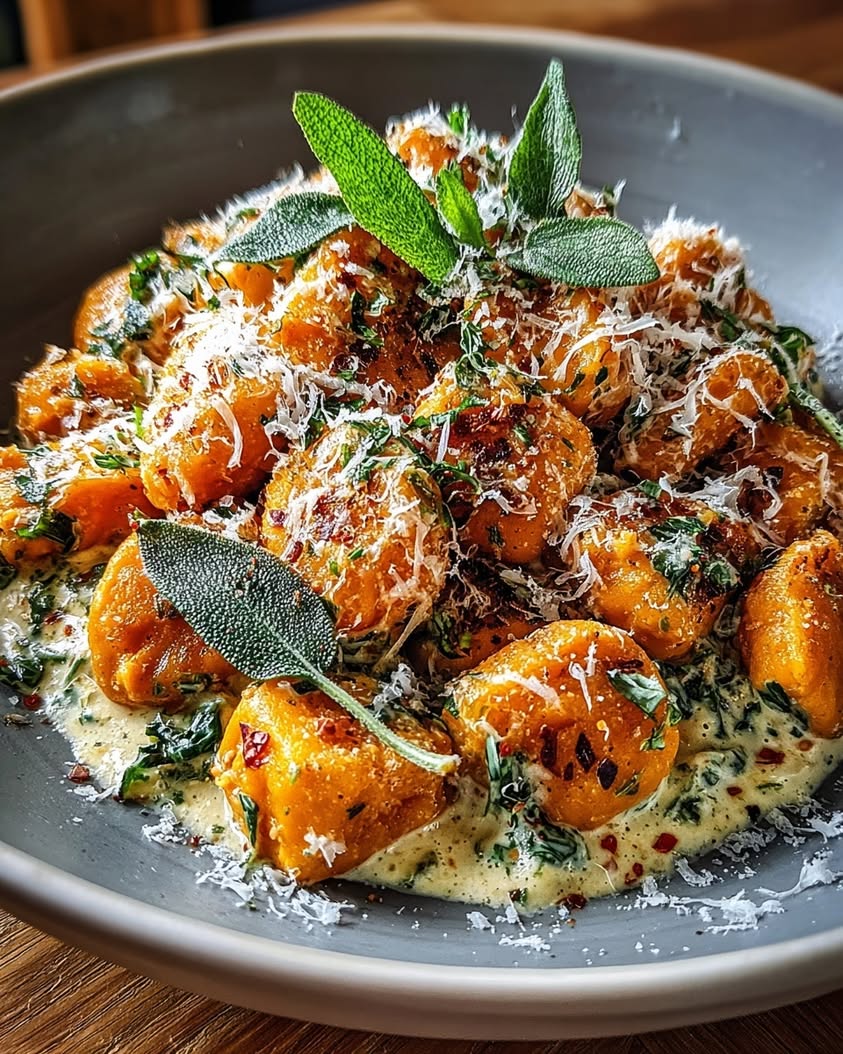
Sweet Potato Gnocchi with Creamy Sage Parmesan Sauce: A Cozy Autumn Masterpiece
Imagine a plate of tender, pillowy dumplings with a subtle earthy sweetness, perfectly coated in a velvety, nutty, and aromatic sauce. This Sweet Potato Gnocchi with Creamy Sage Parmesan Sauce delivers exactly that experience. It transforms humble ingredients into a restaurant-quality dish that feels both rustic and elegant. The process of making homemade gnocchi is incredibly rewarding, and the result is a comforting meal that celebrates the flavors of fall.
This recipe for Sweet Potato Gnocchi with Sage Parmesan Sauce offers a wonderful twist on the classic Italian potato dumpling. The natural sugars in the sweet potato caramelize slightly when cooked, providing a beautiful golden hue and a delicate flavor that pairs magically with the savory, herbal notes of sage. Moreover, the creamy Parmesan sauce clings to each little ridge, ensuring every bite is bursting with rich, complex flavor. It is the ultimate project for a cozy weekend, filling your kitchen with incredible aromas.
Ultimately, this dish strikes a perfect balance. It feels special enough for a date night or holiday gathering, yet it remains comforting and familiar like a warm hug. The combination of textures—from the soft gnocchi to the crispy fried sage leaves—creates a symphony in your mouth. Let us guide you through creating this unforgettable Sweet Potato Gnocchi with Creamy Sage Parmesan Sauce, a dish that will surely become a seasonal favorite in your home.
Quick Recipe Highlights
- Flavor Profile: This Sweet Potato Gnocchi with Sage Parmesan Sauce features a beautiful harmony of sweet and savory. The natural sweetness of the potato balances the salty, umami-rich Parmesan and the slightly peppery, aromatic sage. Brown butter adds a deep, nutty complexity that ties everything together.
- Texture: Expect pillowy-soft, melt-in-your-mouth gnocchi with a delicate bite. The creamy sauce provides a luxurious, velvety coating, while optional crispy fried sage leaves offer a delightful crunch for contrast. Properly made gnocchi should be light and airy, not dense or gummy.
- Aroma: As you cook, your kitchen will fill with the warm, earthy scent of roasted sweet potato, the unmistakable nuttiness of browning butter, and the piney, camphorous fragrance of fresh sage. It is an autumnal aroma that is utterly irresistible.
- Visual Appeal: The dish presents a stunning palette of warm colors. The gnocchi boast a soft orange hue from the sweet potato, beautifully contrasted by the pale ivory of the creamy sauce and the deep green of the sage. A dusting of grated Parmesan and cracked black pepper adds the final touch.
- Skill Level Needed: This recipe requires patience and a gentle touch more than advanced skill. You need basic knife skills for prepping sage and confidence in making a simple dough and a pan sauce. The key is avoiding overworking the gnocchi dough.
- Special Equipment: A potato ricer or food mill is highly recommended for the fluffiest sweet potato mash. Additionally, a fork for shaping, a large pot for boiling, and a sturdy skillet for the sauce are essential. A bench scraper helps portion the dough cleanly.
Recipe Overview
- Difficulty Level: We rate this Sweet Potato Gnocchi with Sage Parmesan Sauce as intermediate. The individual steps are simple, but the process requires attention to detail. Achieving the right dough consistency and mastering the gentle shaping technique are crucial for success. However, with clear instructions, even a confident beginner can create fantastic results.
- Category: This dish falls squarely into the comforting realm of homemade pasta and main courses. It is a hearty, satisfying entrée that can anchor a meal. You can also serve smaller portions as an impressive first course for a multi-course dinner.
- Cuisine: While gnocchi hail from Italy, the use of sweet potato is a modern, global twist. The sauce, with its brown butter and sage, is classically Italian (burro e salvia), but the addition of cream and Parmesan creates a richer, American-inspired Alfredo-style coating. It is a beautiful fusion.
- Cost: This recipe is relatively cost-effective, using affordable staples. Sweet potatoes, flour, and eggs are inexpensive. The primary costs come from fresh Parmesan cheese and fresh sage. Overall, you can create this restaurant-quality dish for a fraction of the price of dining out.
- Season: This Sweet Potato Gnocchi with Sage Parmesan Sauce is perfect for autumn and winter. Sweet potatoes are at their peak, and the warm, rich flavors combat the chill in the air. It is a celebratory dish for Thanksgiving or a cozy Sunday supper.
- Occasion: Ideal for a special weekend dinner, a festive holiday meal, or an intimate gathering. Making the gnocchi together can be a fun, hands-on cooking project with family or friends. It shows care and effort, making any occasion feel more significant.
Why You’ll Love This Recipe
First and foremost, the taste and texture of this Sweet Potato Gnocchi with Sage Parmesan Sauce are simply divine. Each bite delivers a complex journey: the initial sweetness of the potato, the rich and salty creaminess of the sauce, and the aromatic punch of sage. The gnocchi themselves are incredibly satisfying—light as a cloud yet substantial enough to be filling. This dish comforts the soul while exciting the palate, making it a guaranteed crowd-pleaser for anyone who tries it.
Furthermore, the preparation process, while involved, is deeply therapeutic and rewarding. There is a unique joy in transforming simple ingredients into handmade pasta. You control the quality of every component, from roasting the sweet potatoes to infusing the butter with sage. The act of shaping the gnocchi is almost meditative. Consequently, you end up with a profound sense of accomplishment when you sit down to eat, enhancing the entire dining experience.
From a nutritional standpoint, this Sweet Potato Gnocchi with Creamy Sage Parmesan Sauce offers more benefits than traditional gnocchi. Sweet potatoes are packed with beta-carotene, vitamin C, and fiber. By making the sauce at home, you manage the amount of salt and cream, avoiding the excessive additives often found in restaurant versions. You can also easily adapt the recipe to use whole wheat flour or a gluten-free blend for dietary needs.
Additionally, this dish holds tremendous social and entertaining value. Presenting a plate of homemade gnocchi impresses guests and shows a high level of culinary care. You can prepare components ahead of time, so you are not stuck in the kitchen while everyone else socializes. The dramatic presentation and incredible aroma make the meal an event in itself, sparking conversation and creating lasting memories around the table.
Finally, the cost-effectiveness and accessibility of the ingredients make this recipe a winner. You likely have flour, eggs, and butter on hand. Sweet potatoes and sage are affordable, especially in season. A small wedge of good Parmesan goes a long way. Therefore, you can create a luxurious, special-occasion meal without breaking the bank, proving that incredible food does not require exotic or expensive components.
Historical Background and Cultural Significance
The story of gnocchi stretches back centuries in Italian culinary history. Most food historians believe the dish originated in Northern Italy, with the first written recipes appearing in Renaissance cookbooks. Initially, cooks made gnocchi from breadcrumbs or semolina. Later, after the introduction of potatoes from the Americas in the 16th century, the potato-based version we know today became prevalent. The word “gnocchi” likely derives from “nocca,” meaning knuckle, or “nocchio,” a knot in wood, referencing their distinctive shape.
In Italian culture, gnocchi hold a place of comfort and tradition. Traditionally, many families served them on Thursdays, a custom some link to pre-Christian Jupiter worship and others to a practical need for a hearty meal before the weekly fish day on Friday. Regardless of origin, gnocchi making was and often remains a family affair, with generations gathering to shape the dough. They symbolize home, abundance, and the skillful transformation of humble ingredients into something celebratory.
The evolution of the Sweet Potato Gnocchi with Sage Parmesan Sauce recipe is a tale of global ingredient exchange and modern fusion. Sweet potatoes, native to Central and South America, traveled to Europe and Asia. Their use in gnocchi is a relatively recent innovation, popularized by contemporary chefs seeking to add color, sweetness, and nutritional value. The creamy Parmesan sauce represents another evolution, moving beyond the simple butter-and-herb toss to a richer, more indulgent coating that appeals to modern tastes while still honoring Italian foundations.
Regional variations of gnocchi across Italy are vast. For instance, in Rome, “Gnocchi alla Romana” uses semolina instead of potato. In Sardinia, “Gnocchetti Sardi” are smaller and often served with a hearty meat ragù. The version with sweet potato and a creamy sauce is less about a specific region and more about creative, modern Italian-inspired cooking. It showcases how classic techniques can beautifully adapt to incorporate New World ingredients, creating dishes that are both respectful of tradition and excitingly new.
Ingredient Deep Dive
Sweet Potatoes: These vibrant tubers are the heart of our gnocchi. Cultivated for thousands of years in the Americas, they were a staple for indigenous peoples long before Columbus. Nutritionally, they are a powerhouse of beta-carotene (which converts to Vitamin A), vitamin C, manganese, and fiber. For the best Sweet Potato Gnocchi with Sage Parmesan Sauce, choose firm potatoes with smooth, unblemished skin. Bake or roast them instead of boiling to concentrate flavor and reduce moisture. You can store uncooked sweet potatoes in a cool, dark, well-ventilated place for weeks. For a twist, try Japanese purple sweet potatoes for a stunning color.
Fresh Sage: This hardy, aromatic herb is crucial for the sauce’s character. Sage has a long history of culinary and medicinal use in the Mediterranean, symbolizing wisdom and longevity. Its slightly bitter, peppery, and camphorous notes cut through the richness of the butter and cheese. Always choose fresh sage over dried for this recipe; the leaves should be vibrant green-gray and firm, not wilted. To store, wrap stems in a damp paper towel and place in a plastic bag in the refrigerator. If you must substitute, fresh thyme offers a different but complementary earthy profile.
Parmigiano-Reggiano Cheese: The “King of Cheeses” brings unmatched umami depth to the creamy sauce. Produced under strict DOP regulations in specific regions of Italy, it is aged for a minimum of 12 months, developing complex crystalline textures and a savory, nutty flavor. It melts beautifully into a silky sauce. For the best Sweet Potato Gnocchi with Creamy Sage Parmesan Sauce, buy a wedge and grate it yourself—pre-grated cheese contains anti-caking agents that can make sauces grainy. Store tightly wrapped in the fridge. For a sharper bite, you can substitute Pecorino Romano, but use less as it is saltier.
All-Purpose Flour: Flour provides the structure that binds the sweet potato mash into a workable dough. Gluten development must be minimal to keep gnocchi tender. We use all-purpose for its moderate protein content. For a lighter texture, some chefs use “00” pasta flour. If you need a gluten-free Sweet Potato Gnocchi with Sage Parmesan Sauce, a 1:1 gluten-free baking blend often works well, though the dough may be more delicate. Always measure flour by spooning it into the cup and leveling it off to avoid a dense, dry dough.
Unsalted Butter & Heavy Cream: These two ingredients form the luxurious base of the sauce. Butter, browned to a nutty hazelnut color, provides foundational flavor. Using unsalted butter lets you control the final salt level. Heavy cream (with a fat content of 36% or more) stabilizes the sauce, preventing the cheese from seizing and creating that velvety, clingy texture. For a lighter version, you could use half-and-half, but the sauce will be thinner. European-style cultured butter will give an even richer, more complex flavor to your Sage Parmesan Sauce.
Common Mistakes to Avoid
- Using Watery Sweet Potato Mash: This is the number one reason for dense gnocchi. If your cooked sweet potato puree is too wet, you will need to add excessive flour to form a dough, resulting in tough, heavy dumplings. Always roast or bake your potatoes, let them cool completely, and consider spreading the mash on a tray to air-dry slightly before mixing.
- Overworking the Dough: Treat the gnocchi dough like a delicate pastry, not bread. Mix the flour into the sweet potato just until a shaggy dough forms, then knead it gently for only a minute or two until smooth. Over-kneading develops gluten, which makes the gnocchi chewy and rubbery instead of tender.
- Adding Raw Flour to Thicken a Runny Sauce: If your creamy sage Parmesan sauce seems too thin, never sprinkle in raw flour. Instead, let it simmer gently to reduce and thicken naturally. Alternatively, create a slurry with a teaspoon of cornstarch and a tablespoon of cold water, then whisk it in. Raw flour will give the sauce a pasty, uncooked taste.
- Boiling Gnocchi in a Crowded Pot: Gnocchi need space to float and cook evenly. Cook them in batches in a large pot of generously salted boiling water. Crowding the pot lowers the water temperature, causing the gnocchi to stick together and cook unevenly, becoming mushy on the outside while remaining doughy inside.
- Not Salting the Pasta Water Enough: The water for boiling gnocchi should taste like the sea. This is your only chance to season the dumplings themselves from the inside out. Undersalted water means bland gnocchi that the sauce cannot fully compensate for. Be generous with the salt.
- Overcooking the Gnocchi: Fresh gnocchi cook very quickly, usually in 2-3 minutes. They are done when they float to the surface. Immediately remove them with a slotted spoon. Letting them boil for too long turns them into mush. Remember, they will also spend a minute in the hot sauce at the end.
- Using Pre-Grated Parmesan Cheese: Pre-grated cheese contains cellulose to prevent clumping. This additive prevents the cheese from melting smoothly into a silky sauce, often leaving it grainy or clumpy. For the creamiest Sage Parmesan Sauce, always grate a block of Parmigiano-Reggiano or high-quality Parmesan yourself just before using.
- Burning the Brown Butter: Brown butter goes from nutty and golden to acrid and black in seconds. Use a light-colored pan so you can see the color change. Swirl the pan constantly over medium heat. The moment the milk solids turn a toasty brown and smell nutty, immediately remove the pan from the heat or add the sage to stop the cooking.
Essential Techniques
Ricing or Milling the Sweet Potato: After baking and cooling your sweet potatoes, you must rice them or push them through a food mill. This technique is non-negotiable for fluffy gnocchi. It breaks down the potato into fine, airy strands without developing gluten, unlike mashing which can make it gummy. If you do not have a ricer, you can press the flesh through a fine-mesh sieve with the back of a spoon. This step ensures your Sweet Potato Gnocchi with Sage Parmesan Sauce has the perfect light, pillowy texture.
Forming the “Well” and Incorporating Eggs: On your work surface, create a mound with the riced sweet potato and form a deep well in the center. Crack your beaten eggs into this well. Using a fork, gradually incorporate the flour from the inner walls of the well into the wet center. This classic pasta-making technique helps hydrate the flour evenly and slowly, preventing a dry, crumbly dough and minimizing the mixing needed to bring it together.
The “Bench Test” for Dough Hydration: Before you roll and cut all your gnocchi, do a quick test. Pinch off a small piece of dough, roll it into a ball, and boil it for 2-3 minutes. Taste it. If it is gummy or falls apart, your dough needs a slight adjustment—a touch more flour if gummy, a drop of water if crumbly. This simple test saves you from cooking an entire batch of failed gnocchi.
Shaping with a Fork or Gnocchi Board: Creating ridges on your gnocchi is not just for looks. The grooves catch more of the delicious creamy Sage Parmesan Sauce. To shape, roll a small piece of dough into a rope, cut it into pieces, then gently roll each piece down the tines of a floured fork or a gnocchi board using your thumb. The motion should be light and quick to avoid compressing the dough. This technique gives the gnocchi their classic, rustic appearance.
Pro Tips for Perfect Sweet Potato Gnocchi
Chill your baked sweet potatoes before ricing them. Cold potato flesh absorbs less flour, which is key for a lighter dough. You can even bake the potatoes a day ahead and refrigerate them overnight.
When mixing the dough, use a light touch and work quickly. Imagine you are just bringing the ingredients together, not kneading bread. The less you handle it, the more tender your Sweet Potato Gnocchi with Sage Parmesan Sauce will be.
Keep your work surface, hands, and tools lightly floured, but avoid incorporating large amounts of extra flour into the dough. Excess flour is the enemy of light gnocchi. If the dough feels sticky, dust the surface, not the dough ball itself.
Let the shaped gnocchi rest on a floured baking sheet for 15-20 minutes before cooking. This brief rest allows the flour to fully hydrate and the exterior to dry slightly, which helps them hold their shape better in the boiling water.
For an extra flavor boost, add a pinch of freshly grated nutmeg to the gnocchi dough. Nutmeg is a classic pairing with both sweet potato and sage, adding a warm, subtle depth that enhances the entire dish.
Reserve about a cup of the starchy gnocchi cooking water before draining. If your creamy sauce seems too thick when you combine everything, a splash of this hot, salty water can loosen it to the perfect silky consistency.
Do not rinse the cooked gnocchi after draining. The thin layer of starch left on their surface helps the creamy Sage Parmesan Sauce cling to every nook and cranny.
Finish the dish with a final drizzle of high-quality extra virgin olive oil and a crack of black pepper just before serving. This adds a fresh, fruity note and visual appeal that elevates the presentation.
Variations and Adaptations
Regional Variations: To lean into Italian roots, swap the creamy sauce for a simple “burro e salvia” (browned butter and sage) toss, or a tomato-based marinara. For a Roman twist, try a sauce of guanciale, black pepper, and Pecorino Romano (a take on Gricia). A Ligurian-inspired version would use pesto instead of the cream sauce, highlighting basil and pine nuts.
Seasonal Adaptations: In spring, fold chopped fresh chives or wild garlic into the gnocchi dough and pair with a lemon-herb cream sauce. For summer, keep the sage but use a lighter sauce of white wine, lemon zest, and a touch of cream. In deep winter, add roasted, chopped chestnuts to the dough for a nutty richness that complements the sweet potato.
Dietary Modifications: For gluten-free Sweet Potato Gnocchi, use a certified gluten-free 1:1 flour blend. The dough may be stickier, so handle it on well-floured parchment paper. For a dairy-free version, use vegan butter and a rich, unsweetened plant-based cream (cashew or oat work well) with nutritional yeast or a vegan Parmesan alternative for the sauce.
Flavor Variations: Infuse the dough with other spices like smoked paprika or cinnamon. Add finely grated orange zest to the dough for a bright note. For the sauce, crisp up some pancetta or bacon before making the brown butter, or add a splash of white wine or brandy to deglaze the pan before adding the cream.
Texture Modifications: For a crispier finish, after boiling, pan-fry the gnocchi in a little butter or oil until golden brown on one or two sides, then pour the sauce over the top. This adds a wonderful crispy exterior that contrasts with the soft interior.
Presentation Alternatives: Instead of individual dumplings, form the dough into larger “gnudi” (naked ravioli) shapes—simple, rustic quenelles. Or, for a dramatic family-style presentation, bake the sauced gnocchi in a dish with extra cheese on top until bubbly and golden for a gnocchi gratin.
Serving and Presentation Guide
Plating Techniques: For an elegant restaurant-style plate, use a pair of tongs to create a tight, tall nest of gnocchi in the center of a warm, shallow bowl. Drape the creamy Sage Parmesan Sauce over and around, allowing some of the orange gnocchi to peek through. Place the crispy sage leaves strategically on top. Alternatively, for family style, present the entire dish in a wide, low serving bowl or skillet for a rustic, inviting look.
Garnishing Ideas: The classic garnish is the crispy fried sage leaves used in the sauce. Beyond that, consider a light snowfall of freshly grated Parmesan, a twist of cracked black pepper, a drizzle of sage-infused oil, or a few toasted pine nuts or chopped walnuts for crunch. A microplane of lemon zest over the top just before serving can add a surprising and welcome brightness.
Traditional Accompaniments: In Italy, a dish like this rich Sweet Potato Gnocchi with Sage Parmesan Sauce would typically stand alone as a “primo” (first course). A simple, bitter green salad dressed with lemon vinaigrette served after the pasta helps cleanse the palate. A side of sautéed bitter greens like broccoli rabe or kale also balances the richness beautifully.
Modern Serving Suggestions: For a contemporary twist, serve the gnocchi as a main course with a seared scallop or a slice of pan-seared chicken breast placed on top. You could also crumble some salty, crispy prosciutto over the finished dish. A glass of chilled Prosecco or a crisp white wine served alongside makes the meal feel like a true celebration.
Temperature Considerations: Serve this dish immediately. Both the gnocchi and the sauce are at their best piping hot. Warm your serving bowls or plates in a low oven or by filling them with hot water for a minute before drying. This prevents the creamy sauce from cooling and congealing too quickly on the plate.
Portion Control Tips: This recipe yields about four generous main-course servings. As a rich first course, it could serve six. Remember, homemade gnocchi are more filling than they appear. Start with a modest portion; you can always serve more. Leaving guests wanting one more bite is better than leaving them uncomfortably full.
Wine and Beverage Pairing
Wine Pairings: The sweet earthiness of the potato and the rich, creamy Sage Parmesan Sauce call for wines with good acidity to cut through the fat. A white wine like a full-bodied Italian Pinot Grigio, a French Chardonnay (unoaked or lightly oaked), or a California Viognier works wonderfully. For red wine lovers, choose a lighter, low-tannin red like a Pinot Noir or a Barbera, which will not overpower the dish’s subtle sweetness.
Non-Alcoholic Alternatives: Sparkling water with a twist of lemon or a dash of bitters is always a refreshing choice. For something more special, try a non-alcoholic sparkling cider, which echoes the autumnal notes. A ginger beer or a homemade sage-and-lemon infused iced tea can also complement the herbal and rich flavors of the Sweet Potato Gnocchi beautifully.
Coffee/Tea Pairings: After the meal, a cup of espresso is a classic Italian finish. For tea, consider a black tea with notes of caramel or nut, like a Dian Hong, or a soothing herbal tea such as chamomile or peppermint to aid digestion after the rich meal.
Temperature Considerations: Serve white wines well-chilled (45-50°F) and light reds slightly cool (55-60°F). Iced non-alcoholic beverages should be very cold. Coffee and tea, of course, should be served hot to provide a warming contrast and a satisfying end to the dining experience.
Serving Suggestions: Always pour wine into appropriate glassware to enhance its aroma. For water, use tall glasses with ice and lemon. Present coffee in small cups and tea in a pot with extra hot water. Offering a choice of beverages allows your guests to tailor the pairing to their personal preference, making the meal with your Sweet Potato Gnocchi with Creamy Sage Parmesan Sauce even more enjoyable.
Storage and Shelf Life
Storage Methods: Store leftover cooked Sweet Potato Gnocchi with Sage Parmesan Sauce in a single layer or gently tossed in an airtight container in the refrigerator. The sauce may thicken and separate slightly upon cooling, which is normal. Do not freeze the assembled sauced dish, as the cream sauce will likely break and become grainy upon reheating.
Temperature Requirements: Refrigerate all leftovers promptly, within two hours of cooking. Keep your refrigerator at or below 40°F (4°C). The gnocchi and sauce will keep safely for 3-4 days when stored properly. Discard any leftovers that have been left at room temperature for more than two hours.
Container Recommendations: Use shallow, airtight glass or BPA-free plastic containers. Shallow containers allow the food to cool quickly and evenly, reducing the risk of bacterial growth. If storing the gnocchi and sauce separately, keep the gnocchi in one container and the sauce in another for best texture upon reheating.
Signs of Spoilage: Before reheating, check for an off smell, such as sourness or fermentation. Look for visible mold, which can appear as fuzzy spots. If the sauce has separated irreversibly into oily pools and curdled solids even after reheating, it is best to discard it. When in doubt, throw it out.
Reheating Instructions: The best method is on the stovetop. Gently reheat the sauce in a skillet over low heat, adding a splash of milk or cream to bring it back together. Add the gnocchi and stir very gently until warmed through. You can also microwave in 30-second intervals, stirring between each, but this risks making the gnocchi rubbery.
Freezing Guidelines: You can freeze uncooked gnocchi brilliantly. Arrange the shaped, floured gnocchi in a single layer on a parchment-lined baking sheet and freeze until solid. Then transfer to a freezer bag. Cook directly from frozen, adding a minute or two to the boiling time. Freeze the sauce separately, if desired, though dairy-based sauces can sometimes separate upon thawing.
Make Ahead Strategies
Prep Timeline: You can break this recipe into stages over two days. Day 1: Bake and rice the sweet potatoes; refrigerate. Make the gnocchi dough, shape it, and freeze the dumplings on a tray. Day 2: Transfer frozen gnocchi to a bag. Cook the frozen gnocchi and prepare the fresh Sage Parmesan Sauce just before serving. This makes weeknight preparation a breeze.
Storage Between Steps: Keep the riced, cooled sweet potato in an airtight container in the fridge for up to 2 days. Store shaped, uncooked gnocchi on a floured baking sheet, covered with a clean kitchen towel, in the fridge for up to 4 hours before cooking. For longer storage, freeze them as described above.
Quality Impact Assessment: Making the gnocchi ahead and freezing actually improves the texture slightly, as it allows the flour to fully hydrate. The sauce, however, is best made fresh. Its emulsified, creamy nature does not hold up as well after refrigeration and reheating, though it will still taste good.
Assembly Tips: When ready to serve, have your sauce ingredients measured and ready. Boil the gnocchi (fresh or frozen) and finish them in the freshly made sauce. This last-minute assembly ensures the gnocchi are hot and tender and the sauce is velvety and perfect.
Reheating Guidelines: If you must reheat a fully assembled dish, do so gently in a covered skillet over low heat with a splash of liquid (water, milk, or cream). Stir minimally to avoid breaking up the gnocchi. The microwave is a last resort and will compromise texture.
Fresh Element Additions: To revive a make-ahead dish, always finish with a fresh element. After reheating, garnish with newly fried sage leaves, a fresh grating of Parmesan, a drizzle of good olive oil, or a sprinkle of chopped fresh parsley. This adds a burst of freshness that makes the dish taste newly made.
Scaling Instructions
Halving the Recipe: Halving this Sweet Potato Gnocchi with Sage Parmesan Sauce recipe is straightforward for a smaller meal. Use one medium sweet potato (about 12 oz), 3/4 to 1 cup of flour, one small egg, and scale down the sauce ingredients proportionally. The dough may come together more quickly, so be extra vigilant about not over-mixing. Cooking time for the gnocchi remains the same, but you will need a smaller skillet for the sauce.
Doubling or Tripling: For a crowd, you can double or triple the recipe. However, do not attempt to mix a triple batch of dough all at once. Mix the dough in separate batches to ensure even incorporation and prevent overworking. You will need to boil the gnocchi in multiple batches to avoid crowding. For the sauce, consider making it in two separate skillets or in a large, wide saucepan to ensure even heating and reduction.
Equipment Adjustments: Scaling up requires a larger work surface for rolling gnocchi, more baking sheets for holding shaped dumplings, and a very large pot or the willingness to boil in many batches. For the sauce, a Dutch oven or large sauté pan with high sides works better than a standard skillet when doubling or tripling.
Timing Modifications: While prep time increases linearly when scaling up, active cooking time does not. Boiling the gnocchi will take longer as you work in batches. The sauce may take slightly longer to reduce if made in a larger volume. Factor in at least 30-45 minutes of additional active time when doubling the recipe.
Storage Considerations: When making large batches, freezing the uncooked gnocchi is an excellent strategy. Portion them into meal-sized amounts in separate freezer bags. This way, you can enjoy homemade Sweet Potato Gnocchi with Sage Parmesan Sauce anytime without the full prep commitment.
Nutritional Deep Dive
Macro Breakdown: A serving of this Sweet Potato Gnocchi with Creamy Sage Parmesan Sauce provides a balance of carbohydrates, protein, and fat. The sweet potatoes and flour contribute complex carbs for sustained energy. The eggs, Parmesan, and cream provide protein and fat, which promote satiety and help absorb the fat-soluble vitamins (like Vitamin A) from the sweet potatoes. The dish is moderately calorie-dense, making it a satisfying main course.
Micronutrient Analysis: This dish is an excellent source of Vitamin A (from the sweet potato’s beta-carotene), crucial for vision and immune health. It also provides Vitamin C, manganese, and B vitamins. The Parmesan cheese contributes calcium and phosphorus for bone health. The sage offers small amounts of Vitamin K and various antioxidants with anti-inflammatory properties.
Health Benefits: The fiber from the sweet potato aids digestion and helps regulate blood sugar spikes. The antioxidants in both the sweet potato and sage combat oxidative stress. The protein helps with muscle repair and maintenance. Using wholesome, real-food ingredients means you are avoiding processed additives, supporting overall wellness with a nourishing, homemade meal.
Dietary Considerations: This recipe contains gluten (flour), dairy (butter, cream, cheese), and eggs. It is not suitable for those with related allergies or intolerances without modification. For those managing sodium intake, be mindful of the salt in the pasta water and the Parmesan cheese; you can reduce both slightly.
Portion Analysis: A standard serving (about 1/4 of the recipe) is satisfying and balanced. Because the dish is rich, a smaller portion paired with a large side salad or vegetables can make a complete meal for those with smaller appetites or specific calorie goals. Listen to your body’s hunger cues.
Weight Management Tips: To lighten the dish for weight management, you can use half the cream and supplement with a low-sodium vegetable broth for the sauce. Increase the ratio of sweet potato to flour slightly in the dough for more fiber. Most importantly, focus on mindful eating—savor each bite of your Sweet Potato Gnocchi with Sage Parmesan Sauce, which can lead to greater satisfaction with a smaller portion.
Dietary Adaptations
Gluten-Free: Create gluten-free Sweet Potato Gnocchi by substituting the all-purpose flour with a 1:1 gluten-free baking blend that contains xanthan gum. The dough will be stickier, so work on{“success”:true,”message”:”Recipe created successfully”,”post_id”:8964,”tasty_recipe_id”:8964,”shortcode”:” Print
Sweet Potato Gnocchi with Creamy Sage Parmesan Sauce
Description
A comforting, homemade sweet potato gnocchi served in a rich, creamy sage and Parmesan sauce for a cozy, elegant meal.
Ingredients
For the Crust:
- 2 large sweet potatoes, baked and mashed (about 2 cups)
- 2 cups all-purpose flour, plus more for dusting
- 1 large egg, lightly beaten
- 1/2 teaspoon salt
- 1/4 teaspoon nutmeg
- 1 cup heavy cream
- 1/2 cup grated Parmesan cheese
- 4 tablespoons unsalted butter
- 8–10 fresh sage leaves
- Salt and black pepper to taste
Instructions
1. Prepare the Crust:
- Combine mashed sweet potatoes, flour, egg, salt, and nutmeg in a bowl. Mix until a soft dough forms, adding more flour if sticky.
- On a floured surface, divide dough into portions and roll into long ropes. Cut into 1-inch pieces and press with a fork for texture.
- Bring a large pot of salted water to a boil. Cook gnocchi in batches until they float, about 2-3 minutes. Drain and set aside.
- In a large skillet, melt butter over medium heat. Add sage leaves and cook until crisp, about 2 minutes. Remove sage and set aside.
- Pour heavy cream into the skillet, bring to a simmer, and stir in Parmesan until melted. Season with salt and pepper.
- Add cooked gnocchi to the sauce, gently tossing to coat. Cook for 1-2 minutes until heated through. Serve topped with crispy sage.
Notes
You can customize the seasonings to taste.

I’m Billy, a classically trained culinary school graduate from The Culinary Institute of America with over 12 years in the restaurant industry and over 19 years of cooking experience.