
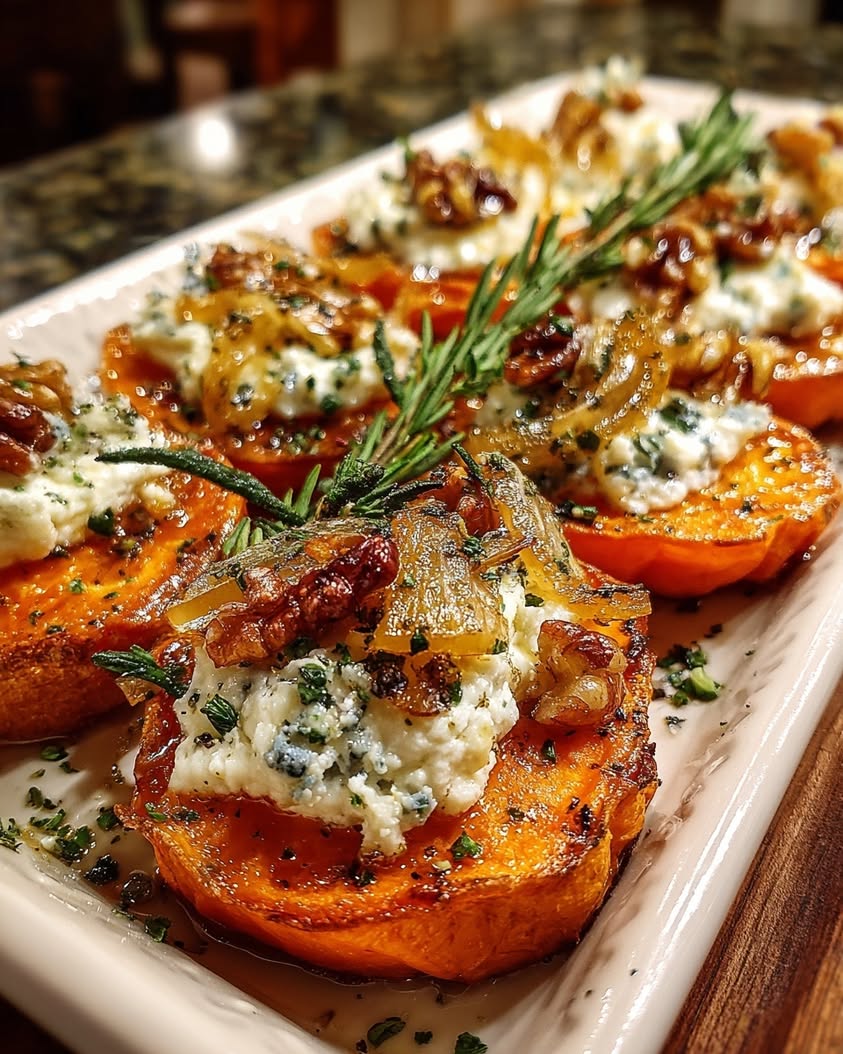
Sweet Potato Slices with Gorgonzola Cream, Caramelized Shallots & Walnut Brittle: An Elegant Appetizer for Any Occasion
Imagine a dish that perfectly balances the earthy sweetness of roasted vegetables with the sharp, creamy tang of a bold cheese. This recipe for Sweet Potato Slices with Gorgonzola Cream, Caramelized Shallots & Walnut Brittle delivers exactly that. It transforms humble ingredients into a stunning, restaurant-worthy appetizer. Moreover, it is a guaranteed conversation starter at any dinner party or holiday gathering.
Each component of this dish plays a crucial role in creating a symphony of flavors and textures. The sweet potato slices provide a soft, caramelized base. Meanwhile, the gorgonzola cream sauce adds a luxurious and pungent contrast. Furthermore, the sticky-sweet caramelized shallots bring a deep, savory note. Finally, the crunchy walnut brittle offers a surprising and delightful finish. Consequently, every bite is a complex and satisfying experience.
This recipe is surprisingly approachable for home cooks. While it involves several components, each step is straightforward. Additionally, you can prepare many parts in advance. Therefore, you can assemble the final dish quickly before serving. Ultimately, this makes it an ideal choice for entertaining. You will impress your guests with minimal last-minute stress.
Quick Recipe Highlights
- Flavor Profile: This dish masterfully combines sweet, savory, tangy, and nutty notes. The natural sweetness of the roasted sweet potato slices beautifully contrasts the sharp, salty gorgonzola cream. Additionally, the deep umami of caramelized shallots and the buttery crunch of walnut brittle complete the flavor journey.
- Texture: You will experience a wonderful play of textures. The sweet potato slices are tender yet firm. The gorgonzola cream is velvety smooth. The shallots are soft and jammy. Conversely, the walnut brittle provides a hard, shattering crunch that elevates the entire dish.
- Aroma: As the sweet potato slices roast, they release a warm, sugary scent. Simultaneously, the shallots cooking in butter and sugar fill the kitchen with a rich, savory-sweet fragrance. The gorgonzola cream adds a distinct, tangy cheese aroma that promises a bold flavor.
- Visual Appeal: This dish is a feast for the eyes. The vibrant orange sweet potato rounds create a stunning base. A dollop of white gorgonzola cream sits atop each slice. Then, a tangle of golden-brown shallots and shiny pieces of amber walnut brittle crown the creation. The colors are autumnal and inviting.
- Skill Level Needed: This recipe is perfect for an intermediate home cook. It requires multitasking between three components. However, each technique—roasting, sautéing, and making a simple brittle—is clearly explained. With careful reading and timing, a confident beginner can also achieve great results.
- Special Equipment: You will need a good baking sheet, parchment paper, and a medium saucepan. A small skillet is ideal for the walnut brittle. A sharp knife and a sturdy vegetable peeler are also essential. No fancy gadgets are required, making this recipe accessible.
Recipe Overview
- Difficulty Level: We rate this recipe as intermediate. The challenge lies in coordinating three separate components that finish around the same time. You must manage the roasting sweet potato slices, the simmering shallots, and the quick-cooking brittle. However, each individual step is simple. With a bit of planning, the process flows smoothly.
- Category: This dish fits perfectly as an elegant appetizer or a sophisticated side dish. It could also serve as a light vegetarian main course when paired with a simple green salad. Its versatility is one of its greatest strengths. You can adapt it to suit many different meals.
- Cuisine: This recipe draws inspiration from modern American bistro cuisine. It uses classic French techniques like caramelization and reduction. Additionally, it features Italian gorgonzola cheese. The result is a fusion dish that feels both familiar and excitingly new.
- Cost: The ingredients are reasonably priced and seasonal. Sweet potatoes and shallots are inexpensive staples. Gorgonzola cheese and walnuts are the premium items, but a little goes a long way. Overall, you can create this impressive dish for a fraction of a restaurant price.
- Season: This is an ideal fall and winter recipe. Sweet potatoes are at their peak during these cooler months. Furthermore, the warm, rich flavors are perfect for holiday tables, from Thanksgiving to New Year’s Eve. It brings a touch of warmth and comfort to any gathering.
- Occasion: Serve this at your next dinner party, holiday potluck, or special family meal. It is impressive enough for celebrations yet simple enough for a cozy weekend treat. It also makes a wonderful vegetarian option for mixed-diet gatherings.
Why You’ll Love This Recipe
First and foremost, the taste is absolutely unforgettable. The combination of flavors is complex yet harmonious. Each element supports the others. The sweet potato is not just a base; it is a star ingredient that roasts into caramelized perfection. The gorgonzola cream sauce is rich and tangy, cutting through the sweetness. Then, the shallots add a savory depth that ties everything together. Finally, the walnut brittle introduces a buttery, crunchy surprise that makes you want another bite immediately. This dish engages all your taste buds in the best possible way.
From a practical standpoint, this recipe offers fantastic convenience. You can prepare every component ahead of time. Roast the sweet potato slices and store them covered at room temperature. Make the gorgonzola cream and keep it chilled. Caramelize the shallots and let them cool. Even the walnut brittle can be made days in advance and stored in an airtight container. When you are ready to serve, simply warm the sweet potatoes and shallots gently, then assemble. This make-ahead strategy is a game-changer for stress-free entertaining.
Nutritionally, this dish packs a beneficial punch. Sweet potatoes are a powerhouse of beta-carotene, vitamin A, and fiber. They support eye health and digestion. Walnuts provide healthy omega-3 fatty acids and protein. While the gorgonzola cream and shallots add richness, they are used in moderation as flavorful accents. Consequently, you get a dish that feels indulgent but also incorporates wholesome, nutrient-dense ingredients. It is a smarter choice than many other heavy appetizers.
The social and entertaining value of this recipe is incredibly high. Visually, it is stunning on a platter. It invites curiosity and compliments. Guests will be delighted by the sophisticated flavor combination. It serves as a talking point and shows that you put thought and care into the meal. Because it is easy to eat as a finger food or with a small fork, it is perfect for cocktail parties or passed appetizers. It elevates any event from casual to special.
Finally, this recipe is cost-effective and accessible. You do not need rare or expensive ingredients. Sweet potatoes, shallots, and basic pantry staples form the foundation. The gorgonzola and walnuts are the splurge, but a small amount creates maximum impact. Compared to ordering similar dishes at a restaurant or buying pre-made gourmet appetizers, making this at home saves significant money. You can feed a crowd with elegance without straining your budget.
Historical Background and Cultural Significance
The story of this dish begins with its individual components, each with a rich history. Sweet potatoes have been cultivated for thousands of years, originating in Central or South America. They were a staple food for many indigenous cultures long before European contact. Spanish and Portuguese explorers then brought them to Europe and Asia. Their natural sweetness and versatility made them a global favorite. In modern American cuisine, sweet potatoes have evolved from a simple side dish to a canvas for creative, upscale recipes like this one.
Gorgonzola cheese adds a layer of European tradition. This iconic blue cheese hails from the Lombardy region of Italy, with production dating back to the early Middle Ages. Its characteristic blue-green veins and sharp, tangy flavor are the result of specific Penicillium mold cultures. Historically, it was aged in caves near the town of Gorgonzola. Using it in a creamy sauce is a classic technique in Northern Italian cooking, often paired with pasta or polenta. Incorporating it into this appetizer bridges Italian culinary artistry with New World ingredients.
The technique of caramelizing alliums like shallots is fundamental to French cuisine. Shallots themselves are believed to have originated in Central or Southeast Asia. They were highly prized in Persian and Indian cooking before becoming essential in French kitchens. The process of slowly cooking them in fat until they break down into a sweet, jammy condiment is a cornerstone of building flavor. This method, known as “confit,” transforms the sharp, pungent raw shallot into a mellow, complex garnish that elevates meats, tarts, and, in this case, vegetable-based appetizers.
Nut brittles have a global presence, from American peanut brittle to Indian chikki. The process of cooking sugar to a hard crack stage and embedding nuts in it is an ancient preservation and candy-making technique. Using walnuts specifically connects to Mediterranean and Californian culinary traditions, where walnuts are abundant. The addition of brittle to a savory dish is a relatively modern, chef-driven innovation. It introduces textural contrast and a note of sweetness that challenges traditional plating norms. This recipe, therefore, represents a fusion of historical foodways from the Americas, Europe, and Asia, culminating in a contemporary culinary creation.
Ingredient Deep Dive
Let us start with the star: sweet potatoes. Botanically distinct from yams, sweet potatoes are tuberous roots packed with nutrition. They are an excellent source of beta-carotene, which the body converts to vitamin A, crucial for vision and immune function. They also provide vitamin C, potassium, and fiber. When selecting sweet potatoes, look for firm specimens with smooth, unblemished skin. Avoid any with soft spots or signs of sprouting. Store them in a cool, dark, well-ventilated place—not the refrigerator, as cold temperatures can alter their texture and flavor. For this recipe, choose medium-sized, uniformly shaped potatoes for even slicing and roasting.
Gorgonzola cheese is the flavor powerhouse. There are two main types: Gorgonzola Dolce (sweet, soft, and milder) and Gorgonzola Piccante (firmer, sharper, and more pungent). For the gorgonzola cream sauce in this recipe, Dolce is often preferred for its creamy, spreadable texture and balanced flavor that is not overwhelmingly sharp. Nutritionally, it is a source of calcium and protein but also high in saturated fat and sodium, so it is used as a potent accent. Always buy a wedge from the cheese counter if possible, as pre-crumbled cheese often contains anti-caking agents that can affect melting. Wrap leftover cheese tightly in parchment and then plastic wrap, and store it in the coldest part of the refrigerator.
Shallots are essential for their nuanced flavor. They are a member of the allium family, like onions and garlic, but offer a more delicate, sweet, and subtle taste. They are rich in antioxidants and compounds that may have anti-inflammatory benefits. When shopping, choose shallots that are firm and heavy for their size, with dry, papery skins. Avoid any that are soft or sprouting. Store them in a cool, dark, dry place with good air circulation. To prepare, slice off the ends, peel the skin, and slice thinly. Their high sugar content makes them ideal for slow caramelization, where they develop a deep, savory-sweet complexity that is less aggressive than caramelized onions.
Walnuts bring the crucial crunch. Specifically, English walnuts are most common, known for their mild, buttery flavor. They are a fantastic source of plant-based omega-3 fatty acids (ALA), which support heart and brain health. They also provide protein, magnesium, and antioxidants. For the brittle, you want fresh, high-quality walnut halves or pieces. Rancid nuts will ruin the dish, so always taste one before using. Store walnuts in an airtight container in the refrigerator or freezer to prevent their oils from going rancid. Toasting them lightly before adding to the brittle can enhance their flavor, but be careful, as they will cook further in the hot sugar syrup.
Common Mistakes to Avoid
- Cutting Sweet Potatoes Too Thin or Thick: Slices under 1/2-inch will become too crisp and may burn. Conversely, slices over 3/4-inch will remain hard in the center and not develop a nice roasted edge. Aim for consistent 1/2-inch rounds for perfect texture.
- Overcrowding the Baking Sheet: Placing sweet potato slices too close together causes them to steam instead of roast. They will become soggy and lack caramelization. Always leave space between each slice for hot air to circulate.
- Not Caramelizing Shallots Fully: Rushing this step is a major error. Shallots need low, slow heat to break down their sugars completely. If they are merely softened and translucent, they will taste sharp and lack the deep, jammy sweetness the recipe requires.
- Burning the Sugar for the Brittle: Sugar goes from golden amber to burnt very quickly. Never walk away from the pan. Use a light-colored saucepan so you can see the color change clearly, and remove it from the heat the moment it reaches a deep amber hue.
- Stirring the Sugar Syrup Too Early: When making the walnut brittle, do not stir the sugar and water mixture until the sugar has fully dissolved. Stirring prematurely can cause crystallization, resulting in a grainy brittle instead of a smooth, glassy one.
- Using Pre-Crumbled Gorgonzola: Pre-crumbled cheese often contains additives to prevent clumping. These can prevent it from melting smoothly into the cream. Always buy a wedge and crumble it yourself for the silkiest, most flavorful sauce.
- Adding Cold Cream to Hot Pan: When making the gorgonzola cream, let the heavy cream come to room temperature before adding it to the reduced shallot pan. Adding it cold can shock the pan and cause the cream to separate or curdle as it heats.
- Assembling Too Early: If you assemble the complete appetizer too far in advance, the sweet potato slices will soften under the cream and the brittle will lose its crunch. Assemble just before serving for ideal texture.
- Not Seasoning Each Layer: Season the sweet potato slices with salt before roasting. Season the shallots as they cook. Taste and season the gorgonzola cream. Building layers of seasoning is key to a well-balanced final dish.
- Ignoring Visual Cues: This recipe relies on visual doneness indicators: golden-brown edges on the sweet potatoes, deep golden-brown color on the shallots, and a specific amber stage for the sugar. Trust your eyes over a rigid timer.
Essential Techniques
Uniform Slicing: Achieving even sweet potato slices is critical for consistent roasting. Use a sharp chef’s knife and pay attention to thickness. First, slice a small piece off one end to create a flat, stable base. Then, make parallel cuts straight down. Consistent thickness ensures all slices finish cooking at the same time. Uneven slices will result in some being overcooked and others undercooked. This foundational technique affects the entire presentation and eating experience.
Low-and-Slow Caramelization: This is the secret to transforming sharp shallots into a sweet, savory jam. Start with butter or oil over medium-low heat. Add the shallots and a pinch of salt, which helps draw out moisture. Cook, stirring occasionally, for 20-30 minutes. The goal is to let the natural sugars brown slowly without burning. If the shallots stick or brown too quickly, reduce the heat and add a splash of water to deglaze the pan. Patience here builds a deep flavor base that cannot be rushed.
Working with Sugar Stages (Hard Crack): Making the walnut brittle requires cooking sugar to the hard crack stage (300-310°F / 149-154°C). Use a clean saucepan and combine sugar with just enough water to moisten it. Heat without stirring until dissolved, then cook until it turns a deep amber color. A candy thermometer is helpful, but the visual cue is key. Immediately pour it over the nuts on a prepared sheet. Do not touch the hot sugar. Mastering this gives you a shiny, snappy brittle that provides perfect textural contrast.
Creating a Smooth Cream Sauce: The gorgonzola cream should be velvety, not grainy. After reducing the shallots, lower the heat to medium-low. Add the room-temperature cream and let it warm gently. Crumble in the cheese off the heat, letting the residual warmth melt it. Stir until just combined; over-stirring or high heat can cause the fat to separate. If the sauce seems too thick, thin it with a teaspoon of warm water or milk. This gentle technique preserves the sauce’s luxurious texture.
Pro Tips for Perfect Sweet Potato Slices with Gorgonzola Cream
First, par-cook your sweet potato slices. For extra creamy interiors, microwave the whole sweet potatoes for 2-3 minutes before slicing and roasting. This jump-starts the cooking process, ensuring the centers are fully tender by the time the exteriors caramelize.
Use a mandoline slicer for absolute uniformity. If you have one, it guarantees every sweet potato slice is the exact same thickness. This leads to perfectly even roasting and a professional-looking presentation.
Infuse your cream. For an even more complex gorgonzola cream, warm the cream with a sprig of fresh thyme or a crack of black pepper before adding it to the pan. Strain it out after infusing for a subtle herbal note.
Make brittle in silicone molds. For perfectly shaped brittle pieces, pour the hot sugar mixture into small silicone candy molds or onto a silicone baking mat. You can break it into uniform shards for a more polished look.
Balance the salt. Taste your gorgonzola before seasoning the cream. Some varieties are saltier than others. Adjust the added salt accordingly to avoid an overly salty final dish.
Create a double-layer appetizer. For a heartier bite, place two smaller sweet potato slices together with a smear of gorgonzola cream in between, then top with shallots and brittle. This creates a stunning “sandwich” effect.
Garnish with fresh herbs. A final sprinkle of finely chopped chives or parsley adds a pop of fresh color and a light herbal note that cuts through the richness beautifully.
Warm your serving platter. To keep the assembled appetizers at an ideal temperature for longer, briefly warm your serving platter or board before arranging the finished sweet potato slices.
Variations and Adaptations
Explore regional variations by swapping the cheese. Use Spanish Cabrales or French Roquefort for a different blue cheese profile. For a Southern twist, use pimento cheese spread instead of gorgonzola cream. Alternatively, for a French-inspired version, top the sweet potato with a dollop of crème fraîche and the shallots.
Consider seasonal adaptations throughout the year. In spring, use asparagus spears as the base instead of sweet potato. During summer, try thick slices of grilled peach or zucchini. For a winter holiday version, add a sprinkle of chopped fresh rosemary or sage to the sweet potatoes before roasting.
Accommodate dietary modifications easily. For a dairy-free version, use a cashew cream base blended with nutritional yeast and white miso to mimic the tangy, creamy quality of gorgonzola. Make a vegan brittle using a sugar alternative that caramelizes, like coconut sugar, and a vegan butter substitute.
Experiment with flavor variations. Add a drizzle of balsamic glaze reduction over the assembled bites. Incorporate crispy fried sage leaves as an additional garnish. Mix a teaspoon of maple syrup into the gorgonzola cream for extra sweetness that complements the potato.
Adjust texture modifications to your preference. For extra crunch, use candied pecans or hazelnuts in the brittle. For a softer bite, skip the brittle and top with a sprinkle of toasted, chopped walnuts. You could also add a layer of microgreens for a fresh, tender texture.
Try presentation alternatives for different events. Instead of individual slices, create a sweet potato crostini board. Serve the roasted slices, gorgonzola cream in a bowl, shallots in a jar, and brittle in a pile, allowing guests to build their own. Alternatively, layer everything in a small baking dish and broil briefly for a hot, bubbly dip served with crackers.
Serving and Presentation Guide
Master plating techniques for visual impact. Arrange the sweet potato slices in a circular pattern on a large, neutral-colored platter or a rustic wooden board. Overlap them slightly for a casual look or space them evenly for a more formal presentation. Place a consistent dollop of gorgonzola cream in the center of each slice.
Explore garnishing ideas beyond the recipe. After adding the shallots and brittle, a final flourish makes the dish pop. Consider tiny edible flowers, a light dusting of smoked paprika, or a few grains of flaky sea salt. A very fine drizzle of high-quality extra virgin olive oil adds sheen and flavor.
Pair with traditional accompaniments. While stunning on its own, this appetizer pairs beautifully with a simple arugula salad dressed with lemon vinaigrette. It also complements a charcuterie board, providing a sweet and creamy contrast to salty meats and pickles. For a full meal, serve it alongside a roasted chicken or pork tenderloin.
Incorporate modern serving suggestions. For a cocktail party, use small, decorative spoons to serve a single, perfect bite-sized portion. Alternatively, serve it as an amuse-bouche in Chinese soup spoons, with a tiny slice of sweet potato, a dot of cream, and one piece of brittle.
Mind temperature considerations. The sweet potato slices and shallots should be warm or at room temperature. The gorgonzola cream can be slightly cool, which creates a pleasant temperature contrast. The brittle is always served at room temperature. Avoid serving any component piping hot, as it will melt the cream too quickly.
Apply portion control tips. As a pre-dinner appetizer, plan for 2-3 slices per person. If serving as part of a larger grazing table, 1-2 slices is sufficient. For a side dish, 2-3 slices alongside a protein is appropriate. The rich flavors are satisfying, so a little goes a long way.
Wine and Beverage Pairing
Select wine pairings that complement the bold flavors. The sweetness of the potato and the pungency of the cheese create an interesting pairing challenge. A off-dry Riesling or Gewürztraminer works wonderfully; their slight sweetness and acidity cut through the richness and balance the blue cheese. Alternatively, a medium-bodied Pinot Noir with its red fruit notes and low tannins won’t fight the dish. For a classic pairing, a rich, nutty Amontillado or Oloroso Sherry is a stunning match for the caramelized elements and blue cheese.
Offer non-alcoholic alternatives that are equally sophisticated. Sparkling apple cider provides sweet effervescence. A ginger beer with its spicy kick cleanses the palate between bites. For a more refined option, serve a chilled, lightly sweetened hibiscus tea (agua de jamaica) whose tartness mirrors wine’s acidity.
Consider coffee or tea pairings for a brunch setting. A medium-roast coffee with notes of caramel or nut will echo the flavors in the dish. A black tea like Darjeeling or Ceylon, with its floral and stone-fruit notes, can also be a delightful companion, especially if served without milk.
Pay attention to temperature considerations. White wines and sparkling beverages should be well-chilled but not ice-cold, as extreme cold mutes flavor. Red wines should be served slightly below room temperature. Non-alcoholic sparkling drinks are best served very cold to maximize refreshment.
Follow serving suggestions for the best experience. Always offer water alongside any paired beverage to cleanse the palate. If serving wine, pour small tasting portions so guests can enjoy the pairing without committing to a full glass of a wine they might not love with the food.
Storage and Shelf Life
Understand proper storage methods for each component. Store cooled, roasted sweet potato slices in a single layer in an airtight container in the refrigerator for up to 3 days. Keep the gorgonzola cream in a separate sealed container for up to 4 days. The caramelized shallots will last for about 5 days refrigerated. The walnut brittle should be stored at room temperature in an airtight container, separated by parchment paper, for up to 2 weeks.
Maintain correct temperature requirements. The assembled dish is not suitable for storage, as the brittle will soften and the potatoes will become soggy. Therefore, only store the components separately. The brittle is the only component that must stay at room temperature; refrigeration will cause it to become sticky.
Choose container recommendations wisely. Use shallow containers for the sweet potato slices to prevent stacking and crushing. Glass jars are excellent for the shallots and cream. For the brittle, a tin or rigid plastic container protects it from breaking into dust.
Recognize signs of spoilage. Discard any component if you see mold, especially on the cheese sauce. If the sweet potatoes develop an off smell or become slimy, they are no longer good. The shallots should smell sweet and savory; sourness indicates spoilage. Rancid nuts in the brittle will smell like paint or chemicals.
Follow reheating instructions carefully. To refresh sweet potato slices, place them on a baking sheet in a 350°F oven for 5-10 minutes until warmed through. Gently reheat shallots in a small pan over low heat with a splash of water. The gorgonzola cream is best served cool or at room temperature; reheating can cause separation. Do not reheat the brittle.
Note freezing guidelines. Freezing is not recommended for any component of this recipe. The sweet potato slices will become mushy upon thawing. The cream sauce will likely separate. The brittle will absorb moisture and become sticky. This is a fresh-assembly dish best enjoyed within a few days of preparing its parts.
Make Ahead Strategies
Establish a practical prep timeline. You can prepare the entire recipe over two days. On Day 1, make the walnut brittle and caramelize the shallots. On Day 2 (or the day of serving), roast the sweet potato slices and prepare the gorgonzola cream. This splits the work and makes the final assembly quick and easy.
Manage storage between steps effectively. After the brittle cools completely, break it into pieces and store it in an airtight container at room temperature. Place the cooled shallots in a jar in the fridge. The sweet potatoes and cream are best made the same day, but the potatoes can be roasted up to 6 hours ahead and held at room temperature.
Assess the quality impact of make-ahead steps. The brittle actually benefits from being made ahead, as it becomes perfectly crisp. The shallots’ flavor deepens and melds when stored overnight. The sweet potatoes may soften slightly if roasted a day ahead, but reheating in the oven will restore some texture. The fresh-made cream ensures the best texture and flavor.
Follow smart assembly tips. If you must assemble slightly ahead (up to 30 minutes), keep the platter at cool room temperature. Add the brittle at the very last possible moment to preserve its crunch. You can even serve the brittle in a small bowl on the side for guests to sprinkle on themselves.
Use gentle reheating guidelines for pre-cooked components. Warm the sweet potato slices in a 300°F oven for about 8 minutes. Take the shallots out of the fridge an hour before serving to come to room temperature, or warm them gently in a pan. Stir the gorgonzola cream to recombine if it has separated slightly.
Plan for fresh element additions. Even with make-ahead components, always add a final fresh touch just before serving. This could be a new sprinkle of flaky salt, a drizzle of oil, or a few fresh herb leaves. This brightens the dish and makes it taste freshly made.
Scaling Instructions
Halving the recipe is straightforward for smaller gatherings. Use one large sweet potato, one large shallot, 1/4 cup cream, 1.5 ounces gorgonzola, and reduce the brittle ingredients by half. Use a smaller baking sheet and saucepan. The cooking times will remain roughly the same, but keep a closer eye on the smaller batch of brittle, as it will cook faster.
Doubling or tripling the recipe for a crowd requires planning. Use multiple baking sheets for the sweet potatoes, rotating them in the oven halfway through for even cooking. Caramelize the shallots in a large, wide pan (like a Dutch oven) to prevent steaming. Make the brittle in separate batches; do not try to double the sugar syrup in one pan, as it will not cook evenly. The gorgonzola cream can be scaled up easily in a larger saucepan.
Adjust equipment for larger batches. You will need additional baking sheets, parchment paper, and possibly a second oven rack. For the brittle, have two silicone mats or parchment-lined sheets ready if making multiple batches. A large, heavy-bottomed pot is essential for bigger batches of shallots to allow for proper evaporation.
Modify timing when scaling up. While oven time for the sweet potatoes remains constant per batch, you will have sequential batches if oven space is limited. Start the shallots early, as a larger batch will take longer to caramelize properly. Factor in extra cooling time for multiple sheets of brittle.
Consider storage implications for scaled recipes. If you double the recipe but are not serving all at once, store the components separately as instructed. Only assemble the number of sweet potato slices you need for the first service. This keeps leftovers fresh for another gathering within a few days.
Nutritional Deep Dive
Examine the macro breakdown per serving. A serving provides a balance of complex carbohydrates from the sweet potato, healthy fats from the walnuts, cream, and cheese, and a modest amount of protein from the walnuts and cheese. The dish is energy-dense, making it a satisfying appetizer. The sugars are primarily natural from the vegetables, with added sugar only in the brittle component.
Analyze the micronutrient profile. This dish is exceptionally high in Vitamin A (from the sweet potato’s beta-carotene), which is vital for vision and immune health. It also provides Vitamin C, manganese, and potassium from the sweet potato. The walnuts contribute important minerals like magnesium and copper, as well as antioxidants. The gorgonzola offers calcium and phosphorus.
Understand the combined health benefits. The antioxidants in sweet potatoes and walnuts combat oxidative stress. The fiber in sweet potatoes promotes gut health and satiety. The monounsaturated and polyunsaturated fats in walnuts support heart health. However, the saturated fat and sodium from the cheese and cream mean this is a dish best enjoyed in moderation as part of a balanced diet.
Note key dietary considerations. This recipe is naturally gluten-free. It is vegetarian but not vegan due to the dairy and honey (if used). It is high in sodium and saturated fat, so those on heart-healthy or low-sodium diets should consume smaller portions. The sugar content, while not excessive, comes from both natural and added sources.
Conduct a portion analysis. One serving (2-3 slices) is designed as an appetizer portion, not a main meal. This controlled portion size allows you to enjoy the rich flavors and textures without overindulging in calories, fat, or sodium. Sticking to the suggested serving size is key to enjoying this as a special treat.
Apply weight management tips. If you are watching your calorie intake, you can make slight modifications: use a light spray of oil on the sweet potatoes, reduce the amount of gorgonzola cream by half, and sprinkle with chopped toasted walnuts instead of making a sugar-based brittle. These tweaks lower the calorie density while preserving the core flavors.
Dietary Adaptations
Create a gluten-free version effortlessly. This recipe is naturally gluten-free as written. Simply ensure all packaged ingredients (like cheese) are certified gluten-free, as cross-contamination can sometimes occur during processing. Use pure maple syrup instead of honey if there’s a concern about gluten in honey processing (rare, but possible).
Adapt for a dairy-free diet. Replace the gorgonzola cream with a sauce made from blended cashews, nutritional yeast, lemon juice, and white miso paste to mimic the tangy creaminess. Use olive oil instead of butter for caramelizing the shallots. Ensure the brittle is made with dairy-free margarine or coconut oil.
Formulate a vegan version. Follow the dairy-free adaptations above. For the brittle, use a vegan butter substitute and agave syrup or maple syrup instead of honey. Confirm that your sugar is vegan (some refined white sugar is processed with bone char). The result is a plant-based appetizer with all the complexity of the original.
Adjust for a low-carb or keto diet. Replace the sweet potato slices with thick slices of roasted turnip or daikon radish. The gorgonzola cream is already keto-friendly. For the brittle, make a “brittle” from chopped walnuts toasted with erythritol or allulose and a pinch of salt until caramelized. The shallots can be used sparingly due to their carb content.
Cater to a paleo diet. Use ghee or coconut oil instead of butter. Omit the dairy-based gorgonzola cream and replace it with a paleo “cheese” sauce made from blended coconut milk, tapioca starch, and nutritional yeast. For the brittle, use honey or maple syrup as the sweetener.
Modify for a low-FODMAP diet. Sweet potato is low-FODMAP in servings of 1/2 cup (about 1-2 slices). The green part of spring onions (scallions) can replace shallots, as shallots are high in FODMAPs. Use a lactose-free cream or a small amount of a hard, aged blue cheese that is naturally lower in lactose. Walnuts are low-FODMAP{“success”:true,”message”:”Recipe created successfully”,”post_id”:8608,”tasty_recipe_id”:8608,”shortcode”:” Print
Sweet Potato Slices with Gorgonzola Cream, Caramelized Shallots & Walnut Brittle
Description
A savory-sweet appetizer featuring roasted sweet potato slices topped with a creamy Gorgonzola sauce, caramelized shallots, and crunchy walnut brittle for a delightful contrast of flavors and textures.
Ingredients
For the Crust:
- 2 large sweet potatoes, sliced into 1/2-inch rounds
- 2 tbsp olive oil
- Salt and black pepper to taste
- 2 large shallots, thinly sliced
- 1 tbsp butter
- 1 tsp brown sugar
- 4 oz Gorgonzola cheese, crumbled
- 1/2 cup heavy cream
- 1/4 cup walnuts, chopped
- 2 tbsp granulated sugar
- 1 tsp water
- Fresh thyme leaves for garnish
Instructions
1. Prepare the Crust:
- Preheat oven to 400°F (200°C). Toss sweet potato slices with olive oil, salt, and pepper, then arrange on a baking sheet. Roast for 20-25 minutes until tender and lightly browned.
- While potatoes roast, melt butter in a skillet over medium heat. Add shallots and cook until soft, about 5 minutes. Stir in brown sugar and cook for another 5 minutes until caramelized. Set aside.
- In a small saucepan, combine Gorgonzola and heavy cream over low heat. Stir until cheese melts and sauce is smooth. Keep warm.
- For the walnut brittle, combine walnuts, granulated sugar, and water in a small non-stick pan. Cook over medium heat, stirring until sugar melts and turns golden, about 3-4 minutes. Pour onto parchment paper, let cool, then break into pieces.
- To assemble, place roasted sweet potato slices on a platter. Top each with a spoonful of Gorgonzola cream, then caramelized shallots, and a piece of walnut brittle. Garnish with fresh thyme and serve warm.
Notes
You can customize the seasonings to taste.

I’m Billy, a classically trained culinary school graduate from The Culinary Institute of America with over 12 years in the restaurant industry and over 19 years of cooking experience.