
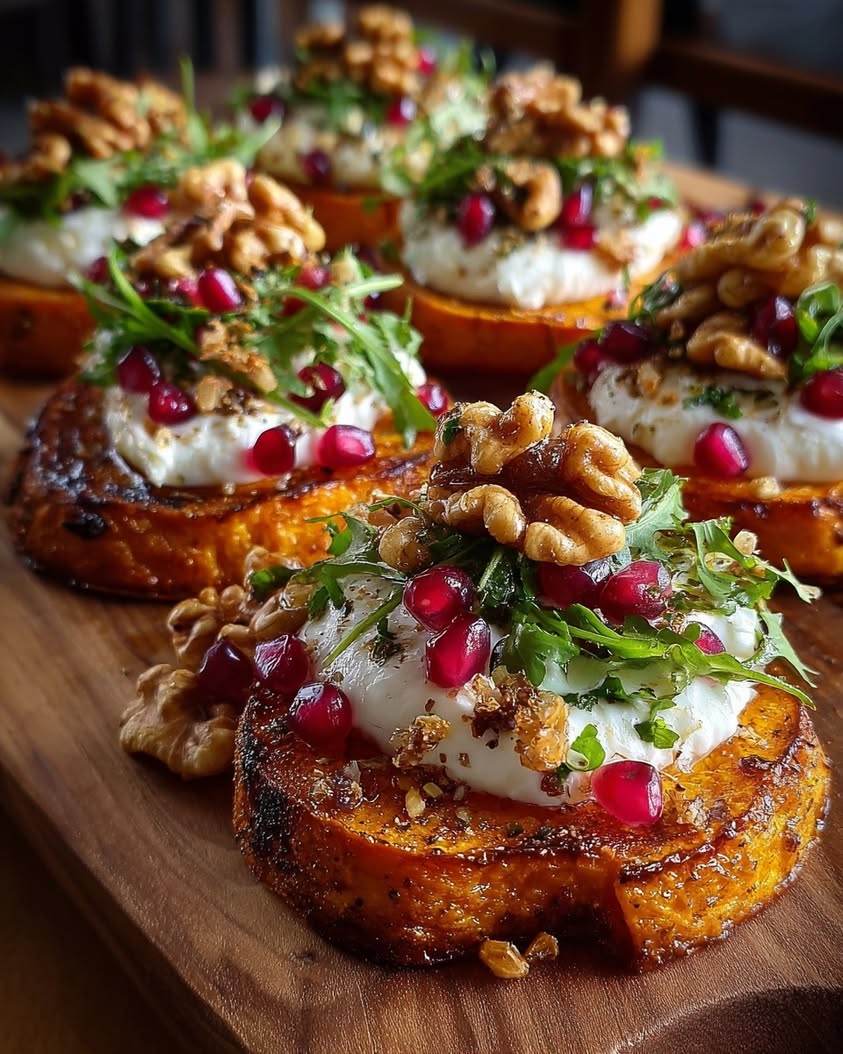
Sweet Potato Rounds with Burrata, Pomegranate & Walnut Crunch: An Elegant Appetizer
Imagine a dish that perfectly captures the essence of a holiday gathering on a single, beautiful plate. This recipe for Sweet Potato Rounds with Burrata, Pomegranate, and Walnut Crunch does exactly that. It transforms simple, earthy sweet potatoes into elegant canvases for a symphony of luxurious textures and vibrant flavors. Consequently, this appetizer is not just food; it’s a conversation starter, a centerpiece that promises to wow your guests from the very first glance. The combination of creamy, cool burrata with the warm, caramelized sweet potato creates a delightful temperature contrast that is utterly irresistible.
Moreover, this dish is a masterclass in balancing sweet, savory, creamy, and crunchy elements in every single bite. The natural sweetness of the roasted sweet potato rounds forms a perfect foundation. Then, the rich and tangy burrata cheese adds a luxurious creaminess that melts in your mouth. Finally, the tart pop of pomegranate arils and the savory, spiced crunch of walnuts tie everything together with a festive flair. Ultimately, this recipe proves that impressive entertaining food doesn’t have to be complicated or time-consuming.
Furthermore, the visual appeal of these Sweet Potato Rounds with Burrata, Pomegranate, and Walnut Crunch is undeniable. The vibrant orange of the potato, the snowy white of the cheese, the jewel-like red of the pomegranate, and the deep brown of the walnuts create a stunning color palette. This dish looks as spectacular as it tastes, making it ideal for special occasions, holiday parties, or even a luxurious weekend treat. It’s a versatile recipe that feels both rustic and refined, comforting and sophisticated all at once.
Quick Recipe Highlights
- Flavor Profile: This dish offers a complex and harmonious blend. You experience the earthy sweetness of roasted sweet potato, the rich tang of creamy burrata, the bright acidity from pomegranate, and the warm, savory spice of the walnut crunch. Additionally, a drizzle of balsamic glaze or honey adds a final layer of sweet-and-sour depth that brings all the components together perfectly.
- Texture: The texture journey is equally exciting. You get the tender, almost velvety flesh of the sweet potato round. Then, you encounter the luscious, soft give of the burrata. Next, there’s the juicy burst of the pomegranate seeds. Finally, the recipe finishes with the satisfying, coarse crunch of the toasted, spiced walnuts, creating a truly dynamic eating experience in every single bite.
- Aroma: As these Sweet Potato Rounds roast, your kitchen fills with the comforting, caramelized scent of cooking sweet potatoes. Meanwhile, toasting the walnuts with rosemary and spices releases warm, woody, and aromatic notes. Upon assembly, the fresh, slightly floral scent of the pomegranate seeds cuts through the richness, promising a fresh and vibrant final dish.
- Visual Appeal: This appetizer is a feast for the eyes. The circular sweet potato bases provide a neat, uniform canvas. The torn, cloud-like burrata offers beautiful texture, while the scattered ruby-red pomegranate arils look like edible jewels. The rustic walnut crunch adds depth and contrast, making the plate look professionally composed and incredibly inviting.
- Skill Level Needed: This is a fantastically accessible recipe. Fundamentally, it requires only basic skills like slicing, roasting, and simple assembly. There is no intricate knife work or complex techniques involved. Therefore, it’s perfect for novice cooks wanting to impress, as well as seasoned chefs looking for a quick, beautiful dish.
- Special Equipment: You need only standard kitchen tools. A sharp knife and cutting board prepare the potatoes and walnuts. A sturdy baking sheet is essential for roasting the Sweet Potato Rounds. Finally, a small skillet toasts the walnut crunch. No fancy gadgets or appliances are required, making this recipe very approachable.
Recipe Overview
- Difficulty Level: We classify this Sweet Potato Rounds with Burrata, Pomegranate, and Walnut Crunch recipe as “Easy” for several clear reasons. The steps are sequential and simple: slice, roast, toast, and assemble. There is no finicky dough to make or delicate sauces to emulsify. Consequently, the margin for error is very small, and success is almost guaranteed even on your first attempt.
- Category: This dish shines brightest as a stunning appetizer or a sophisticated side dish. It can also anchor a light lunch or brunch when served with a simple green salad. Furthermore, the components are naturally gluten-free and vegetarian, making it a versatile option for diverse dietary needs at any gathering.
- Cuisine: This recipe draws inspiration from modern American and Mediterranean culinary traditions. The use of burrata is distinctly Italian, while pomegranates have deep roots in Middle Eastern cuisine. The sweet potato, a New World staple, brings it all together in a contemporary, fusion-style dish that celebrates global, seasonal ingredients.
- Cost: This is a moderately priced appetizer that delivers luxury on a budget. Sweet potatoes and walnuts are typically inexpensive. Pomegranates and burrata are the splurge items, but a little goes a long way. Overall, you can create this impressive platter for a fraction of the cost of a similar dish at a restaurant.
- Season: This recipe is perfect for fall and winter, when sweet potatoes are at their peak and pomegranates are in season. However, its bright flavors also make it a wonderful transition dish for early spring. Ultimately, it feels particularly festive and fitting for holiday tables from Thanksgiving through New Year’s.
- Occasion: These Sweet Potato Rounds are ideal for holiday parties, cocktail gatherings, or a fancy starter for a dinner party. They also make a special addition to a festive brunch or a vegetarian Thanksgiving spread. Basically, any event where you want to serve something beautiful, delicious, and conversation-worthy is the right occasion.
Why You’ll Love This Recipe
First and foremost, the taste and texture combination is absolutely magical. Each component of these Sweet Potato Rounds with Burrata, Pomegranate, and Walnut Crunch plays a specific role. The sweet potato provides a hearty, caramelized base. The burrata delivers an unforgettable creamy richness. Meanwhile, the pomegranate seeds offer a refreshing, tart pop that cuts through the fat. Finally, the savory walnut crunch adds a necessary textural contrast and depth of flavor that makes you want to reach for another round immediately.
Secondly, the convenience factor is a major win. Despite its elegant appearance, this recipe comes together with minimal active effort. You simply slice the potatoes, toss them in the oven, and prepare the topping while they roast. The assembly is intuitive and fast. Therefore, you can spend less time in the kitchen and more time with your guests, which is the ultimate goal of any good entertaining recipe.
Thirdly, let’s discuss the nutritional advantages. Sweet potatoes are a powerhouse of beta-carotene and fiber. Pomegranates are loaded with antioxidants and vitamin C. Walnuts provide healthy fats, protein, and omega-3s. Even the burrata, while indulgent, offers calcium and protein. So, while this dish feels like a treat, it’s built on a foundation of wholesome, nutrient-dense ingredients that are good for you.
Furthermore, the social and entertaining value of this dish is incredibly high. A platter of these beautiful Sweet Potato Rounds becomes an instant focal point. Guests will gravitate toward it, asking questions and complimenting the presentation. It’s a shareable, finger-friendly appetizer that encourages interaction. Consequently, it sets a celebratory and welcoming tone for any event, making you look like a culinary rockstar with surprisingly little stress.
Finally, the cost-effectiveness and accessibility are key benefits. You likely have many of the core spices and olive oil already in your pantry. The main ingredients are readily available at most grocery stores year-round. By making these Sweet Potato Rounds with Burrata, Pomegranate, and Walnut Crunch at home, you recreate a restaurant-quality appetizer for a fraction of the price. This allows you to entertain more lavishly without blowing your budget.
Historical Background and Cultural Significance
The story of this dish is a modern tale of ingredient fusion. Sweet potatoes, native to Central and South America, have been a global staple for centuries. Burrata, however, is a relatively recent Italian invention from the early 20th century in Puglia. Pomegranates, one of the oldest known fruits, hold symbolic significance in many cultures, from Greek mythology to Persian tradition. This recipe beautifully marries these diverse histories on one plate.
Culturally, each component carries weight. In the American South, sweet potato rounds might be served as a side. In Italy, burrata is a celebratory cheese, often served simply with bread and tomatoes. In the Middle East and Armenia, pomegranate seeds are a ubiquitous garnish symbolizing prosperity and abundance. By combining them, this recipe creates a new tradition that honors each ingredient’s heritage while creating something entirely fresh and contemporary.
The evolution of this specific recipe likely stems from the modern trend toward “small plate” dining and vegetable-forward dishes. As chefs and home cooks sought to create more visually striking and texturally complex vegetarian options, the logical pairing of sweet and creamy elements emerged. The addition of a crunchy, savory nut topping and a bright, acidic fruit is a classic culinary technique for balance, applied here to accessible, popular ingredients.
Regional variations of this concept are endless. In the Mediterranean, one might use roasted eggplant rounds with a tahini drizzle instead of sweet potato. In Mexico, the walnuts could be swapped for pepitas with chili powder. Some versions might skip the cheese for a vegan take using a cashew cream. The core formula—a sturdy roasted base, a creamy element, a juicy fruit, and a crunchy nut—is wonderfully adaptable across cuisines and personal tastes.
Ingredient Deep Dive
Sweet Potatoes: Botanically distinct from yams, sweet potatoes are tuberous root vegetables prized for their sweet, starchy flesh. They originated in Central or South America over 5,000 years ago and were later spread globally by European explorers. Nutritionally, they are an exceptional source of beta-carotene (which converts to Vitamin A), fiber, Vitamin C, and potassium. When selecting, choose firm potatoes with smooth, unblemished skin; avoid any with soft spots or sprouts. Store them in a cool, dark, well-ventilated place—not the refrigerator, as cold temperatures can alter their texture and flavor.
Burrata Cheese: Burrata, meaning “buttered” in Italian, is a fresh cheese originating from Apulia in the early 1900s. It consists of a delicate mozzarella pouch filled with stracciatella (shredded mozzarella) and cream, resulting in an incredibly rich, soft interior. It’s a source of calcium and protein but is higher in fat due to the cream. Always seek the freshest burrata possible, often sold in a liquid-filled container. It is highly perishable and should be used by the date on the package, kept refrigerated, and served at room temperature for the best texture and flavor.
Pomegranate: This ancient fruit, native to Iran and the Himalayas, has been cultivated for millennia and is rich in symbolism across cultures, representing life, fertility, and abundance. The edible arils (seeds) are packed with antioxidants, particularly punicalagins and anthocyanins, vitamin C, and fiber. Choose a pomegranate that feels heavy for its size with taut, unbroken skin. To easily remove the arils, score and submerge it in a bowl of water; the white pith will float while the seeds sink. Store arils in an airtight container in the fridge for up to 5 days or freeze them.
Walnuts: Walnuts are one of the oldest tree foods, dating back to 7000 B.C. in Persia. They are celebrated for their brain-like shape and corresponding nutritional benefits for cognitive health, thanks to their high concentration of DHA, an Omega-3 fatty acid. They also provide protein, fiber, and magnesium. For the best flavor, always buy raw walnuts and toast them yourself to unlock their oils and deepen their taste. Store walnuts in an airtight container in the refrigerator or freezer to prevent their natural oils from turning rancid.
Common Mistakes to Avoid
- Cutting the Rounds Too Thin or Thick: Slices under 1/2-inch will become too crisp and lose their soft interior, while slices over 3/4-inch may not cook through evenly and will be difficult to eat as a finger food. Aim for consistent 1/2-inch to 3/4-inch thickness for the perfect balance of tender center and caramelized edges.
- Overcrowding the Baking Sheet: Placing the sweet potato rounds too close together causes them to steam instead of roast. This prevents the beautiful caramelization and slightly crispy edges that are crucial for texture and flavor. Always give them space, using two sheets if necessary, to ensure proper air circulation and browning.
- Skipping the Walnut Toast: Adding raw walnuts to the topping misses a critical flavor opportunity. Toasting walnuts intensifies their nutty taste, adds crunch, and helps the spices adhere. Simply tossing them in the skillet for a few minutes until fragrant makes a world of difference in the final Walnut Crunch component.
- Using Cold Burrata: Serving burrata straight from the refrigerator dulls its flavor and makes its texture too firm. The luxurious, creamy experience is best achieved by letting the cheese sit at room temperature for 20-30 minutes before tearing and placing it on the warm Sweet Potato Rounds. This allows its full, milky flavor to shine.
- Adding the Pomegranate Too Early: If you assemble the entire platter too far in advance, the pomegranate arils can bleed their color and become soggy. For the best visual appeal and juicy pop, scatter the pomegranate seeds over the assembled rounds just before serving to maintain their vibrant color and firm texture.
- Underseasoning the Sweet Potatoes: Sweet potatoes need ample seasoning to balance their natural sugar. Don’t be shy with the salt and pepper before roasting. A generous seasoning not only enhances the potato itself but also creates a flavorful base that complements the milder burrata and sweet-tart pomegranate.
- Burning the Spices in the Walnut Crunch: When toasting the walnuts with rosemary and spices like cumin or chili powder, add the spices in the last 30-60 seconds of toasting. Adding them too early can cause them to burn in the hot oil, resulting in a bitter, acrid flavor that will overpower the entire dish.
- Neglecting the Final Drizzle: The recipe often calls for a finish of balsamic glaze, honey, or good olive oil. This is not just decoration; it adds a necessary layer of acidity or sweetness that ties all the disparate elements together. Skipping it leaves the flavor profile incomplete, so don’t forget this final, unifying touch.
Essential Techniques
Uniform Slicing: Achieving even slices is the first critical technique for perfect Sweet Potato Rounds. Use a sharp chef’s knife and steady pressure. Consistent thickness ensures every round cooks at the same rate, preventing some from being undercooked while others burn. If you have a mandoline, you can use it carefully for perfectly even rounds, but a good knife works perfectly. The visual cue for success is a stack of rounds that look like identical coins.
High-Heat Roasting: Roasting at a high temperature (around 400°F to 425°F) is non-negotiable. This technique caramelizes the natural sugars in the sweet potatoes, creating a delicious browned exterior and a tender, fluffy interior. The key is preheating your baking sheet in the oven so the rounds sizzle on contact, which jumpstarts the browning process. You’ll know it’s working when you see golden-brown edges and caramelized spots on the flat surfaces.
Toasting Nuts and Spices: Toasting is a dry-heat technique that transforms walnuts from bland to deeply flavorful. Use a dry skillet over medium heat, stirring constantly, until they become fragrant and slightly darker. The pitfall is walking away, as they can burn in seconds. For the spices, add them at the very end off direct heat; the residual warmth will toast them without burning. The visual cue is a rich aroma and a slightly oily sheen on the nuts.
Tearing vs. Slicing Burrata: The technique of tearing burrata by hand is important for both presentation and texture. Using a knife creates clean, less interesting edges and can cause the creamy interior to spill out uncontrollably. Tearing it creates rustic, craggy pieces that hold the creamy filling better and provide more surface area for the toppings to cling to, enhancing every bite.
Pro Tips for Perfect Sweet Potato Rounds with Burrata, Pomegranate & Walnut Crunch
First, for extra-crispy edges, toss your sweet potato rounds in a tablespoon of cornstarch along with the oil and seasoning before roasting. The cornstarch draws out moisture and promotes superior browning and crispiness on the outside while the inside stays tender.
Second, infuse your olive oil. Before drizzling it on the potatoes or finishing the dish, gently warm olive oil with a sprig of rosemary and a crushed garlic clove. Let it cool slightly, then strain. This adds a subtle, aromatic layer of flavor to every component.
Third, make a big batch of the spiced Walnut Crunch and store it in the freezer. It’s a fantastic topping for salads, oatmeal, or yogurt, saving you time when you want to whip up this appetizer again or add crunch to other meals.
Fourth, if your sweet potatoes are very large in diameter, consider cutting half-moons instead of full rounds. This makes them easier to eat in one bite and can help with plating on a long board or platter.
Fifth, add a fresh herb garnish just before serving. While rosemary is in the crunch, a final sprinkle of finely chopped fresh parsley, chives, or even mint adds a bright green color and a burst of fresh flavor that elevates the dish.
Sixth, for a smoother eating experience, consider smashing the roasted sweet potato rounds slightly with a fork before adding the burrata. This creates little wells that cradle the cheese and toppings, preventing them from sliding off.
Seventh, balance your acidity. If your pomegranate seeds are very sweet, add a tiny squeeze of lemon juice over the assembled dish. Conversely, if your balsamic glaze is very tart, opt for a honey drizzle instead to find the perfect sweet-savory balance.
Eighth, warm your serving platter. Placing the hot sweet potato rounds on a cold plate causes them to cool down too quickly. A slightly warm platter keeps the dish at the ideal temperature for serving, ensuring the burrata melts just the right amount.
Variations and Adaptations
Regional Variations: Take this recipe on a world tour with simple swaps. For a Greek twist, use roasted eggplant rounds, top with crumbled feta instead of burrata, and add Kalamata olives. For a Mexican-inspired version, season the sweet potatoes with chili and cumin, use cotija cheese, and top with toasted pepitas and a lime crema.
Seasonal Adaptations: While perfect for fall, this dish adapts year-round. In spring, use roasted asparagus spears as the base. In summer, try thick slices of grilled peach or heirloom tomato. In winter, roasted beet rounds or parsnip rounds make a beautiful, earthy alternative to sweet potato.
Dietary Modifications: For a vegan version, replace burrata with a dollop of cashew cream or a store-bought vegan mozzarella ball. For a nut-free Walnut Crunch, use toasted sunflower or pumpkin seeds. To make it Whole30 or Paleo, omit the cheese and ensure your drizzle is compliant (like a date glaze).
Flavor Variations: Experiment with the spice profile in the crunch. Swap rosemary for thyme or sage. Add a pinch of smoked paprika or cayenne for heat. For a sweeter note, add a touch of maple syrup or brown sugar to the walnuts as they toast (they will become sticky and clumpy, which is delicious).
Texture Modifications: If you prefer a smoother component, blend the roasted sweet potato with a touch of cream to create a silky purée, then pipe or spoon it onto crostini before topping. For extra crunch, add crispy fried shallots or onions on top of the walnut mixture.
Presentation Alternatives: Instead of individual rounds, create a deconstructed salad. Toss roasted sweet potato chunks with arugula, torn burrata, pomegranate, and the walnut crunch, then drizzle with dressing. Alternatively, serve the components in separate bowls on a board and let guests build their own bites.
Serving and Presentation Guide
Plating Techniques: For a family-style presentation, arrange the Sweet Potato Rounds slightly overlapping on a large wooden board or a sleek slate platter. Alternatively, for a more formal appetizer course, place one or two rounds on individual small plates, artfully draping the burrata and scattering the toppings. The key is to create height and dimension, not just a flat arrangement.
Garnishing Ideas: Beyond the core ingredients, final garnishes add polish. A light flake of sea salt (like Maldon) over the burrata adds texture and highlights the cheese. Microgreens or delicate edible flowers introduce a fresh, elegant touch. A final zigzag of your chosen glaze or high-quality olive oil in a contrasting color creates visual movement on the plate.
Traditional Accompaniments: While stunning on its own, this dish pairs beautifully with other items. Serve it alongside a board of cured meats and olives for a fuller antipasto spread. A simple, bitter green salad with a lemon vinaigrette balances the richness. For brunch, offer it with prosciutto-wrapped melon or a frittata.
Modern Serving Suggestions: For a cocktail party, spear each assembled round with a decorative toothpick or small skewer for easy grabbing. Alternatively, set up a DIY station where guests can top their own roasted sweet potato round with burrata and an array of toppings like different nuts, seeds, and fruit compotes.
Temperature Considerations: This dish is best served immediately after assembly while the sweet potato rounds are still warm (not piping hot) and the burrata is at cool room temperature. This maximizes the delightful contrast. If you must hold it, keep the components separate and assemble just before guests arrive.
Portion Control Tips: As an appetizer, plan for 2-3 rounds per person. If serving as a side dish or part of a larger spread, 1-2 rounds per person is sufficient. Remember, burrata is rich, so a little goes a long way. When scaling for a crowd, you can make slightly smaller rounds to yield more pieces from the same number of potatoes.
Wine and Beverage Pairing
Wine Pairings: The sweet, creamy, and earthy notes of this dish call for wines with good acidity to cut through the richness. A crisp, unoaked Chardonnay or a French Chablis complements the burrata beautifully. Alternatively, a light-bodied, fruity red with low tannins, like a Pinot Noir or a Beaujolais, pairs wonderfully with the sweet potatoes and walnuts. For a festive sparkler, a dry Prosecco or Cava offers cleansing bubbles that refresh the palate between bites.
Non-Alcoholic Alternatives: Craft a special drink to match. A sparkling apple cider provides autumnal sweetness and effervescence. A pomegranate spritzer (pomegranate juice mixed with soda water and a squeeze of lime) echoes the fruit in the dish. For a warmer option, a lightly sweetened ginger tea or a chai latte complements the warm spices in the walnut crunch.
Coffee/Tea Pairings: If serving for brunch, coffee and tea are excellent. A medium-roast coffee with nutty or chocolatey notes won’t clash with the savory elements. For tea, a smoky Lapsang Souchong can stand up to the robust flavors, or a delicate Darjeeling provides a floral contrast. Avoid overly bitter or acidic brews that might fight with the dish’s balance.
Temperature Considerations: Serve white wines and sparkling options well-chilled, between 45-50°F. Red wines should be served slightly cooler than room temperature, around 55-60°F, to keep them refreshing. Non-alcoholic spritzers should be ice-cold, while teas and coffees should be hot but not scalding to avoid overwhelming delicate flavors.
Serving Suggestions: Always offer water alongside any beverage pairing to cleanse the palate. When serving wine, use appropriate glassware to enhance the aroma and taste. For a large party, consider offering one clear white and one light red option to cater to different preferences, ensuring both will pair well with the Sweet Potato Rounds.
Storage and Shelf Life
Storage Methods: This dish is best enjoyed immediately. However, you can store components separately for up to 2 days. Keep roasted and cooled sweet potato rounds in an airtight container in the refrigerator. Store the toasted walnut crunch at room temperature in a sealed jar. Keep burrata in its original liquid in the fridge, and pomegranate arils in a separate container in the fridge.
Temperature Requirements: The assembled dish should never be left at room temperature for more than 2 hours due to the dairy in the burrata. All components except the walnut crunch require refrigeration. The walnut crunch can be kept in a cool, dark pantry but will stay crispier in the fridge if storing for more than a week.
Container Recommendations: Use shallow containers for the sweet potato rounds to prevent them from steaming and becoming soggy. A mason jar is perfect for the dry walnut crunch. For the burrata, keep it in its original tub with the liquid; if that’s gone, submerge it in a container of fresh, cold water.
Signs of Spoilage: Discard the burrata if it develops a sour smell, an off-color, or excessive liquid separation. Sweet potato rounds that become slimy or moldy should be thrown out. The walnut crunch is likely spoiled if it smells stale, rancid, or has any visible mold. Fresh pomegranate seeds will become mushy and dull in color when past their prime.
Reheating Instructions: Only reheat the sweet potato rounds. Place them on a baking sheet in a single layer and warm in a 350°F oven for 5-10 minutes until heated through. Avoid the microwave, as it will make them rubbery. Assemble with the cold/fresh components only after reheating.
Freezing Guidelines: Freezing is not recommended for the assembled dish or for burrata. You can freeze roasted sweet potato rounds on a parchment-lined sheet, then transfer to a freezer bag for up to 3 months. Reheat from frozen in the oven. Pomegranate arils freeze beautifully on a tray before bagging; use them frozen as a garnish.
Make Ahead Strategies
Prep Timeline: You can prepare nearly every component 1-2 days in advance. Day 1: Toast the walnut crunch and store it at room temperature. Remove the pomegranate arils and refrigerate them. Day of: Roast the sweet potato rounds up to 2 hours before your event. Let the burrata come to room temperature 30 minutes before serving. Final assembly should happen just before guests arrive.
Storage Between Steps: The key to successful make-ahead is proper storage. Let the roasted sweet potato rounds cool completely on a wire rack before placing them in a container. This prevents condensation from making them soggy. Layer them between parchment paper if stacking is necessary. The walnut crunch stays crisp in a tightly sealed glass jar.
Quality Impact Assessment: Making components ahead has minimal impact on flavor and a positive impact on your stress level. The walnut crunch may soften slightly but will still be delicious. The sweet potato rounds may lose a bit of their initial crisp edge but will re-crisp nicely in a quick oven warm-up. The fresh elements (burrata, pomegranate) must be done day-of for peak quality.
Assembly Tips: For quick assembly, set up a station: a platter, the warm rounds, the burrata (torn and ready in a bowl), the pomegranate seeds, the walnut crunch, and your finishing drizzle. This assembly-line approach takes just minutes and ensures every round is built fresh and beautiful right before serving.
Reheating Guidelines: If you roasted the rounds ahead and refrigerated them, reheat them on a baking sheet in a 375°F oven for 8-10 minutes. You want them warm, not hot, so they don’t melt the burrata too aggressively. Let them cool for 2-3 minutes before assembling.
Fresh Element Additions: The final flourish of fresh herbs (like chopped chives or parsley) should always be added at the very end, after the drizzle. This keeps them vibrant and prevents wilting. Any delicate greens used as a platter base (like arugula) should also be placed just before serving to avoid wilting from the warmth of the potatoes.
Scaling Instructions
Halving the Recipe: Halving is straightforward for smaller gatherings. Use one medium sweet potato, half a ball of burrata, and reduce other toppings proportionally. Use a smaller baking sheet to avoid overcrowding. The cook time may decrease by a few minutes, so start checking the sweet potato rounds at the 15-minute mark for doneness.
Doubling or Tripling: For a large party, you can easily double or triple this recipe. The key is to roast the sweet potato rounds in batches on multiple oven racks, rotating the sheets halfway through for even cooking. Do not stack the rounds on the sheet; use more sheets as needed. Mix the walnut crunch in a larger bowl. Consider presenting the components on a very large board for a dramatic, abundant display.
Equipment Adjustments: Scaling up requires planning. Ensure you have enough baking sheets (lining them with parchment prevents sticking and speeds cleanup). You may need a larger skillet to toast the increased volume of walnuts, or toast them in batches. Have a giant platter or multiple serving boards ready for presentation.
Timing Modifications: While prep time scales linearly, roasting time may increase slightly if your oven is very full, as it affects air circulation. Add an extra 5-10 minutes to the roasting time and rely on visual cues (golden brown edges, tender flesh) rather than just the timer. Start checking early to avoid burning.
Storage Considerations: If making a huge batch, remember that assembled rounds do not store well. It’s better to have all components ready and assemble in waves throughout your event. Keep a tray of warm rounds in a low oven (200°F) and bring out fresh platters as needed to ensure every guest gets a perfect bite.
Nutritional Deep Dive
Macro Breakdown: A serving of these Sweet Potato Rounds provides a balanced mix of macronutrients. The sweet potatoes and pomegranate offer complex carbohydrates and fiber for sustained energy. The burrata and walnuts contribute healthy fats and a moderate amount of protein. This combination helps stabilize blood sugar and promotes satiety, making it a satisfying appetizer that won’t leave you overly full before the main course.
Micronutrient Analysis: This dish is a micronutrient powerhouse. Sweet potatoes deliver a massive dose of Vitamin A (as beta-carotene), essential for vision and immunity. Pomegranate seeds are rich in Vitamin C and potent antioxidants like punicalagins. Walnuts provide Vitamin E, magnesium, and plant-based omega-3s (ALA). Burrata adds calcium for bone health. Together, they offer a wide spectrum of vitamins and minerals.
Health Benefits: The combined ingredients support overall wellness. The antioxidants combat oxidative stress and inflammation. The fiber promotes digestive health and gut microbiome diversity. The healthy fats support brain function and cardiovascular health. The low glycemic index of sweet potatoes (when not overcooked) makes this a good option for blood sugar management, especially when balanced with the fat and protein from the cheese and nuts.
Dietary Considerations: This recipe is naturally gluten-free and vegetarian. It can be adapted for many other diets with simple swaps (see Dietary Adaptations section). For those monitoring sodium, control the amount of added salt. For fat-conscious diets, use a lighter hand with the burrata or choose a part-skim mozzarella. The dish is not inherently low-carb, but the carbs present are from high-fiber, nutrient-dense sources.
Portion Analysis: As an appetizer, a serving of 2-3 rounds is a reasonable portion that provides taste and satisfaction without overindulgence. Be mindful that burrata is calorie-dense, so the portion size of cheese is key. A little goes a long way in terms of flavor and creaminess, so you don’t need to overload each round to achieve the desired effect.
Weight Management Tips: This dish can fit into a weight-conscious diet due to its high fiber and protein content, which promote fullness. To lighten it, you can reduce the oil used for roasting by using an oil spray, use a smaller amount of burrata, or increase the ratio of pomegranate and walnut crunch to add volume without excessive calories. The key is mindful assembly.
Dietary Adaptations
Gluten-Free: This recipe is naturally gluten-free as written. Simply ensure that any pre-made spice{“success”:true,”message”:”Recipe created successfully”,”post_id”:8197,”tasty_recipe_id”:8197,”shortcode”:” Print
Sweet Potato Rounds with Burrata, Pomegranate & Walnut Crunch
Description
A vibrant, elegant appetizer featuring roasted sweet potato rounds topped with creamy burrata, tart pomegranate arils, and a crunchy walnut-herb topping.
Ingredients
For the Crust:
- 2 large sweet potatoes, sliced into 1/2-inch rounds
- 2 tablespoons olive oil
- 1/2 teaspoon smoked paprika
- Salt and black pepper to taste
- 8 ounces burrata cheese, at room temperature
- 1/2 cup pomegranate arils
- 1/2 cup walnuts, toasted and roughly chopped
- 2 tablespoons fresh parsley, chopped
- 1 tablespoon honey
- 1 teaspoon lemon zest
Instructions
1. Prepare the Crust:
- Preheat oven to 400°F (200°C). Toss sweet potato rounds with olive oil, smoked paprika, salt, and pepper. Arrange in a single layer on a baking sheet.
- Roast for 20-25 minutes, flipping halfway, until tender and lightly browned. Let cool slightly.
- In a small bowl, mix walnuts, parsley, and lemon zest. Place a spoonful of burrata on each sweet potato round.
- Top with pomegranate arils and walnut crunch. Drizzle with honey and serve immediately.
Notes
You can customize the seasonings to taste.

I’m Billy, a classically trained culinary school graduate from The Culinary Institute of America with over 12 years in the restaurant industry and over 19 years of cooking experience.