
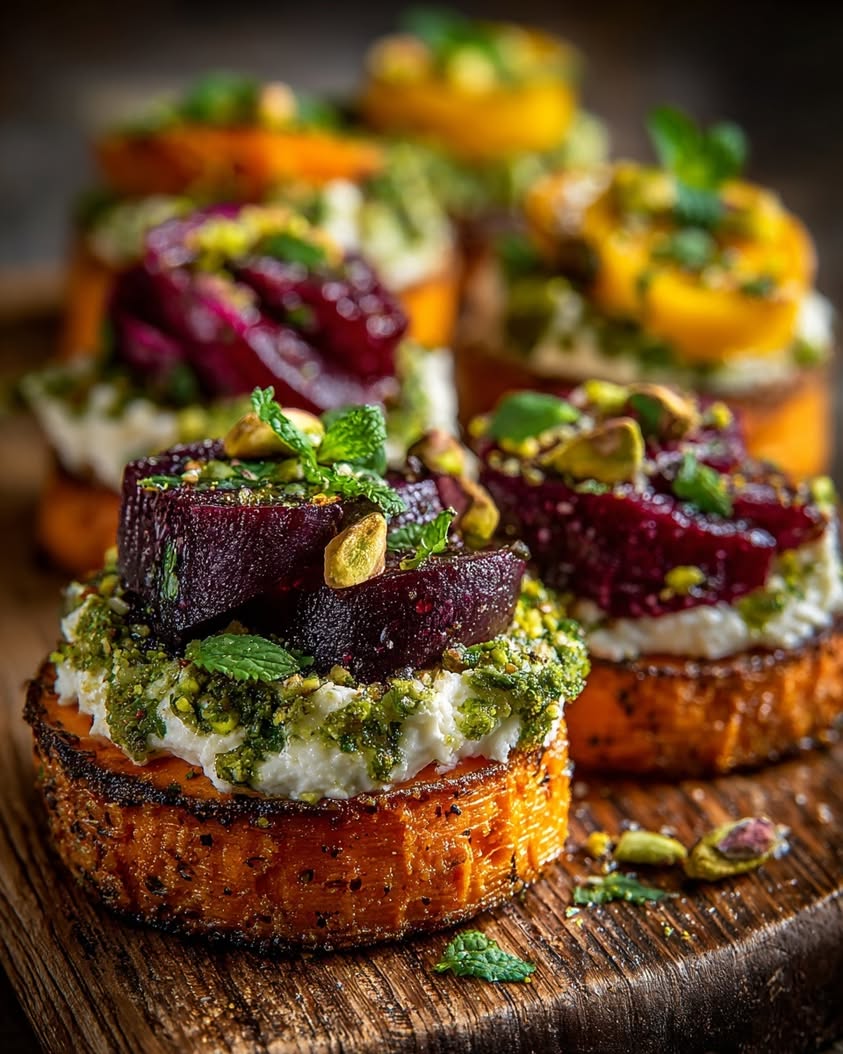
Sweet Potato Rounds with Whipped Goat Cheese, Roasted Beets & Mint-Pistachio Pesto: A Vibrant Appetizer Masterpiece
Imagine a dish that looks like a modern art painting and tastes like a symphony of earthy, creamy, and fresh flavors. That is exactly what you get with these Roasted Sweet Potato Rounds with Pesto. This recipe transforms simple, wholesome ingredients into an elegant and impressive appetizer or light meal. Moreover, each component brings its own unique character to the plate, creating a delightful culinary experience. Ultimately, these rounds are a celebration of color, texture, and sophisticated simplicity.
The journey begins with perfectly roasted sweet potato rounds, which become tender and caramelized. Next, they are topped with a cloud of tangy whipped goat cheese. Following that, jewel-like roasted beets add a burst of earthy sweetness. Finally, a vibrant mint-pistachio pesto ties everything together with its herbal brightness and nutty crunch. Consequently, every bite offers a complex and satisfying harmony. This dish is not just food; it is a conversation starter and a guaranteed crowd-pleaser for any gathering.
Quick Recipe Highlights
- Flavor Profile: These Roasted Sweet Potato Rounds with Pesto masterfully balance earthy sweetness from the roots, tangy creaminess from the cheese, and a bright, herbal punch from the pesto. The combination is both sophisticated and deeply satisfying.
- Texture: You will enjoy a wonderful contrast between the tender, slightly crisp sweet potato, the velvety whipped goat cheese, the firm bite of roasted beets, and the crunchy pistachios in the pesto. This variety makes each mouthful exciting.
- Aroma: As the sweet potatoes and beets roast, your kitchen will fill with a warm, caramelized scent. Meanwhile, the fresh mint and lemon zest in the pesto add a layer of invigorating, garden-fresh fragrance that is utterly irresistible.
- Visual Appeal: This dish is a feast for the eyes with its stunning color palette: vibrant orange sweet potatoes, deep magenta beets, snowy white cheese, and emerald green pesto. It is naturally beautiful and requires minimal fuss to plate elegantly.
- Skill Level Needed: This is an accessible recipe for most home cooks. It involves straightforward techniques like roasting, blending, and whipping. Therefore, even beginners can achieve impressive results with careful attention to timing.
- Special Equipment: You will need a good baking sheet, parchment paper, a food processor or blender for the pesto, and a hand mixer or whisk for the goat cheese. Fortunately, these are common tools found in most kitchens.
Recipe Overview
- Difficulty Level: We rate this recipe as easy because it breaks down into simple, manageable steps. While there are multiple components, they can be prepared concurrently. The techniques are foundational, making it a great project for building kitchen confidence.
- Category: This dish shines as a stunning vegetarian appetizer or a light lunch. It can also serve as a elegant side dish for a larger dinner party. Furthermore, it fits perfectly into a tapas-style spread or holiday menu.
- Cuisine: This recipe draws inspiration from modern American and Mediterranean culinary traditions. It utilizes whole, plant-forward ingredients and bright, fresh flavors characteristic of contemporary healthy cuisine with a gourmet twist.
- Cost: The ingredients are reasonably priced, especially when sweet potatoes and beets are in season. Goat cheese and pistachios are the premium items, but a little goes a long way. Overall, it is a cost-effective way to create a luxurious-tasting dish.
- Season: This recipe is fantastic year-round but truly excels in the fall and winter. That is when root vegetables are at their peak sweetness. Conversely, the fresh mint pesto brings a welcome touch of spring or summer brightness to colder months.
- Occasion: These rounds are perfect for holiday parties, baby or bridal showers, book club gatherings, or a fancy weekend brunch. They are equally suitable for a quiet date night at home or as a special treat for yourself.
Why You’ll Love This Recipe
First and foremost, the taste and texture appeal is undeniable. These Roasted Sweet Potato Rounds with Pesto deliver a complex flavor journey in every single bite. You experience the natural caramelized sugar of the sweet potato, immediately followed by the tangy creaminess of the goat cheese. Then, the earthy depth of the beet cuts through, and finally, the pesto cleanses your palate with its minty freshness. This layered experience is what makes the dish so memorable and crave-worthy. It is far more interesting than a standard appetizer.
Secondly, the convenience and preparation benefits are significant. You can roast the vegetables and make the pesto ahead of time. Consequently, assembly before serving is quick and stress-free. The components are also forgiving; sweet potato rounds are hard to overcook, and the pesto can be adjusted to your taste. This makes the recipe ideal for entertaining, as you can focus on your guests instead of last-minute kitchen chaos. It is designed for smart, efficient cooking.
Furthermore, the nutritional advantages are impressive. Sweet potatoes and beets are packed with fiber, vitamins, and antioxidants. Goat cheese offers protein and probiotics, and the pesto provides healthy fats from olive oil and nuts. This dish is a powerhouse of nutrients disguised as a decadent treat. You can feel good about serving it, knowing it fuels the body beautifully. It is the perfect example of food that is both indulgent and wholesome.
Additionally, the social and entertaining value is through the roof. This dish is a guaranteed conversation starter. Its stunning visual presentation will have guests reaching for their cameras. It caters beautifully to vegetarian diets and can be easily adapted for other dietary needs. Serving these Roasted Sweet Potato Rounds with Pesto shows thoughtfulness and culinary flair, making any host look like a seasoned pro. It elevates the simplest gathering into a special event.
Finally, the cost-effectiveness and accessibility are key. While the final product looks and tastes luxurious, the base ingredients are humble root vegetables. You can find everything at a standard grocery store. The recipe is also scalable; you can easily make a large batch for a crowd or a small one for a couple. This versatility and affordability mean you can enjoy gourmet flavors without a gourmet budget. It is an accessible way to eat beautifully.
Historical Background and Cultural Significance
The story of this dish is a modern tale of fusion and plant-forward innovation. It does not hail from one specific tradition but rather weaves together ingredients and techniques from various culinary histories. The use of roasted root vegetables as a base is a practice found in countless cultures, from the clay ovens of the Middle East to the hearths of European peasants. Meanwhile, the concept of a pesto—a pounded sauce of herbs, nuts, cheese, and oil—is deeply rooted in the Liguria region of Italy. This recipe respectfully borrows and reinterprets these timeless ideas.
Cultural importance emerges from the current global shift towards vegetable-centric eating. Dishes like these Roasted Sweet Potato Rounds with Pesto represent a contemporary food movement that celebrates vegetables as the star, not just a side. They reflect a growing desire for meals that are health-conscious, visually appealing, and ethically considerate. This appetizer fits perfectly into modern dining trends that prioritize sustainability, nutrition, and bold flavor without relying on meat. It is a dish of its time.
The evolution of the recipe follows the natural path of culinary creativity. A classic crostini might use bread, tomato, and basil. A modern interpretation swaps the bread for a nutrient-dense sweet potato round. The tomato might be replaced by a roasted beet for deeper flavor. The basil pesto evolves into a mint-pistachio version for a brighter, more unique profile. This evolution is how cuisine stays alive and relevant. Cooks constantly adapt and play with forms, textures, and flavors to create something new and exciting.
Regional variations of this concept are endless. In the American South, you might find a version with pecans in the pesto and a drizzle of sorghum. A Mediterranean take could feature oregano and kalamata olives. In the fall, a Nordic-inspired version might use roasted parsnips and a dill-pumpkin seed pesto. The framework is wonderfully adaptable. This flexibility is the true beauty of the recipe; it invites you to incorporate local ingredients and personal tastes, making it your own culinary signature.
Ingredient Deep Dive
Sweet Potatoes: Originally cultivated in Central and South America over 5,000 years ago, sweet potatoes are now a global staple. They are incredibly rich in beta-carotene, which converts to vitamin A, essential for vision and immunity. When selecting, choose firm potatoes with smooth, unblemished skin. Avoid any with soft spots or signs of sprouting. Store them in a cool, dark, well-ventilated place—not the refrigerator, as cold temperatures can alter their texture and flavor. For a substitution, try using rounds of butternut squash or even large golden beet slices.
Goat Cheese (Chèvre): With origins dating back thousands of years to the Mediterranean and Middle Eastern regions, goat cheese is one of the oldest known dairy products. It is often easier to digest than cow’s milk cheese due to different protein structures and contains beneficial fatty acids. Look for a fresh, soft log of plain goat cheese. For the best whipping texture, let it come to room temperature before blending with cream cheese. Store tightly wrapped in the fridge. For a dairy-free version, whipped almond cheese or a thick cashew cream can be a good alternative.
Beets: Beets have a long history, initially cultivated for their leafy greens; the root became popular later. They are a fantastic source of folate, manganese, and dietary nitrates, which can support blood flow and athletic performance. Choose beets that are firm, smooth, and heavy for their size, with vibrant, unwilted greens attached if possible. To store, separate the greens from the roots and keep both in plastic bags in the refrigerator’s crisper drawer. Golden beets can be used for a less messy, equally sweet variation.
Mint: Mint has been used for millennia across cultures for culinary and medicinal purposes, valued for its refreshing aroma and digestive properties. It provides a burst of freshness and contains antioxidants like rosmarinic acid. Select bunches with perky, bright green leaves without black spots or yellowing. The best way to store it is like a bouquet: trim the stems and place them in a glass of water in the fridge, loosely covered with a bag. If mint isn’t your favorite, basil, parsley, or even arugula can create a different but delicious pesto.
Pistachios: Pistachios are one of the oldest flowering nut trees, beloved in the Middle East and Mediterranean. They are packed with protein, fiber, and healthy fats. Their unique green color comes from antioxidants. For the pesto, use unsalted, raw pistachios for the best flavor control. You can toast them lightly for a deeper nuttiness. Store nuts in an airtight container in the freezer to prevent their oils from going rancid. For substitutions, walnuts, pine nuts, or even sunflower seeds work wonderfully in the pesto.
Common Mistakes to Avoid
- Cutting the Sweet Potatoes Too Thin or Thick: Slices under 1/4-inch will become too crisp and can burn, while slices over 1/2-inch will not get tender in the center before the edges overcook. Aim for a consistent 1/3-inch thickness for perfect rounds that are tender inside and lightly caramelized outside.
- Overcrowding the Baking Sheet: Placing the sweet potato rounds too close together causes them to steam instead of roast. This results in soggy, limp rounds without the desirable caramelized edges. Always use two sheets if needed to ensure each round has its own space for optimal hot air circulation.
- Using Cold Goat Cheese for Whipping: Attempting to whip cold, firm goat cheese will lead to a lumpy, uneven texture. Always let the goat cheese and cream cheese sit at room temperature for at least 30 minutes before whipping. This ensures a smooth, cloud-like, spreadable consistency.
- Not Drying the Roasted Beets: After peeling roasted beets, they can be quite wet. Skipping the step of patting them dry with a paper towel adds unwanted moisture to your assembled rounds. This extra moisture can make the sweet potato soggy and dilute the flavors of the other toppings.
- Over-processing the Pesto: Blending the pesto into a completely smooth paste removes all textural interest and can make it bitter. Pulse the ingredients just until they are finely chopped and combined but still have some small bits of nut and herb for a pleasing crunch.
- Assembling Too Far in Advance: Assembling the complete rounds more than 30 minutes before serving risks a soggy base. The moisture from the cheese and pesto will seep into the sweet potato. For best results, prepare all components separately and assemble just before your guests arrive.
- Seasoning at Only One Stage: Forgetting to season each component individually results in a bland final dish. Season the sweet potatoes before roasting, taste and season the whipped goat cheese, and ensure your pesto is properly salted. Layered seasoning is the secret to deep, complex flavor.
- Using Bitter or Old Pistachios: Nuts can go rancid. Taste your pistachios before using them. If they have a sharp, bitter, or paint-like flavor, discard them. Fresh pistachios should taste mildly sweet and nutty. Rancid nuts will ruin the entire batch of pesto.
Essential Techniques
Uniform Slicing: Achieving consistent thickness for your sweet potato rounds is arguably the most critical technique. Why is it important? Because even cooking depends on it. Use a sharp chef’s knife and take your time. Alternatively, a mandoline slicer set to 1/3-inch guarantees perfect uniformity. The common pitfall is rushing and creating wedges or uneven disks. Visual cues for success are all rounds lying flat on the baking sheet with no gaps underneath, ensuring full contact with the hot surface.
High-Heat Roasting: Roasting at a high temperature (400°F or above) is essential for caramelization, not just cooking. This technique creates the Maillard reaction, which develops complex, sweet, and savory flavors on the surface of the vegetables. To master it, preheat your baking sheet in the oven, use enough oil to coat, and do not disturb the rounds too often. The pitfall is roasting at too low a temperature, which steams the vegetables. Look for golden-brown edges and slightly puckered surfaces as your visual cue for perfect roasting.
Whipping Dairy: Whipping goat cheese with cream cheese incorporates air, transforming a dense spread into a light, fluffy cloud. The importance lies in texture contrast. Start with room-temperature cheeses and use a hand mixer on medium speed until the mixture is smooth and slightly increased in volume. Over-whipping can cause separation. The visual cue is a pale, smooth, and spreadable mixture that holds a soft peak when you lift the beaters.
Emulsifying Pesto: Creating a pesto is the process of emulsifying oil into a paste of solid ingredients. Proper emulsification yields a cohesive sauce that clings to food rather than a separated, oily puddle. The key is to pulse the nuts, cheese, and herbs first, then slowly drizzle in the oil while the processor is running. The pitfall is adding all the oil at once. Success looks like a vibrant, coarse paste where the oil is fully integrated and the sauce has body.
Pro Tips for Perfect Roasted Sweet Potato Rounds with Pesto
- For extra-crisp edges on your sweet potatoes, toss the rounds in a tablespoon of cornstarch along with the oil and salt before roasting. This draws out surface moisture and creates a delightful delicate crust.
- Roast your beets on a separate small pan or foil packet. This prevents their vibrant red juice from bleeding onto and staining your sweet potato rounds, keeping the presentation pristine.
- Add a teaspoon of honey or maple syrup to the whipped goat cheese mixture. This tiny addition balances the tanginess beautifully and complements the natural sweetness of the roasted vegetables.
- When making the pesto, save a few whole pistachios and mint leaves. Chopping them finely by hand and sprinkling them on top after assembly adds a professional, textured finish that looks stunning.
- If your sweet potato rounds are done but seem a bit soft, turn off the oven and leave them inside with the door slightly ajar for 10 minutes. This helps them firm up without further cooking.
- Use a small cookie scoop or melon baller to place the whipped goat cheese onto each round. This creates a neat, uniform dollop that looks elegant and makes assembly much faster and cleaner.
- For a warm flavor note, lightly toast the pistachios in a dry skillet for 2-3 minutes before making the pesto. Let them cool completely first to avoid steaming in the food processor.
- If serving as a main component for lunch, place the assembled rounds on a bed of lightly dressed arugula or massaged kale. The greens catch any drips and turn the appetizer into a hearty salad.
Variations and Adaptations
Regional Variations: Take your Roasted Sweet Potato Rounds with Pesto on a world tour. For a Greek twist, use a feta-yogurt whip and a pesto of oregano, walnuts, and lemon. A Mexican-inspired version could feature a chipotle-lime crema and a cilantro-pumpkin seed pesto topped with pickled red onion. The basic formula is a perfect canvas for global flavors.
Seasonal Adaptations: Embrace what is fresh. In spring, use asparagus tips and a pea shoot pesto. Summer invites rounds topped with grilled zucchini and a basil-almond pesto. For a deep winter version, try roasted parsnip rounds with a rosemary-hazelnut pesto and a dollop of whipped blue cheese. The recipe is inherently flexible.
Dietary Modifications: To make this vegan, substitute the goat cheese with a whipped base of soaked cashews, lemon juice, and nutritional yeast. Use a vegan hard cheese alternative in the pesto or simply omit it. For a nut-free version, replace pistachios with toasted sunflower seeds or pepitas. Gluten-free is automatic here.
Flavor Variations: Experiment with different cheese bases. Whipped feta is saltier and brinier. Whipped ricotta is lighter and milder. For a smoky element, add a pinch of smoked paprika to the sweet potatoes before roasting. A drizzle of balsamic glaze or pomegranate molasses over the finished rounds adds a sweet-tart finish.
Texture Modifications: For a crunchier base, try using sliced roasted russet potatoes or even thick slices of roasted acorn squash. For a creamier component, mix a bit of labneh or Greek yogurt into the whipped cheese. Adding pomegranate arils or diced apple on top introduces a juicy, bursting texture.
Presentation Alternatives: Instead of individual rounds, create a large, shareable “pizza.” Spread the whipped goat cheese on one giant roasted sweet potato slab or a bed of polenta. Artfully arrange the beets and drizzle pesto over the top. Let guests slice or scoop their portions. It is dramatic and fun.
Serving and Presentation Guide
Plating Techniques: For individual servings, arrange three rounds slightly overlapping on a long rectangular plate or a small salad plate. Alternatively, for a party, use a large rustic wooden board or a sleek slate platter. Arrange the rounds in concentric circles or rows, leaving a little space between each for easy grabbing. The goal is to create a display that looks abundant and inviting but not cluttered.
Garnishing Ideas: The final garnish elevates the dish from homemade to restaurant-quality. A light sprinkle of flaky sea salt (like Maldon) adds a final burst of salinity. Microgreens, edible flowers, or a few tiny mint leaves add color and freshness. A final drizzle of high-quality extra virgin olive oil or a few cracks of black pepper adds shine and complexity.
Traditional Accompaniments: While stunning on its own, this dish pairs wonderfully with other appetizers. Serve it alongside a bowl of marinated olives, a selection of cured meats (if not strictly vegetarian), or a simple green salad. It complements soups beautifully, especially a creamy tomato or a pureed vegetable soup.
Modern Serving Suggestions: For a trendy grazing table, include these rounds among bowls of hummus, crackers, and fresh fruit. They also make an excellent passed hors d’oeuvre; use a small spoon to top each round and serve on a tray. For a sit-down dinner, plate them as a first course atop a swoosh of reduced balsamic vinegar.
Temperature Considerations: These Roasted Sweet Potato Rounds with Pesto are best served warm or at room temperature. The sweet potatoes should be warm enough to slightly soften the cheese but not hot enough to melt it into a runny mess. The pesto should be at room temperature for optimal flavor release. Avoid serving them cold from the refrigerator.
Portion Control Tips: As an appetizer, plan for 2-3 rounds per person. As a light lunch or main course, 4-5 rounds with a side salad is sufficient. If doubling the recipe for a large crowd, remember that assembly takes time; consider setting up a “build-your-own” station with all the components in separate bowls for interactive fun.
Wine and Beverage Pairing
Wine Pairings: The earthy sweetness of the vegetables and the tangy cheese call for wines with good acidity and some fruitiness. A dry Rosé from Provence is a fantastic all-around choice, bridging the gap between the red beets and green pesto. A crisp Sauvignon Blanc, especially from New Zealand, highlights the herbal mint notes. For red wine lovers, a light-bodied Pinot Noir with its red fruit and earthy undertones complements without overpowering.
Non-Alcoholic Alternatives: Sparkling water with a twist of lemon or lime cleanses the palate between bites. A ginger beer or spicy ginger ale pairs wonderfully with the sweetness of the potatoes. For a more crafted option, try a minty iced green tea or a virgin mojito, which echoes the pesto’s flavors beautifully.
Coffee/Tea Pairings: If serving these rounds at a brunch or late-morning gathering, coffee and tea are excellent. A medium-roast coffee with low acidity won’t clash with the food. For tea, a green tea like Sencha or a herbal mint tea (served after the meal) can be a refreshing, palate-cleansing finish.
Temperature Considerations: Serve white wines and rosés well-chilled (45-50°F). Red wines like Pinot Noir should be slightly cool, around 55°F. Non-alcoholic sparkling drinks should be ice-cold. The contrast between the cool beverage and the warm appetizer is part of the sensory pleasure.
Serving Suggestions: Always offer water alongside any other beverage. Provide options if possible, as flavor preferences vary. For a party, a signature cocktail like a Gin & Tonic with a mint garnish would be a sophisticated pairing that ties directly back to the mint in the pesto of your Roasted Sweet Potato Rounds.
Storage and Shelf Life
Storage Methods: Store all components separately in airtight containers in the refrigerator for best results. Place cooled sweet potato rounds in a single layer between parchment paper. Keep whipped goat cheese and pesto in their own containers with plastic wrap pressed directly onto the surface to prevent oxidation and drying out. Beets can be stored in a small bowl covered with plastic wrap.
Temperature Requirements: All components must be refrigerated at or below 40°F. Do not leave assembled rounds at room temperature for more than two hours. The dairy and fresh herbs in the pesto are perishable and require consistent cold storage to maintain food safety and quality.
Container Recommendations: Use shallow containers for the sweet potato rounds to prevent stacking and crushing. Glass jars are excellent for pesto, and a small bowl with a tight-fitting lid works for the whipped cheese. Label containers with the date to track freshness easily.
Signs of Spoilage: Discard any component that develops an off smell (sour, rancid), visible mold, or significant discoloration. If the pesto turns a dark brownish-green, it has oxidized and lost its fresh flavor, though it may still be safe. Separated cheese or pesto is usually okay to stir back together unless other spoilage signs are present.
Reheating Instructions: Only reheat the sweet potato rounds. Place them in a single layer on a baking sheet in a 350°F oven for 5-8 minutes until warmed through. Avoid the microwave, as it will make them soggy. The cheese and pesto should be served cold or at room temperature; do not heat them.
Freezing Guidelines: Freezing is not recommended for assembled rounds or the whipped cheese, as texture will suffer badly. The pesto can be frozen in an ice cube tray, then transferred to a bag for up to 3 months. Roasted sweet potato rounds can be frozen on a tray, then bagged, but will be softer upon thawing—best used in soups or hashes, not for reassembling.
Make Ahead Strategies
Prep Timeline: You can prep this dish over two days. Day 1: Roast the beets and sweet potato rounds. Let them cool completely, then store as directed. Make the pesto and store it. Day 2 (up to 4 hours before serving): Whip the goat cheese. An hour before serving, bring the pesto and cheese to room temperature. Re-warm the sweet potato rounds in the oven. Assemble just before serving.
Storage Between Steps: The key to successful make-ahead is preventing moisture buildup. Ensure roasted vegetables are completely cool before sealing containers to avoid condensation. Press plastic wrap directly on the pesto’s surface to limit air exposure. Keep the whipped cheese covered tightly. This prevents flavors from mingling prematurely and textures from degrading.
Quality Impact Assessment: Pre-roasting the vegetables has minimal impact; they may soften slightly but remain delicious. Pesto’s flavor often improves after a few hours as the ingredients meld. The whipped cheese is best made the day of, but can be done 4-6 hours ahead. Overall, strategic make-ahead actually enhances the dish by allowing flavors to develop.
Assembly Tips: When ready to assemble, have all components lined up. Use a paper towel to blot any moisture from the beets and sweet potatoes if needed. Spread or dollop the cheese, add beet pieces, then use a spoon to drizzle or dot the pesto. Work quickly to maintain the temperature and crispness of the base.
Reheating Guidelines: Only reheat the sweet potato rounds, and do so just before assembly. If the rounds have softened in the fridge, reheating in a hot oven (400°F) for 5 minutes will crisp them up again. Let them cool for a minute or two before adding the cheese so it doesn’t immediately melt and slide off.
Fresh Element Additions: If prepping the pesto a day ahead, reserve a few fresh mint leaves. Chop them and stir them into the pesto right before serving to revive its bright, fresh aroma. A final squeeze of lemon juice over the assembled rounds can also wake up all the flavors if they’ve been sitting.
Scaling Instructions
Halving the Recipe: Halving is straightforward for a smaller household. Use one medium sweet potato and one small beet. Halve all other ingredient quantities precisely. Baking time may reduce by 5 minutes, so watch closely. Use a smaller baking sheet to maintain proper spacing between the rounds. The pesto can be made in a small food processor or even chopped by hand.
Doubling or Tripling: For a large party, doubling or tripling works well. Use multiple baking sheets and rotate them in the oven halfway through cooking. You may need to roast in batches. For the pesto, you may need to blend in batches to avoid overfilling your processor. Consider using a stand mixer with the whisk attachment for large batches of whipped cheese.
Equipment Adjustments: Scaling up requires planning. Ensure you have enough baking sheets and oven space. A large-capacity food processor is essential for big batches of pesto. For the whipped cheese, a stand mixer is ideal for large quantities. Have plenty of cooling racks and storage containers ready for the increased yield.
Timing Modifications: Prep time increases linearly, but roasting time may need adjustment. With crowded ovens (multiple sheets), air circulation is reduced, potentially adding 5-10 minutes to the roasting time. Start checking for doneness a bit earlier than the recipe suggests. Assembly time will, of course, take significantly longer for 50 rounds versus 18.
Storage Considerations: When scaling up, storage logistics become important. You will need significant refrigerator space for all the separate components. Labeling becomes crucial to avoid confusion. Consider whether you have enough serving platters or boards for the final presentation. Planning the assembly line is key to efficient service.
Nutritional Deep Dive
Macro Breakdown: This dish offers a balanced macronutrient profile. The sweet potatoes and beets provide complex carbohydrates and fiber for sustained energy. The goat cheese and olive oil in the pesto contribute healthy fats and protein, which aid in satiety. Overall, it is a meal that provides lasting fullness without the heavy, sluggish feeling that can come from more processed appetizers.
Micronutrient Analysis: These Roasted Sweet Potato Rounds with Pesto are a micronutrient powerhouse. Sweet potatoes are exceptionally high in Vitamin A (as beta-carotene), vital for eye and skin health. Beets are rich in folate and potassium. The mint and pistachios add manganese and various B vitamins. Together, they support immune function, energy production, and overall cellular health.
Health Benefits: The combination of high fiber, antioxidants, and healthy fats supports heart health, digestive health, and stable blood sugar levels. The anti-inflammatory properties of the ingredients can help reduce systemic inflammation. This dish is a perfect example of how delicious food can also be powerful preventive medicine, nourishing the body from the inside out.
Dietary Considerations: Naturally gluten-free and vegetarian, this recipe fits many dietary patterns. It is relatively low in saturated fat, especially if you use a light hand with the cheese. The glycemic load is moderated by the fiber in the vegetables and the fat/protein from the toppings, making it a good option for those monitoring blood sugar when consumed in reasonable portions.
Portion Analysis: Two rounds constitute a reasonable appetizer portion, providing a good mix of carbs, fat, and protein without excessive calories. As a light meal, 3-4 rounds with a side salad is satisfying and nutritionally complete. Being mindful of the amount of whipped cheese and pesto per round helps control calorie density while maximizing flavor.
Weight Management Tips: This dish is excellent for weight management due to its high volume and fiber content, which promotes fullness. To reduce calories slightly, you can decrease the oil in the pesto by a tablespoon or use a lighter hand when applying the whipped cheese. The bulk of the dish is non-starchy vegetables, making it a nutrient-dense, lower-calorie choice for any meal.
Dietary Adaptations
Gluten-free: This recipe is naturally and inherently gluten-free. No adaptations are needed. Simply ensure that any pre-packaged ingredients like cream cheese are certified gluten-free if you have celiac disease or a severe sensitivity, as cross-contamination can sometimes occur in processing facilities.
Dairy-free: Replace the goat cheese and cream cheese with a blend of soaked raw cashews, lemon juice, nutritional yeast, and a pinch of salt, blended until super smooth. For the pesto, omit the Parmesan or use a store-bought vegan Parmesan alternative. The result is a creamy, tangy, and completely plant-based version.
Vegan: Follow the dairy-free adaptations for the cheese and pesto. Ensure you use a vegan-friendly cream cheese alternative if the cashew base isn’t preferred. All other components—sweet potatoes, beets, nuts, herbs—are plant-based. This adaptation makes the dish suitable for a fully vegan diet without sacrificing richness or flavor.
Low-carb/Keto: For a keto adaptation, replace the sweet potato rounds with thick slices of roasted radish or turnip, which have a similar texture but far fewer net carbs. Increase the fat content by adding more olive oil to the pesto and using full-fat cheeses. The beets are higher in sugar, so use them sparingly or substitute with roasted mushrooms.
Paleo: Omit the dairy cheeses. Use a whipped base made from avocado or a coconut cream mixture. Ensure the pesto contains no cheese; just herbs, nuts, olive oil, and lemon. Check that your cream cheese alternative (if using one) is free from soy and other non-Paleo ingredients. This focuses the dish on whole, unprocessed foods.
Low-FODMAP: Sweet potato is low-FODMAP in servings of 1/2 cup (about 2 rounds). Beets are also low-FODMAP in moderate amounts. Omit the garlic from the pesto entirely, as it is high in FODMAPs. Use only the green parts of scallions for a subtle onion flavor. Ensure the whipped cheese uses lactose-free cream cheese if sensitive.
Troubleshooting Guide
I’m Billy, a classically trained culinary school graduate from The Culinary Institute of America with over 12 years in the restaurant industry and over 19 years of cooking experience.