
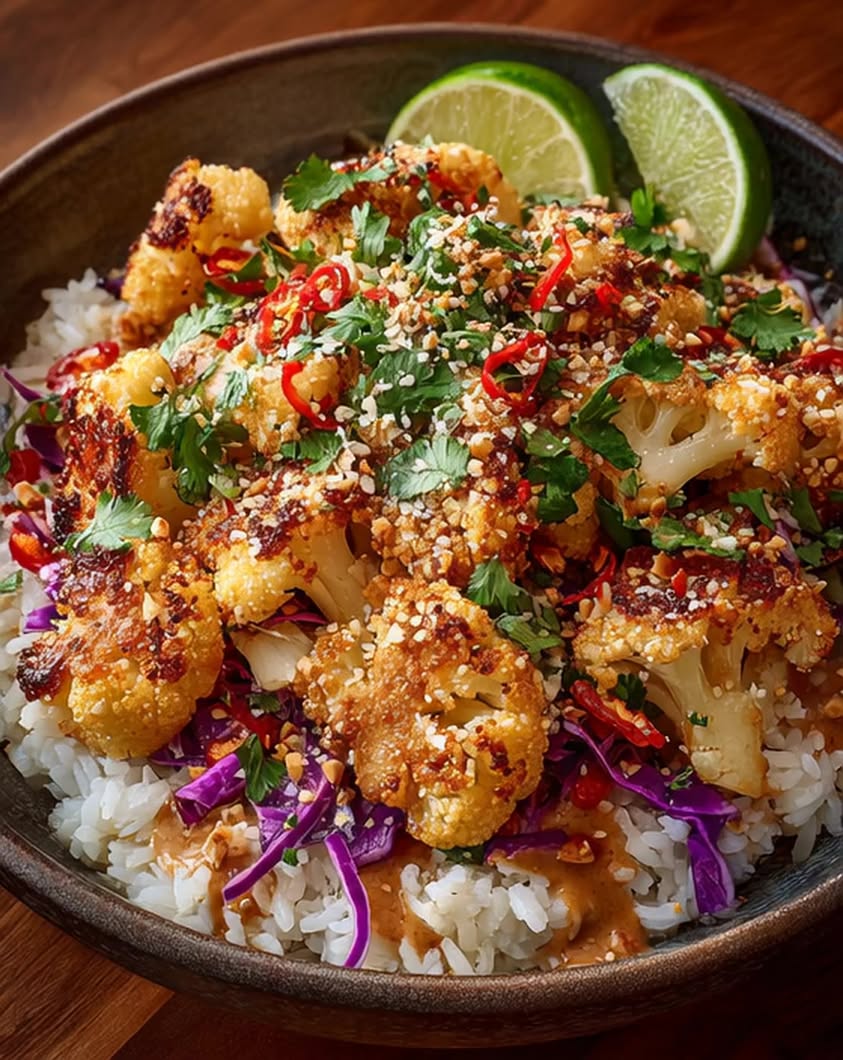
Thai Peanut Cauliflower Bowl Recipe: A Flavorful Plant-Based Feast
Imagine a dish that brings the vibrant street markets of Bangkok right to your kitchen table. This Thai Peanut Cauliflower Bowl Recipe does exactly that, offering a symphony of sweet, savory, spicy, and tangy flavors in every single bite. Moreover, it transforms humble cauliflower into a crispy, crave-worthy centerpiece, smothered in a luxuriously creamy peanut sauce. Ultimately, this meal is a celebration of texture and taste that will make you forget you are eating a vegetable-forward dish.
This recipe is perfect for busy weeknights, yet impressive enough for casual entertaining. The process is straightforward, and the ingredients are accessible, meaning you can create restaurant-quality food without the fuss. Additionally, the final bowl is a visual masterpiece, bursting with colorful vegetables and fresh herbs. The aroma alone, with notes of toasted peanuts, fresh lime, and ginger, will have everyone gathering in the kitchen, eagerly awaiting their portion.
Ultimately, this Thai Peanut Cauliflower Bowl Recipe is more than just dinner; it is an experience. It proves that healthy, plant-based eating can be deeply satisfying and incredibly exciting. Whether you are a dedicated vegan or simply looking to incorporate more vegetables into your diet, this bowl is a guaranteed winner that will earn a permanent spot in your meal rotation.
Quick Recipe Highlights
- Flavor Profile: This Thai Peanut Cauliflower Bowl Recipe delivers a perfect balance. The sauce is rich and nutty with a hint of sweetness from maple syrup, a sharp tang from lime juice, and a gentle warmth from garlic and ginger. Consequently, each component complements the others beautifully.
- Texture: Expect a fantastic contrast in every forkful. The roasted cauliflower florets become tender with crispy, caramelized edges. Meanwhile, the sauce is velvety and clings to every nook. Finally, fresh toppings like crunchy peanuts and crisp vegetables add the final textural punch.
- Aroma: As the cauliflower roasts and the sauce simmers, your kitchen will fill with an irresistible fragrance. Key aromatic notes include the earthiness of roasting cauliflower, the nutty toastiness of peanut butter, and the bright, zesty scent of fresh lime and cilantro.
- Visual Appeal: This bowl is a feast for the eyes. The golden-brown cauliflower sits atop a bed of fluffy rice, surrounded by vibrant red bell peppers, green onions, and fresh herbs. A generous drizzle of the creamy peanut sauce creates stunning visual stripes of color.
- Skill Level Needed: This is a beginner-friendly recipe. The techniques involve simple chopping, whisking, and roasting. Therefore, even novice cooks can achieve fantastic results with minimal stress and no special culinary training required.
- Special Equipment: You need only basic kitchen tools. A good baking sheet, a mixing bowl, and a whisk are essential. However, a blender can make the sauce extra smooth, but a vigorous whisk by hand works perfectly well too.
Recipe Overview
- Difficulty Level: We rate this Thai Peanut Cauliflower Bowl Recipe as easy. The steps are logical and sequential, with no advanced techniques. Primarily, success relies on organization and watching the cauliflower as it roasts to achieve perfect caramelization without burning.
- Category: This dish fits multiple meal categories beautifully. It is a hearty main course for lunch or dinner, a fantastic meal prep option, and a stunning centerpiece for a plant-based feast. Furthermore, it works as a warm, comforting meal or served at room temperature.
- Cuisine: The recipe draws direct inspiration from Thai cuisine, specifically from satay sauces and vibrant street food bowls. While not claiming to be authentically traditional in every aspect, it respectfully captures the essential flavor spirit and balance that defines Thai cooking.
- Cost: This is a very cost-effective meal. Cauliflower and rice are inexpensive staples. Meanwhile, pantry items like soy sauce, peanut butter, and maple syrup form the sauce base. Ultimately, you create a restaurant-style dish for a fraction of the price.
- Season: This bowl is truly versatile across seasons. It feels light and fresh for spring and summer, yet the roasted elements and rich sauce provide warmth in fall and winter. Consequently, it is a year-round recipe you can enjoy anytime.
- Occasion: Serve it for a simple family dinner, a healthy lunch, or a casual dinner party where guests can customize their bowls. It is also an excellent potluck contribution, as it travels well and appeals to diverse dietary preferences.
Why You’ll Love This Recipe
First and foremost, the taste and texture are utterly addictive. This Thai Peanut Cauliflower Bowl Recipe masterfully combines creamy, crunchy, fresh, and hearty elements. Each mouthful offers a new sensation, from the umami-rich sauce to the pop of a fresh herb. The flavor is complex enough to feel special, yet familiar enough to be universally loved. You will find yourself craving this specific combination of savory peanut and roasted vegetable goodness.
Next, consider the sheer convenience. From start to finish, the entire dish comes together in under forty-five minutes. Furthermore, much of that time is hands-off while the cauliflower roasts. This allows you to prepare the sauce and chop toppings simultaneously. The recipe is also incredibly forgiving; you can easily adjust spice levels or swap vegetables based on what you have available. It is the definition of a streamlined, satisfying weeknight meal solution.
Nutritionally, this bowl is a powerhouse. Cauliflower provides a wealth of vitamins, fiber, and antioxidants. The peanut sauce offers healthy fats and plant-based protein. When served over whole grain rice, you get a complete meal that is energizing and deeply nourishing. This dish proves that eating well does not mean sacrificing flavor or satisfaction. Instead, it is a celebration of how good whole foods can make you feel.
For social gatherings, this Thai Peanut Cauliflower Bowl Recipe is a star. You can easily set up a “bowl bar” with all the components separate, allowing guests to build their own masterpiece. This interactive element makes dinner fun and engaging. Additionally, the recipe is naturally vegan and gluten-free adaptable, meaning you can accommodate most dietary restrictions without preparing multiple separate meals. It is a truly inclusive dish.
Finally, the cost-effectiveness and accessibility are major wins. You do not need expensive or hard-to-find ingredients. The core components are pantry staples and affordable fresh produce. This makes the recipe sustainable for regular cooking. You can enjoy a gourmet-tasting, healthy meal without straining your grocery budget, which is a significant benefit for anyone cooking at home regularly.
Historical Background and Cultural Significance
The flavors in this Thai Peanut Cauliflower Bowl Recipe are deeply rooted in Thai culinary history. Peanut sauce, known as “nam jim satay,” traditionally accompanies grilled meat skewers (satay) believed to have been influenced by Indonesian and Malaysian traders. This sauce became a staple in Thai street food culture, valued for its rich texture and ability to balance sweet, salty, sour, and spicy elements. The adaptation of this iconic sauce for vegetable-based dishes reflects modern, global culinary trends toward plant-forward eating.
In Thai cuisine, balance is the paramount principle. Every dish aims to harmonize the fundamental taste senses. This bowl honors that philosophy. The creamy peanut butter provides richness and sweetness, the lime juice adds sourness, the soy sauce contributes saltiness and umami, and the chili delivers heat. This careful calibration is what makes the flavor profile so compelling and authentic in spirit, even as it features a non-traditional main ingredient like roasted cauliflower.
The evolution of this specific recipe is a testament to contemporary fusion cooking. Chefs and home cooks worldwide seek to recreate beloved flavors using local and seasonal ingredients. Cauliflower, with its neutral taste and meaty texture when roasted, became a perfect canvas for bold sauces. Consequently, the Thai Peanut Cauliflower Bowl emerged as a popular dish in health-conscious cafes and vegetarian restaurants, bridging cultural tradition with modern dietary preferences.
Regional variations of peanut sauce exist throughout Southeast Asia. In Thailand, the sauce often includes coconut milk for extra creaminess and uses tamarind for sourness. Vietnamese versions might be thinner and include hoisin sauce. Our recipe takes inspiration from these traditions but simplifies the ingredient list for home kitchens. The result is a versatile, approachable sauce that captures the essential character of its culinary origins while being easy to whip up any night of the week.
Ingredient Deep Dive
Cauliflower: This versatile cruciferous vegetable is the star. Historically cultivated in the Mediterranean and Asia, it gained global popularity for its adaptability. Nutritionally, it is packed with vitamin C, vitamin K, and fiber, while being very low in calories. For the best results in this Thai Peanut Cauliflower Bowl Recipe, choose a head that is firm, heavy for its size, with tightly packed, creamy-white florets and bright green leaves. Store it whole in a perforated bag in the refrigerator’s crisper drawer. For a variation, try using broccoli or cubed sweet potato.
Natural Peanut Butter: The foundation of the iconic sauce. Peanuts originated in South America but became integral to African and Asian cuisines. Natural peanut butter, made with just peanuts and sometimes salt, provides healthy monounsaturated fats, protein, and essential vitamins like E and B6. It is crucial for achieving the right sauce consistency and clean flavor. Always stir the jar well before using. For substitutions, almond butter or sunflower seed butter work well for nut-free versions, though the flavor profile will shift.
Lime Juice: This provides the essential acidic tang that brightens the entire dish. Limes are a cornerstone of Southeast Asian cooking, valued for their intense aroma and flavor compared to lemons. Freshly squeezed juice is non-negotiable; bottled juice often has a flat, metallic taste. Lime juice is rich in vitamin C and antioxidants. Roll the lime firmly on the counter before cutting to maximize juice yield. In a pinch, rice vinegar mixed with a little lemon zest can approximate the flavor, but fresh is always best.
Soy Sauce or Tamari: This ingredient delivers the salty, umami depth that grounds the sauce. Soy sauce is a fermented product with ancient Chinese origins. Tamari is a Japanese variety that is typically gluten-free and slightly richer. Both work perfectly. They contribute complex savory notes that simple salt cannot replicate. For a gluten-free Thai Peanut Cauliflower Bowl, always opt for tamari or a certified gluten-free soy sauce. Coconut aminos can be used as a soy-free alternative, though it is sweeter and less salty.
Fresh Ginger and Garlic: These aromatics are the flavor engine. Ginger, with its spicy warmth, and garlic, with its pungent kick, are used in virtually all Thai savory dishes. They both possess notable anti-inflammatory properties. Select ginger roots that are firm and smooth with taut skin; avoid wrinkled pieces. Fresh garlic cloves should be plump and firm. Grate or mince them finely to distribute their flavor evenly throughout the sauce. Pre-minced jarred versions can be used in a hurry but lack the vibrant potency of fresh.
Common Mistakes to Avoid
- Overcrowding the Baking Sheet: Placing cauliflower florets too close together causes them to steam instead of roast. Consequently, you will get soggy, pale cauliflower instead of crispy, caramelized pieces. Always use a large enough pan and spread the florets in a single layer with space between them.
- Using the Wrong Peanut Butter: Avoid commercial peanut butter with added sugar, oils, or stabilizers. These can make the sauce overly sweet, greasy, or prevent it from emulsifying properly. Stick to natural, stirred peanut butter for the best texture and a clean, nutty flavor.
- Neglecting to Taste the Sauce: The balance of sweet, salty, sour, and spicy is personal. Do not just follow the measurements blindly. After whisking the sauce, always taste it and adjust. You might want more lime for tang, more maple for sweetness, or more chili for heat.
- Skipping the Fresh Lime Juice: Bottled lime juice lacks the bright, floral acidity of fresh. It can impart a dull, sometimes bitter flavor that dulls the entire dish. The few minutes it takes to juice a fresh lime make a monumental difference in the final taste.
- Underseasoning the Cauliflower: Before roasting, the cauliflower needs a good coat of oil and salt. If you are too sparing, the florets will taste bland, forcing the sauce to carry all the flavor. Season the cauliflower generously before it goes into the oven.
- Blending Hot Ingredients for the Sauce: If you choose to blend the sauce for ultra-smoothness, ensure the liquid (like the soy sauce and lime juice) is at room temperature or cool. Blending very hot liquids can create steam pressure, potentially causing the blender lid to pop off messily.
- Adding Fresh Herbs Too Early: Ingredients like cilantro and green onions should be added as a fresh garnish just before serving. If you mix them into the hot components or sauce ahead of time, they will wilt, lose their vibrant color, and their delicate flavor will diminish.
- Forgetting to Reserve Sauce for Drizzling: While tossing some sauce with the roasted cauliflower is great, always reserve a portion to drizzle over the assembled bowl. This ensures every component gets coated and adds to the beautiful visual presentation.
Essential Techniques
Roasting Cauliflower for Optimal Texture: This technique is crucial for transforming cauliflower from bland to spectacular. High heat (around 425°F) encourages caramelization, where the natural sugars brown and develop deep flavor. The key is ensuring the florets are dry after washing and evenly coated with oil. Oil conducts heat and promotes browning. Do not stir too frequently; let them sit on the hot pan to develop those desirable crispy, browned edges. The visual cue for success is golden-brown spots and a tender-but-not-mushy stem when pierced with a fork.
Emulsifying the Peanut Sauce: This process combines water-based liquids (like lime juice and soy sauce) with fat-based peanut butter into a smooth, unified sauce. The secret is to start with a smooth peanut butter base and add the liquids gradually while whisking vigorously. This slow incorporation prevents the sauce from seizing or becoming grainy. If the sauce seems too thick, simply whisk in warm water, one tablespoon at a time, until it reaches a drizzle-able consistency that still clings to a spoon.
Pro Tips for Perfect Thai Peanut Cauliflower Bowl
Cut your cauliflower florets into uniform sizes. This ensures they all cook at the same rate, so you do not end up with some pieces burnt and others undercooked. Aim for bite-sized pieces, about 1 to 1.5 inches across.
Line your baking sheet with parchment paper. This prevents sticking and makes cleanup an absolute breeze. Furthermore, it helps with even browning compared to some non-stick mats.
Let the roasted cauliflower cool for a minute before tossing it in the sauce. If the cauliflower is piping hot, it can sometimes cause the sauce to break or become too thin. A brief cool-down period helps the sauce adhere perfectly.
Toast your garnish peanuts. A quick toast in a dry skillet for a few minutes enhances their nutty flavor and adds an extra layer of crunch to your finished Thai Peanut Cauliflower Bowl Recipe.
Prep all your toppings before you start cooking. Having your bell peppers sliced, herbs chopped, and lime wedges ready makes the final assembly fast and stress-free. This “mise en place” is a game-changer for smooth cooking.
If your peanut sauce is too thick, thin it with warm water, not more lime juice or soy sauce. Adding more liquid seasonings will throw off the flavor balance. Warm water integrates easily and adjusts the texture without compromising taste.
For meal prep, store the components separately. Keep the roasted cauliflower, rice, sauce, and fresh toppings in their own containers. Assemble the bowls just before eating to maintain the best textures.
Variations and Adaptations
For regional variations, incorporate a few tablespoons of coconut milk into the peanut sauce for a creamier, more Thai-style result. You could also add a teaspoon of red curry paste to the sauce for a deeper, more complex heat. These small additions bring the flavor profile even closer to traditional street food versions.
Seasonal adaptations are simple. In summer, add fresh corn kernels or cherry tomatoes. For fall, roast sweet potatoes or Brussels sprouts alongside the cauliflower. In winter, serve the bowl over a bed of hearty kale instead of rice for a warming, nutrient-dense meal. The recipe framework is wonderfully flexible.
Dietary modifications are straightforward. For a gluten-free Thai Peanut Cauliflower Bowl, use tamari instead of soy sauce. To make it nut-free, substitute sunflower seed butter for peanut butter. For a lower-carb option, serve the cauliflower and sauce over cauliflower rice or a bed of zucchini noodles.
Experiment with flavor variations by adding a tablespoon of miso paste for extra umami, or a splash of rice vinegar for more tang. You can also switch the herb garnish from cilantro to Thai basil or mint for a completely different aromatic profile. Each change creates a new signature dish.
Texture modifications can include adding crushed rice crackers on top for extra crunch, or blending silken tofu into the sauce for an even creamier, protein-boosted version. You could also leave the cauliflower in larger “steak-like” pieces for a more dramatic presentation.
Presentation alternatives are endless. Instead of a bowl, serve the components as lettuce wraps for a hand-held meal. Alternatively, layer everything in a jar for a portable lunch, with the sauce at the bottom and the rice and cauliflower on top to prevent sogginess.
Serving and Presentation Guide
Start with a warm, shallow bowl as your canvas. Place a generous scoop of fluffy rice slightly off-center. Then, artfully arrange a portion of the saucy roasted cauliflower around or over the rice. This creates height and visual interest immediately.
Next, add your colorful toppings with intention. Scatter bright red bell pepper strips, thinly sliced green onions, and a handful of fresh cilantro leaves around the bowl. Sprinkle with toasted peanuts for that essential crunch. The goal is a balanced distribution of color and texture in every section.
Traditional accompaniments include extra lime wedges on the side for squeezing and a small dish of chili flakes or sriracha for those who desire more heat. A simple side of quick-pickled vegetables, like carrots and cucumbers, adds a refreshing, acidic contrast that complements the rich sauce beautifully.
For modern serving, consider a “deconstructed” approach. Present all components in separate, stylish bowls or on a large platter and let guests build their own masterpiece. This is especially fun for gatherings and allows everyone to customize their perfect Thai Peanut Cauliflower Bowl.
Temperature considerations are key. Serve the bowl immediately after assembling while the rice and cauliflower are still warm and the fresh toppings are cool and crisp. The contrast between warm and cool elements is part of the sensory appeal.
Portion control is easy with this recipe. A standard serving is about one cup of cooked rice, one to two cups of the saucy cauliflower, and a quarter cup of assorted toppings. For a lighter meal, increase the vegetable-to-rice ratio. For a heartier appetite, simply add more of everything.
Wine and Beverage Pairing
For wine pairings, look for bottles that can handle the dish’s sweetness, spice, and richness. An off-dry Riesling or Gewürztraminer is a classic choice; their slight sweetness and floral notes harmonize with the peanut sauce and tame any chili heat. Alternatively, a crisp, unoaked Sauvignon Blanc with its citrusy acidity can cut through the creaminess and refresh the palate between bites.
Non-alcoholic alternatives are fantastic with this bowl. A sparkling ginger beer complements the ginger in the sauce and provides a refreshing fizz. Iced lemongrass tea or a cold-brewed jasmine tea offers a fragrant, cleansing sip that does not compete with the food’s complex flavors. Simply put, these drinks enhance the overall dining experience.
If you prefer coffee or tea after the meal, opt for a light to medium roast coffee or a green tea. These have clean, palate-cleansing properties that work well after a flavorful meal. Avoid very heavy, bitter brews that might clash with the lingering savory-sweet notes of the peanut sauce.
Always serve white wines and non-alcoholic sparklers well-chilled. The cool temperature is refreshing against the warm, spiced components of the Thai Peanut Cauliflower Bowl. For hot teas, serve them alongside the meal rather than after, as the warmth can be comforting and aid digestion.
Storage and Shelf Life
Store leftover components in airtight containers in the refrigerator. Keep the roasted cauliflower, plain rice, and peanut sauce in separate containers for best results. The assembled bowl does not store well as the fresh toppings wilt and the rice can become soggy. Properly stored, the cauliflower and rice will last for 3-4 days, and the peanut sauce for up to 5 days.
The ideal storage temperature is below 40°F in the main body of your refrigerator, not in the door. Use glass or BPA-free plastic containers with tight-fitting lids. For the sauce, a mason jar is perfect as you can shake it to recombine it before use. Label containers with the date to keep track of freshness.
Signs of spoilage include an off or sour smell, visible mold (especially on the sauce or cauliflower), or a slimy texture on the vegetables. If the sauce separates and cannot be re-emulsified with whisking, it may be past its prime. Always err on the side of caution and discard anything questionable.
Reheating instructions are simple. Reheat the cauliflower and rice separately in the microwave or in a skillet over medium heat with a splash of water to prevent drying out. Gently warm the peanut sauce in a small saucepan over low heat, adding a little water if it has thickened too much. Do not boil the sauce vigorously.
Freezing guidelines apply best to the peanut sauce and the plain roasted cauliflower. Freeze them in portion-sized containers for up to 2 months. Thaw overnight in the refrigerator. Note that the cauliflower’s texture will be softer after freezing and thawing. Cooked rice and fresh toppings do not freeze well and should be made fresh.
Make Ahead Strategies
You can prep this entire Thai Peanut Cauliflower Bowl Recipe over a weekend for easy weekday meals. Start by washing and cutting the cauliflower; store the raw florets in a sealed bag in the fridge for up to 2 days. Cook the rice and let it cool completely before refrigerating. Finally, whisk the peanut sauce together and keep it in a jar. This advance work cuts your active cooking time on a busy night to just the 25 minutes needed for roasting.
For storage between steps, keep all prepped components chilled. The raw cauliflower stays fresh in the crisper. The cooked rice should be cooled quickly and refrigerated within two hours to prevent bacterial growth. The peanut sauce is stable in the fridge. Keeping everything separate until assembly is the golden rule for maintaining quality.
Assessing quality impact, the peanut sauce’s flavors often improve after a day, allowing the garlic and ginger to meld. The cauliflower is best roasted fresh, but you can roast it a day ahead; re-crisp it in a hot oven or air fryer for a few minutes before serving. Fresh herbs and crunchy toppings should always be added just before eating.
For assembly, have all your cold and warm components ready. Warm the rice and cauliflower, give the sauce a good stir or gentle warm-up, and chop your fresh garnishes. Build the bowls in this order: warm rice base, warm cauliflower, a drizzle of sauce, then all fresh toppings, finishing with a final artistic drizzle of more sauce and a sprinkle of peanuts.
Scaling Instructions
Halving the recipe is simple for one or two servings. Use a medium head of cauliflower or half a large one. Precisely halve all other sauce and topping ingredients. You can use a smaller baking sheet, but still ensure the cauliflower is in a single layer for proper roasting. Cooking time may reduce by a few minutes, so start checking for doneness around the 18-minute mark.
Doubling or tripling the recipe for a crowd is easy. You will need multiple baking sheets, and it is best to roast the cauliflower in batches or on separate oven racks, rotating the sheets halfway through. For the sauce, simply multiply the ingredients in a large mixing bowl. Consider cooking the rice in a large pot or a rice cooker for bigger batches.
Equipment adjustments are necessary when scaling up. Ensure you have a large enough whisking bowl for the sauce. You may need to blend the sauce in batches if using a blender. For very large groups, consider keeping the roasted cauliflower warm in a low oven (200°F) on a sheet pan until serving time.
Timing modifications are minimal. The sauce and topping prep will take slightly longer with larger volumes. The cauliflower roasting time may increase by 3-5 minutes per batch if the oven is crowded, as this can lower the ambient temperature. Always rely on visual cues (golden brown edges) rather than strict timer settings.
Nutritional Deep Dive
A serving of this Thai Peanut Cauliflower Bowl Recipe provides a well-rounded macronutrient profile. The cauliflower and rice offer complex carbohydrates for sustained energy. The natural peanut butter contributes healthy fats and plant-based protein, making the meal satisfying. The sauce’s maple syrup adds a small amount of natural sugar, but the overall glycemic load is balanced by the fiber from the vegetables and whole grains if using brown rice.
The micronutrient analysis is impressive. Cauliflower is rich in vitamin C, vitamin K, and folate. Peanuts provide biotin, copper, and manganese. Fresh lime juice boosts vitamin C intake, while ginger and garlic offer antioxidant and anti-inflammatory compounds. Together, these ingredients support immune function, bone health, and overall cellular protection.
For dietary considerations, the base recipe is naturally vegetarian and vegan. Using tamari makes it gluten-free. It is also dairy-free. For those on specific plans like Weight Watchers, using a light hand with the oil and maple syrup can adjust the point count. It is inherently a whole-food, nutrient-dense meal.
Portion analysis shows that a standard serving is volumous and filling due to the high fiber and water content of the cauliflower. This promotes satiety, which can aid in weight management by preventing overeating. The combination of protein, fat, and fiber helps stabilize blood sugar levels, avoiding the energy crash that can follow less balanced meals.
Dietary Adaptations
For a gluten-free Thai Peanut Cauliflower Bowl, the only critical swap is using tamari or certified gluten-free soy sauce. Double-check that your peanut butter and other condiments are certified GF, as cross-contamination can sometimes occur. All other base ingredients are naturally gluten-free.
The recipe is already dairy-free, as it contains no milk, cheese, butter, or cream. This makes it suitable for those with lactose intolerance or a dairy allergy. The creamy texture comes solely from the emulsified peanut butter, creating a rich experience without any dairy products.
It is inherently vegan, using plant-based ingredients throughout. The protein comes from peanuts and the small amount in the grains. To boost protein further, you can add baked tofu, tempeh, or edamame beans to the bowl. This makes it a complete and satisfying plant-based meal.
For a low-carb or keto adaptation, replace the rice with cauliflower rice. Be sure to calculate the carbs in the peanut butter and maple syrup carefully. You may need to reduce the maple syrup significantly and replace it with a keto-friendly sweetener like monk fruit or erythritol to fit your macros.
A Paleo adaptation requires a few more changes. Substitute the soy sauce/tamari with coconut aminos. Replace the peanut butter with almond butter (as peanuts are legumes, not nuts). Serve over cauliflower rice instead of grain-based rice. Ensure the maple syrup is 100% pure, as it is a Paleo-approved sweetener in moderation.
Troubleshooting Guide
If your sauce is too thick and pasty, you likely need more liquid. Gradually whisk in warm water, one tablespoon at a time, until it reaches a silky, drizzle-able consistency. Do not add more lime juice or soy sauce at this stage, as it will throw the flavor balance out of whack. Warm water integrates seamlessly and fixes the texture without altering the taste.
If the sauce is too thin and runny, it means the ratio of liquid to peanut butter is off. Whisk in an additional tablespoon of peanut butter to thicken it. Alternatively, you can simmer the sauce gently in a small saucepan for a few minutes to reduce and concentrate it, stirring constantly to prevent burning.
If your roasted cauliflower is soggy, the main culprit is overcrowding on the pan. For next time, use two sheets if needed. Also, ensure the florets are completely dry after washing. If you are making it now, you can try broiling the cooked cauliflower for 1-2 minutes to crisp up the edges, watching carefully to prevent burning.
If the flavor tastes flat or one-dimensional, you are likely missing an element of balance. Taste and identify what is lacking. Needs brightness? Add more fresh lime juice. Needs depth? Add a splash more soy sauce. Needs sweetness? A tiny bit more maple syrup. Needs umami? A dash of rice vinegar or a pinch of salt can often bring everything into focus.
Recipe Success Stories
Community feedback on this Thai Peanut Cauliflower Bowl Recipe has been overwhelmingly positive. Many home cooks report it becoming a weekly staple in their homes, with even the pickiest eaters (especially kids) asking for seconds. The most common comment is surprise at how such simple ingredients can create a dish that tastes so complex and restaurant-quality. It consistently receives high marks for being both foolproof and impressive.
Readers have shared fantastic variation successes. One family adds cubed tofu to the baking sheet for the last 10 minutes of roasting. Another uses the leftover peanut sauce as a dressing for cold noodle salads or a dip for spring rolls. A creative cook even used it as a pizza sauce base, topping it with the roasted cauliflower, red onion, and cilantro for a unique fusion pizza. These adaptations show the recipe’s incredible versatility.
For photography, readers have found that natural, bright light is key. Shooting the bowl from directly above (an overhead shot) beautifully showcases all the colorful components. A drizzle of extra sauce and a sprinkle of herbs just before the photo adds a fresh, appetizing touch. Using a simple, neutral-colored bowl makes the vibrant food truly pop, creating images that are almost as delightful as the meal itself.
Frequently Asked Questions
Can I use frozen cauliflower? Yes, but the texture will be different. Frozen cauliflower contains more water, so it will steam and become softer rather than achieving crispy, roasted edges. If using frozen, do not thaw it first. Toss it directly with oil, spread it on a parchment-lined sheet, and increase the roasting time slightly, stirring occasionally.
How can I make this recipe nut-free? Substitute the peanut butter with sunflower seed butter. The flavor will be different but still deliciously rich and creamy. You could also use tahini (sesame seed paste) for a more savory, earthy profile. Top with toasted sunflower seeds instead of peanuts.
Is the peanut sauce spicy? The base recipe as written has only a mild warmth from fresh ginger and garlic. The red pepper flakes add a subtle kick. To control the heat, you can omit the red pepper flakes entirely or add them to taste. For more spice, add sriracha, a diced fresh chili, or more crushed red pepper to the sauce.
Can I bake the cauliflower ahead of time? You can roast it up to a day in advance. Store it in the fridge and re-crisp it in a 400°F oven for 5-10 minutes or in an air fryer for 3-4 minutes before tossing with the sauce and assembling your bowls. This restores some of the lost texture.
What type of rice is best? Jasmine or basmati rice are classic choices for their fragrant, slightly sticky texture that pairs well with Thai flavors. Brown rice, quinoa, or even rice noodles are excellent healthy and gluten-free alternatives. Choose what you enjoy most or have on hand.
My sauce separated. How do I fix it? Separation is normal, especially after refrigeration. Simply whisk it vigorously to re-emulsify. If it’s stubborn, warm it gently in a saucepan over low heat while whisking. Adding a tablespoon of warm water can also help bring it back together smoothly.
How long does the peanut sauce last in the fridge? Stored in an airtight container or jar, the homemade peanut sauce will keep well for 4-5 days. Always give it a good stir or shake before using. The flavors often deepen and improve after a day.
Can I grill the cauliflower instead of roasting it? Absolutely! Grilling adds a wonderful smoky flavor. Toss the florets in oil, then place them in a grill basket or on skewers to prevent{“success”:true,”message”:”Recipe created successfully”,”post_id”:9283,”tasty_recipe_id”:9283,”shortcode”:”“}

I’m Billy, a classically trained culinary school graduate from The Culinary Institute of America with over 12 years in the restaurant industry and over 19 years of cooking experience.