
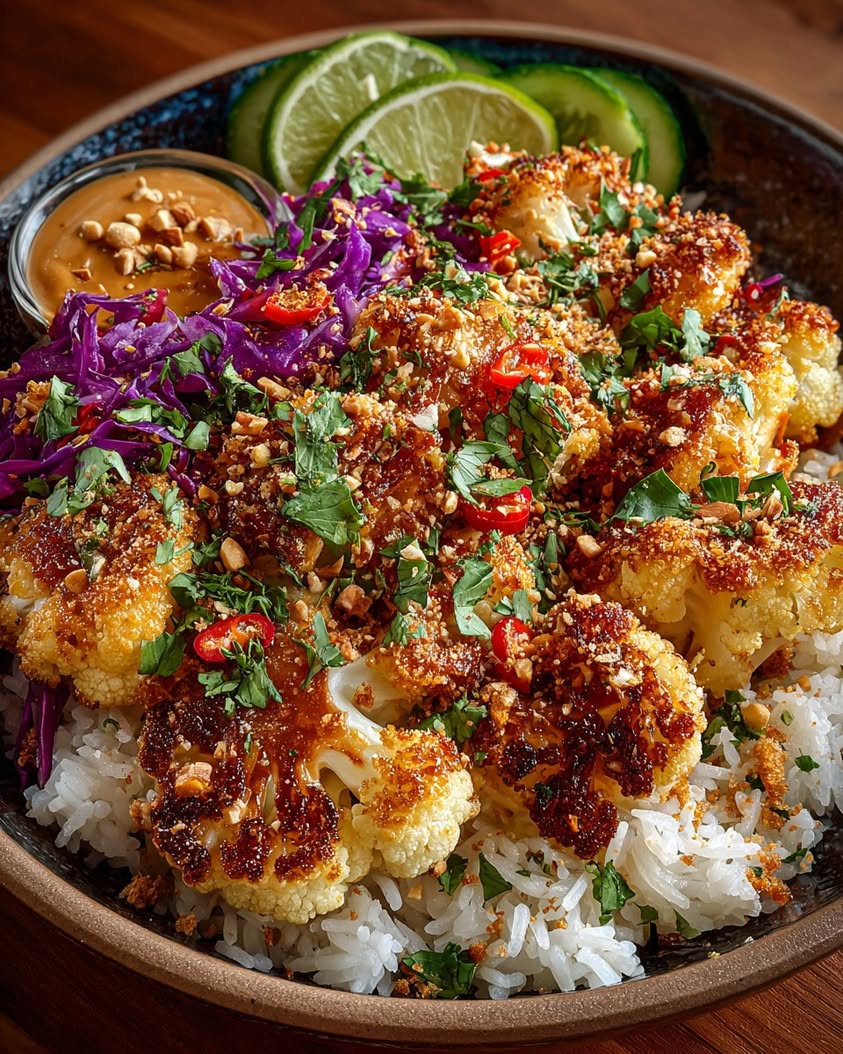
Thai Peanut Cauliflower Bowl Recipe: A Flavor-Packed Vegan Feast
This Thai Peanut Cauliflower Bowl Recipe is your ticket to an incredibly satisfying and healthy meal. Moreover, it brings the vibrant, bold flavors of Southeast Asia right to your kitchen. Imagine tender roasted cauliflower florets, perfectly crisp and caramelized, then generously coated in a luxuriously creamy peanut sauce. This dish is a true celebration of plant-based ingredients. Consequently, it delivers a powerful punch of umami, sweetness, and a gentle heat that will have you craving seconds.
Creating this Thai Peanut Cauliflower Bowl is surprisingly straightforward. In fact, it transforms simple, wholesome components into a restaurant-quality dinner. The magic lies in the harmony of textures and tastes. You get the hearty bite of roasted cauliflower, the freshness of crisp vegetables, and the rich, velvety sauce that ties everything together. Ultimately, this recipe proves that eating your vegetables can be the most exciting part of your day.
Furthermore, this bowl is a complete meal packed with nutrition and flavor. It is perfect for busy weeknights, yet impressive enough for casual entertaining. The aromatic peanut sauce, fragrant with ginger and lime, clings to every nook of the cauliflower. Meanwhile, a colorful array of toppings adds crunch and brightness. Let’s dive into how you can master this delicious and versatile Thai Peanut Cauliflower Bowl Recipe at home.
Quick Recipe Highlights
- Flavor Profile: This Thai Peanut Cauliflower Bowl Recipe delivers a perfect balance of savory, sweet, tangy, and spicy notes. The rich, nutty peanut sauce is brightened with fresh lime juice and balanced by the umami depth of soy sauce. Additionally, a hint of chili provides a gentle, warming heat that builds with each bite.
- Texture: You will enjoy a wonderful contrast of textures in every forkful. The roasted cauliflower offers a tender interior with delightfully crispy, caramelized edges. Conversely, fresh toppings like shredded cabbage and cucumber provide a refreshing, hydrating crunch that complements the creamy sauce perfectly.
- Aroma: As the cauliflower roasts and the sauce simmers, your kitchen will fill with an irresistible fragrance. Key aromatic notes include the nutty toastiness of peanut, the bright citrus zest of lime, the warm spice of ginger and garlic, and the subtle herbal hint of cilantro.
- Visual Appeal: This bowl is a feast for the eyes with its vibrant color palette. The golden-brown cauliflower coated in rich, amber sauce creates a beautiful base. Subsequently, it is topped with pops of green from cilantro, red from chili flakes, and the bright white of shredded cabbage for a stunning presentation.
- Skill Level Needed: This is an accessible recipe for cooks of all levels. Basic techniques like chopping, roasting, and whisking a sauce are all that’s required. Therefore, even beginner home cooks can achieve fantastic results with minimal fuss and no special equipment.
- Special Equipment: You need only standard kitchen tools. A good baking sheet, a mixing bowl, and a whisk or fork for the sauce are essential. Meanwhile, a blender can make the sauce extra smooth, but it is entirely optional for this simple Thai Peanut Cauliflower Bowl Recipe.
Recipe Overview
- Difficulty Level: We rate this Thai Peanut Cauliflower Bowl Recipe as “Easy” because it breaks down into simple, manageable steps. First, you prepare vegetables and whisk a sauce. Then, you roast one main component. Finally, you assemble everything. There are no advanced techniques or precise timings, making it very forgiving for a weeknight meal.
- Category: This dish fits beautifully into multiple meal categories. Primarily, it is a hearty and satisfying main course for lunch or dinner. Alternatively, you can serve it as a substantial side dish or a standout item at a potluck or buffet. It is a versatile, all-in-one bowl meal.
- Cuisine: The recipe draws direct inspiration from the vibrant street food and culinary traditions of Thailand. Specifically, it celebrates the classic flavor combination of peanut sauce found in dishes like satay and gado-gado. However, it uses a modern, plant-centric approach with cauliflower as the star.
- Cost: This is a remarkably cost-effective meal to prepare. Cauliflower, rice, and cabbage are typically budget-friendly vegetables. Meanwhile, pantry staples like peanut butter, soy sauce, and spices form the sauce base. Consequently, you can create a restaurant-quality meal for a fraction of the price.
- Season: This Thai Peanut Cauliflower Bowl Recipe is fantastic year-round. In colder months, the warm, roasted cauliflower and rich sauce feel comforting. Conversely, in summer, the fresh, crunchy toppings and zesty lime make it feel light and refreshing. It truly is a versatile seasonal dish.
- Occasion: It is perfect for casual weeknight family dinners, healthy meal prep, or a relaxed weekend lunch. Furthermore, its vibrant colors and crowd-pleasing flavors make it excellent for informal gatherings and potlucks. It is a universally appealing dish for many occasions.
Why You’ll Love This Recipe
First and foremost, the taste and texture appeal of this Thai Peanut Cauliflower Bowl Recipe is undeniable. Each component plays a specific role in creating a harmonious eating experience. The roasted cauliflower becomes sweet and nutty, absorbing the savory peanut sauce beautifully. Then, the cool, crisp vegetables cut through the richness, while the fluffy rice soaks up every last drop of flavor. Every single bite offers a complex and satisfying journey for your palate, making it a dish you will want to make repeatedly.
Next, consider the sheer convenience and preparation benefits. This recipe comes together in under an hour with mostly hands-off cooking time. You can chop the vegetables and whisk the sauce while the cauliflower roasts. Moreover, the components are excellent for meal prep. You can roast the cauliflower and make the sauce ahead of time, then assemble quick bowls throughout the week. It simplifies healthy eating without sacrificing an ounce of flavor or satisfaction.
From a nutritional standpoint, this bowl is a powerhouse. Cauliflower is low in calories but high in fiber, vitamins C and K, and antioxidants. The natural peanut butter provides healthy fats and plant-based protein to keep you full. Additionally, by loading the bowl with fresh veggies like cabbage and carrots, you boost the vitamin and mineral content significantly. It is a meal that fuels your body deliciously, supporting overall wellness with every ingredient.
This Thai Peanut Cauliflower Bowl Recipe also holds tremendous social and entertaining value. Its vibrant, colorful presentation is instantly impressive, making guests feel special. The recipe is easily doubled or tripled to feed a crowd without complicated last-minute steps. Importantly, it caters to diverse dietary preferences, being naturally vegan and gluten-free adaptable. Serving a beautiful, flavorful bowl that everyone can enjoy takes the stress out of hosting and creates a memorable dining experience.
Finally, the cost-effectiveness and accessibility are major wins. You transform humble, affordable ingredients into a spectacular meal. A head of cauliflower and some pantry staples become a restaurant-worthy dinner. You do not need any expensive or hard-to-find items. Consequently, this recipe makes eating well both sustainable for your budget and simple for your shopping list. It proves that delicious, global-inspired food can be accessible to every home cook.
Historical Background and Cultural Significance
The origin story of peanut sauce, or “nam jim satay,” is deeply rooted in the culinary traditions of Southeast Asia, particularly Indonesia and Thailand. Historically, this rich, savory sauce accompanied skewered and grilled meats known as satay, a popular street food. The sauce’s creation was a genius way to use locally abundant peanuts, creating a creamy, flavorful condiment that balanced the smoky char of the meat. Over centuries, this versatile sauce traveled and evolved, becoming a staple in Thai cuisine and adapting to include local ingredients like coconut milk and tamarind.
In Thai culture, the balance of flavors—sweet, sour, salty, spicy, and sometimes bitter—is paramount. This peanut sauce perfectly embodies that philosophy. It is a cornerstone of communal and street food dining, symbolizing shared meals and vibrant food culture. The act of dipping and coating food in a shared sauce is inherently social. While this Thai Peanut Cauliflower Bowl Recipe is a modern interpretation, it honors that cultural significance by focusing on the sauce as the unifying, celebratory element of the dish.
The evolution of this recipe specifically reflects a growing global interest in plant-based eating. Traditionally, peanut sauce paired with meat. However, contemporary cooks have brilliantly adapted it to coat hearty vegetables like cauliflower. This innovation makes the classic flavors accessible to vegetarians, vegans, and anyone looking to reduce meat consumption. It demonstrates how traditional recipes are not static but living elements of food culture that grow and change with new dietary trends and available ingredients.
Regional variations of peanut sauce abound. In Central Thailand, the sauce might be thinner and sweeter. In the south, it could be much spicier. Some versions use coconut cream for extra richness, while others rely solely on peanut butter and water. This Thai Peanut Cauliflower Bowl Recipe draws from these variations, offering a balanced, adaptable version. You can easily adjust the heat, sweetness, or thickness to suit your preference, making the recipe a personal canvas while staying true to its flavorful heritage.
Ingredient Deep Dive
Cauliflower is the magnificent star of this Thai Peanut Cauliflower Bowl Recipe. Culturally, it has been a staple in many parts of the world for centuries, but its recent rise to “superfood” status is linked to modern plant-based cuisine. Nutritionally, it is a cruciferous vegetable packed with fiber, vitamins C and K, and compounds linked to reducing inflammation. For the best results, select a head that feels heavy for its size with tightly packed, creamy-white florets and fresh, green leaves. Store it unwashed in a perforated bag in the refrigerator’s crisper drawer. If needed, broccoli or even chickpeas make a great roasted substitution.
Natural peanut butter forms the soul of the sauce. Peanuts originated in South America but became integral to African and Asian cuisines through trade. They provide healthy monounsaturated fats, protein, and essential vitamins like E and B6. Always choose a variety with just peanuts (and maybe salt) to avoid added sugars and oils. Store it upside down in the pantry to prevent oil separation, and stir well before use. For a nut-free version, sunflower seed butter is an excellent alternative that mimics the color and texture surprisingly well.
Fresh lime juice and zest provide the essential acidic brightness. Limes have been used for centuries in tropical cuisines to balance rich flavors and add vitamin C. The juice cuts through the richness of the peanut butter, while the zest adds intense aromatic citrus oils. Choose limes that feel heavy and have a bright, smooth skin. They can be stored at room temperature for a week or in the fridge for longer. In a pinch, rice vinegar or lemon juice can substitute for the acidity, though the distinct lime flavor will be missed.
Soy sauce or tamari delivers the deep, savory umami foundation. Soy sauce is a fermented product with a history spanning over 2,000 years in China. It adds saltiness and complexity that salt alone cannot achieve. Tamari is a Japanese, typically gluten-free alternative with a slightly smoother taste. Use a reduced-sodium version if you are monitoring salt intake. Store it in a cool, dark place. For a soy-free option, coconut aminos are a great substitute, offering a similar savory-sweet profile without soy or gluten.
Fresh ginger and garlic are the aromatic powerhouses. Both have been revered in traditional medicine and cooking across Asia for millennia. Ginger adds a warm, spicy-sweet note and aids digestion, while garlic provides a pungent, savory depth. Select ginger with smooth, taut skin and firm garlic heads. Store them in a cool, dry place; you can even freeze ginger for easy grating. Ground ginger and garlic powder can work in a pinch, but fresh will always provide a superior, brighter flavor in your Thai Peanut Cauliflower Bowl Recipe.
Common Mistakes to Avoid
- Overcrowding the Baking Sheet: If you pile all the cauliflower onto one pan, it will steam instead of roast. Consequently, you will get soggy, pale florets instead of crispy, caramelized ones. Always use a large enough sheet and spread the pieces in a single layer with space between them for proper air circulation and browning.
- Using the Wrong Peanut Butter: Avoid commercial peanut butter with added sugar, hydrogenated oils, or stabilizers. These can make your sauce overly sweet, greasy, or oddly textured. Instead, always opt for natural peanut butter where the ingredients list just peanuts and maybe salt for the most authentic flavor and consistency.
- Neglecting to Taste and Adjust the Sauce: The sauce balance is personal. Do not just mix the ingredients and assume it is perfect. Before tossing with the cauliflower, taste it. You may need an extra squeeze of lime for acidity, a dash more soy for saltiness, or a spoonful of water to thin it out. Adjusting as you go is key.
- Underseasoning the Cauliflower Before Roasting: Do not rely solely on the sauce for flavor. Generously season the raw cauliflower florets with salt and pepper before they go into the oven. This foundational seasoning enhances the vegetable’s natural taste and ensures every bite is flavorful from the inside out.
- Skipping the Rest Time After Roasting: Pulling the cauliflower from the oven and immediately drowning it in sauce can make it soggy. Let the roasted florets rest on the pan for 5 minutes. This allows them to firm up slightly and ensures the crispy texture you worked for stays intact when combined with the sauce.
- Using Bottled Lime Juice: The bright, fresh flavor of freshly squeezed lime juice is irreplaceable in this recipe. Bottled juice often has a flat, metallic, or overly sour taste that will throw off the delicate balance of your peanut sauce. Always take the minute to juice a fresh lime for the best results.
- Forgetting to Prep Toppings in Advance: The beauty of a bowl is in the assembly with all components ready. If you are chopping cucumbers and shredding carrots while your cauliflower is cooling, the meal loses its flow. Prepare all your fresh toppings and cook your rice ahead of time so assembly is quick and easy.
- Not Toasting the Peanut Butter (Optional but Recommended): If you have time, gently warming the peanut butter before making the sauce can deepen its nutty flavor significantly. Simply microwave it for 15-20 seconds or warm it in a small pan. This small step adds a layer of toasted complexity to your final dish.
Essential Techniques
Roasting the Cauliflower: This technique is crucial for developing deep flavor and desirable texture. Roasting at a high heat (around 425°F) causes the natural sugars in the cauliflower to caramelize, creating sweet, nutty notes and a crispy exterior. To master it, ensure your florets are evenly sized for consistent cooking. Toss them thoroughly with oil so every surface is lightly coated. The common pitfall is under-oiling, which leads to drying instead of browning. You will know it is done when the edges are dark golden brown and a fork easily pierces the stem.
Emulsifying the Peanut Sauce: Creating a smooth, cohesive sauce requires proper emulsification. This means thoroughly combining the liquid ingredients (like lime juice, soy sauce, and water) with the thick peanut butter until they become one uniform mixture. Start by whisking your liquid bases together first. Then, add the peanut butter gradually while whisking constantly. If you dump all the peanut butter in at once, you risk a lumpy sauce. If it seizes or becomes too thick, simply add warm water, one tablespoon at a time, whisking vigorously until it reaches a silky, pourable consistency.
Balancing Flavors: This is the artistic heart of the Thai Peanut Cauliflower Bowl Recipe. Taste your sauce systematically. Is it flat? Add a pinch of salt or more soy sauce. Too salty or heavy? Brighten it with lime juice. Lacking depth? A tiny bit more grated ginger or garlic can help. Too sweet? A splash of rice vinegar can balance it. The goal is a harmonious blend where no single flavor overpowers the others. Always adjust in small increments, tasting after each addition.
Pro Tips for Perfect Thai Peanut Cauliflower Bowl
Cut your cauliflower florets into similar, bite-sized pieces. This ensures they roast evenly, so you will not have some pieces burnt and others undercooked. Aim for pieces about 1.5 to 2 inches in size.
Let your roasted cauliflower cool for a few minutes on the pan before adding the sauce. This brief rest helps the exterior crisp up further and prevents the hot cauliflower from immediately absorbing all the sauce and becoming soggy.
If your peanut sauce is too thick, thin it with warm water, not more lime juice or soy sauce. Adding water adjusts the consistency without altering the carefully balanced flavor profile you have created.
Toast your sesame seeds and chopped peanuts before using them as a garnish. A quick toast in a dry pan over medium heat for 2-3 minutes until fragrant dramatically enhances their nutty flavor and adds extra crunch.
For an extra flavor boost, add a teaspoon of toasted sesame oil to the peanut sauce. This introduces a deep, nutty aroma that complements the peanuts beautifully and adds another layer of complexity.
Do not rinse your cauliflower after chopping it. The slight moisture on the surface from washing can prevent proper browning and crispiness during roasting. Simply pat it very dry with a clean kitchen towel if needed.
Make a double batch of the peanut sauce and store it in the fridge. It is fantastic on noodles, salads, spring rolls, or as a dip for fresh vegetables, giving you a quick flavor booster for other meals throughout the week.
When assembling the bowls, start with a base of warm rice or greens, then add the saucy cauliflower, and finally top with the fresh, cool vegetables. This layering keeps the crunchy toppings crisp and creates a more appealing visual presentation.
Variations and Adaptations
For regional variations, you can lean into different Southeast Asian influences. To mimic a more Indonesian “gado-gado” style, add boiled potatoes, green beans, and a hard-boiled egg to your bowl. For a Thai street food vibe, serve the saucy cauliflower alongside skewers or with a side of sticky rice. Incorporating a spoonful of red or green curry paste into the peanut sauce will also add authentic, regional heat and complexity.
Seasonal adaptations are simple and rewarding. In spring, add blanched asparagus tips or fresh peas. During summer, incorporate sweet corn kernels or cherry tomatoes. For a fall version, roast sweet potato cubes alongside the cauliflower. In winter, add heartier greens like kale, massaged and raw, or quickly sautéed bok choy. Using seasonal produce keeps the bowl exciting and aligned with what is freshest and most affordable.
Dietary modifications are straightforward. For a gluten-free bowl, use tamari or coconut aminos instead of soy sauce. To make it soy-free, use coconut aminos exclusively. For a lower-carb or keto version, serve the cauliflower and sauce over cauliflower rice or a bed of leafy greens instead of traditional rice. Ensure all other ingredients comply with your specific dietary needs.
Experiment with flavor variations by changing the nut butter. Almond butter or cashew butter will create a slightly different, but equally delicious, profile. For a spicy “kung pao” twist, add a tablespoon of chili-garlic sauce or sriracha to the peanut sauce and garnish with dried red chilies. A teaspoon of fish sauce (or vegan fish sauce) will add an incredible depth of umami for those who enjoy it.
Texture modifications can cater to personal preference. If you love extra crunch, add toasted coconut flakes or crispy fried shallots on top. For a creamier bowl, drizzle with a little coconut milk or swirl in some tahini into the peanut sauce. If you prefer a smoother eating experience, you can puree the sauce in a blender until it is completely silky.
Presentation alternatives can make the dish feel new. Instead of a deconstructed bowl, toss the roasted cauliflower, cooked rice noodles, and all veggies directly with the peanut sauce for a hearty noodle salad. Alternatively, serve the components in separate sections of a bento box for a fun, packed lunch. You can also use the saucy cauliflower as a filling for lettuce wraps or stuffed into pita bread.
Serving and Presentation Guide
Plating techniques matter for visual appeal. Start with a wide, shallow bowl to showcase all the colorful components. Place a scoop of warm rice or grains slightly off-center. Then, artfully arrange the saucy cauliflower around and over the rice, allowing some grains to peek through. This creates height and dimension rather than a flat, layered look.
Garnishing is the final, impactful touch. A generous sprinkle of fresh cilantro leaves adds a pop of green. Next, scatter toasted sesame seeds and chopped peanuts for texture and a professional finish. Finally, add thin slices of fresh red chili or a pinch of red pepper flakes for a hint of color and heat. A lime wedge on the side invites interaction.
Traditional accompaniments might include a small side of quick-pickled vegetables (like carrots and daikon) or a simple cucumber salad dressed with rice vinegar. These acidic sides cleanse the palate between bites of the rich peanut sauce and enhance the overall Thai meal experience.
Modern serving suggestions include setting up a “bowl bar” for gatherings. Provide the base of rice, the main saucy cauliflower, and an array of toppings in separate bowls. Let guests build their own creations with options like edamame, avocado slices, different fresh herbs, and various crunchy elements. This makes the meal interactive and fun.
Temperature considerations are key for the best flavor. Serve the bowl immediately after assembly. The rice and cauliflower should be warm, contrasting pleasantly with the cool, fresh toppings. The peanut sauce is best at room temperature; if it has been refrigerated, let it sit out or warm it gently to take the chill off before tossing with the hot cauliflower.
Portion control is easy with this meal. A good rule of thumb is to aim for about 1 to 1.5 cups of cooked rice per bowl, topped with a generous cup of the saucy cauliflower mixture, and then about 1/2 cup of assorted fresh vegetables. This creates a satisfying, balanced meal that is filling without being overly heavy.
Wine and Beverage Pairing
Wine pairings should complement the dish’s sweet, spicy, and savory notes. An off-dry Riesling or Gewürztraminer is a classic choice. Their slight sweetness balances the spice and peanut richness, while their acidity cuts through the creamy sauce. Alternatively, a crisp, citrusy Sauvignon Blanc or a dry Rosé with good acidity can also work beautifully, refreshing the palate between bites.
For non-alcoholic alternatives, consider drinks that offer cooling or contrasting flavors. A sparkling limeade or lemonade provides sweetness and acidity. Iced jasmine or green tea is a traditional and excellent choice, its floral notes complementing the dish’s aromatics. For something more unique, a ginger beer (non-alcoholic) echoes the ginger in the sauce and adds a spicy-sweet fizz.
Coffee and tea pairings are delightful if serving the bowl for lunch. A light, floral black tea or an oolong tea can be a sophisticated companion. After the meal, a cup of strong, black coffee can help cut through the richness. Avoid overly sweetened or milky coffee drinks, as they may clash with the complex flavors of the Thai Peanut Cauliflower Bowl.
Temperature considerations are straightforward: serve all beverages well-chilled or with ice. The coolness of the drink provides a refreshing contrast to the warm, savory bowl. Even the wine selections are best served slightly cooler than room temperature to maximize their refreshing qualities against the dish’s richness.
Serving suggestions include offering a variety of drinks to suit different preferences. Place a pitcher of infused water with cucumber and mint on the table alongside a bottle of the suggested wine and some sparkling water. This ensures all guests have a refreshing beverage option that pairs well with the vibrant flavors of the meal.
Storage and Shelf Life
Store components separately for the best results. Keep the peanut sauce in an airtight container in the refrigerator for up to 5 days. The roasted cauliflower (without sauce) can be stored in a separate container in the fridge for 3-4 days. Cooked rice should also be stored separately and used within 3-4 days. This prevents the cauliflower from becoming soggy and allows you to assemble fresh bowls.
Temperature requirements are standard refrigerator temperatures, at or below 40°F. Do not leave the assembled bowl or its saucy components at room temperature for more than two hours, as the moisture-rich environment can promote bacterial growth. Always cool components to room temperature before sealing and refrigerating.
Container recommendations include glass containers with tight-fitting lids. They do not absorb odors and allow you to see the contents. For the peanut sauce, a small mason jar is perfect for shaking and storing. For the cauliflower, use a container that allows for some air circulation; do not pack it in too tightly.
Signs of spoilage include an off or sour smell, visible mold (often fuzzy spots), or a significant change in texture where the cauliflower becomes unpleasantly slimy. If the peanut sauce separates irreversibly or develops an odd smell, it is best to discard it. When in doubt, throw it out.
Reheating instructions are simple. Reheat the plain roasted cauliflower in an air fryer or toaster oven at 375°F for 5-7 minutes to restore crispiness. Alternatively, use a conventional oven or a skillet on the stove. Avoid the microwave, as it will make the cauliflower soft. Reheat the rice separately with a sprinkle of water. Warm the sauce gently in a pan or microwave, stirring in a little water if it has thickened.
Freezing guidelines: You can freeze the peanut sauce successfully for up to 2 months in a freezer-safe container. Thaw overnight in the fridge. The roasted cauliflower does not freeze well, as it becomes mushy and watery upon thawing. It is best to enjoy it fresh or refrigerated for a few days.
Make Ahead Strategies
Create a prep timeline for efficiency. Up to 3 days ahead, make the peanut sauce and store it in the fridge. Chop your fresh vegetable toppings (cabbage, carrots, cucumber) and store them in separate airtight containers with a damp paper towel to maintain crispness. You can also cook the rice 1-2 days ahead.
Storage between steps is crucial for quality. Keep all prepped ingredients in their designated containers in the refrigerator. Do not combine the sauce with the cauliflower until you are ready to serve or eat. This preserves the texture of the roasted vegetable and the freshness of the sauce.
Assess the quality impact of make-ahead steps. The peanut sauce’s flavor often improves after a day, allowing the ingredients to meld. Pre-chopped vegetables will lose a slight bit of crispness but remain perfectly acceptable. Roasting the cauliflower the day of serving is recommended for the best texture, though you can do it a day ahead if necessary.
Assembly tips for make-ahead meals: When ready to eat, if the cauliflower is cold, re-crisp it in the oven or air fryer as described. Warm the sauce slightly. Then, assemble your bowl with warm rice, hot cauliflower, room-temperature sauce, and cold, fresh toppings. This contrast is part of the magic.
Reheating guidelines for prepped components are specific. Reheat rice with a splash of water covered in the microwave. Re-crisp cauliflower in a dry, hot oven or air fryer. Gently warm the sauce on the stove or in short microwave bursts, stirring often. Never boil the sauce, as it can separate.
Fresh element additions are the key to a vibrant make-ahead bowl. Even if you prepped everything else, always add the final garnishes—fresh cilantro, a squeeze of lime, toasted nuts—right before serving. These last-minute touches restore brightness and texture, making the meal taste freshly made.
Scaling Instructions
Halving the recipe is simple for smaller households. Use half a head of cauliflower and simply divide all other sauce and topping ingredients by two. Use a smaller baking sheet to ensure the cauliflower still has room to roast properly. The cook time may be slightly reduced by a few minutes, so keep an eye on it.
Doubling or tripling the recipe for a crowd is easy. You will need multiple baking sheets. Roast the cauliflower in batches or on separate oven racks, rotating the sheets halfway through cooking to ensure even browning. Whisk the sauce in a very large bowl. For toppings, consider setting up a buffet-style assembly station.
Equipment adjustments for scaling up are important. If doubling, ensure you have two large baking sheets. You may also need a larger mixing bowl for the sauce. When tripling, you might need to use your oven’s convection setting (if available) to help with even cooking across multiple trays.
Timing modifications are minimal when scaling. The sauce and prep time will increase linearly as you chop more vegetables. The roasting time for the cauliflower may need a slight increase (5-10 minutes) if the pans are very full, as the oven’s temperature drops when overloaded. Always rely on visual cues (golden brown edges) rather than strict timer settings.
Storage considerations for large batches are similar. Store components separately in multiple containers. Label them with dates if preparing for a meal prep service or a large family. Remember that a large batch of rice should be cooled quickly and refrigerated promptly to ensure food safety.
Nutritional Deep Dive
This Thai Peanut Cauliflower Bowl Recipe offers a balanced macro breakdown. A typical serving provides complex carbohydrates from the rice and cauliflower, plant-based protein and healthy fats from the peanut butter, and minimal saturated fat. The exact numbers depend on your specific ingredients and portions, but the meal is designed to be satiating and energy-sustaining.
The micronutrient analysis is impressive. Cauliflower delivers a significant amount of vitamin C and K, along with folate and choline. The fresh vegetables add vitamins A and C. Peanuts provide biotin, copper, and manganese. Using a variety of colorful vegetables ensures you get a broad spectrum of antioxidants and phytonutrients.
Health benefits are numerous. The high fiber content from the vegetables and whole grains supports digestive health. The monounsaturated fats in peanut butter are heart-healthy. The anti-inflammatory compounds in cauliflower and ginger may help reduce inflammation in the body. Overall, it is a meal that supports holistic wellness.
Dietary considerations are easily addressed. The recipe is naturally vegetarian and vegan. It can be made gluten-free with tamari and soy-free with coconut aminos. It is nut-based due to the peanut butter, so those with allergies must substitute the nut butter. It contains no dairy or eggs unless added as a topping.
Portion analysis shows this is a volumous, satisfying meal. You can eat a large bowl for a relatively moderate calorie count because the base is low-calorie, high-volume vegetables. The richness of the sauce satisfies cravings, preventing the need for second helpings or unhealthy snacks later.
Weight management tips include being mindful of sauce portioning. The sauce is calorie-dense due to the peanut butter. Using the recommended amount coats the cauliflower perfectly without drowning it. You can also increase the ratio of vegetables to rice in your bowl to further boost fiber and volume while managing calorie intake.
Dietary Adaptations
For a gluten-free Thai Peanut Cauliflower Bowl, ensure your soy sauce is gluten-free by using tamari (check the label, as some contain wheat) or certified gluten-free soy sauce. Also, verify that any other packaged ingredients, like chili sauce, are gluten-free. All other core ingredients are naturally gluten-free.
A dairy-free adaptation is inherent to this recipe, as it contains no dairy products. The creamy texture comes solely from the peanut butter. For garnishes, avoid any dairy-based toppings like yogurt-based sauces. The recipe is perfectly creamy and satisfying without any dairy substitutes.
The vegan adaptation is also built-in. This recipe uses no animal products. Confirm that your soy sauce or tamari is vegan (most are), and avoid honey if you use it as a sweetener. Agave syrup or maple syrup are perfect vegan alternatives to balance the sauce.
For a low-carb or keto version, replace the rice with cauliflower rice. You can make your own or use store-bought. Be mindful of the carbohydrate content in the peanut sauce; natural peanut butter is relatively low in net carbs, but check labels. Reduce or omit any sweetener in the sauce to minimize carbs further.
A Paleo adaptation requires more substitutions. Replace the peanut butter with almond butter or cashew butter. Substitute soy sauce with coconut aminos. Omit any grains, serving the bowl over a bed of greens or steamed vegetables like zucchini noodles. Ensure all other ingredients are Paleo-compliant.
For a Low-FODMAP version, this recipe needs careful modification. Cauliflower is high in FODMAPs in larger servings. Stick to a 1/2 cup serving of cauliflower per bowl. Use garlic-infused oil instead of fresh garlic for flavor without the fructans. Omit the onion and use only the green parts of scallions. Ensure the peanut butter has no added high-FODMAP ingredients.
Troubleshooting Guide
If your cauliflower is soggy, the likely cause is overcrowding on the pan or under-roasting. For future attempts, spread florets in a single layer with space. To salvage a current batch, you can try re-crisping it in a 425°F oven for 5-10 minutes on a fresh, dry pan. Do not add more sauce until after this re-crisping step.
If the peanut sauce is too thick and pasty, you have not added enough liquid. Gradually whisk in warm water, one tablespoon at a time, until it reaches a silky, pourable consistency. You can also add a little more lime juice or coconut milk to thin it while adding flavor. Always whisk vigorously to emulsify.
If the sauce is too thin and runny, it likely has too much liquid. Whisk in an additional tablespoon of peanut butter to thicken it. Alternatively, you can simmer it gently in a small saucepan for a few minutes to reduce and concentrate the flavors, stirring constantly to prevent burning.
If the dish lacks flavor, you may have underseasoned at multiple stages. First, ensure you salted the cauliflower{“success”:true,”message”:”Recipe created successfully”,”post_id”:9301,”tasty_recipe_id”:9301,”shortcode”:”“}

I’m Billy, a classically trained culinary school graduate from The Culinary Institute of America with over 12 years in the restaurant industry and over 19 years of cooking experience.