
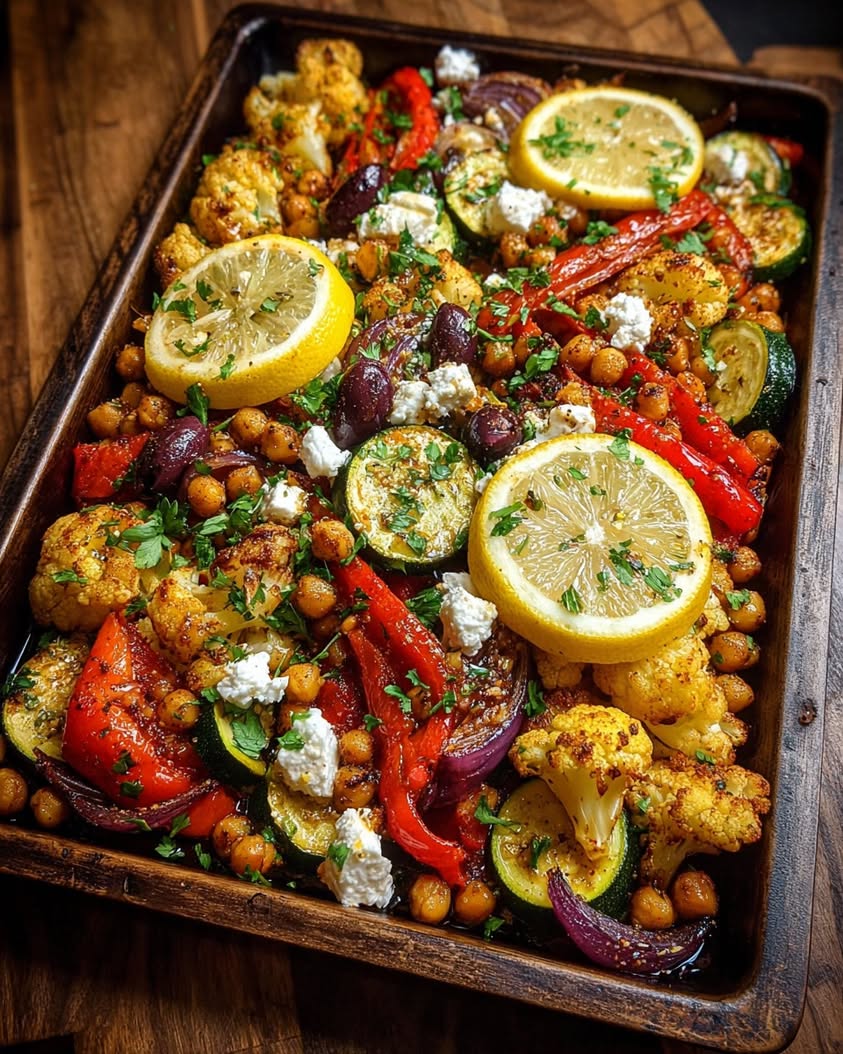
Vegetarian Sheet Pan with Lemon, Feta, and Olives: The Ultimate Easy Weeknight Feast
Imagine a complete, vibrant dinner that roasts to perfection on a single pan with minimal effort. This Lemon Feta Sheet Pan Dinner is exactly that kind of magic. It transforms humble vegetables and protein-rich chickpeas into a stunning, flavor-packed meal. The process is wonderfully simple, but the result feels special enough for company. Ultimately, you get tender potatoes, sweet cherry tomatoes, and caramelized red onion all mingling with briny olives and creamy feta.
The star of this show is the bright, zesty lemon that cuts through the richness. As the dish roasts, the lemon slices caramelize, and their juice mingles with olive oil to create a light, fragrant sauce. Meanwhile, the feta cheese softens and browns slightly at the edges, becoming irresistibly creamy. Every bite delivers a symphony of textures and Mediterranean flavors. This recipe proves that a vegetarian sheet pan dinner can be the most exciting thing on your weekly menu.
Furthermore, this meal is a testament to the power of simple, high-quality ingredients. You likely have most of them in your pantry right now. It is the perfect solution for busy weeknights, lazy weekends, or anytime you crave something wholesome and delicious without a sink full of dishes. Let us dive into why this Lemon Feta Sheet Pan Dinner deserves a permanent spot in your recipe rotation.
Quick Recipe Highlights
- Flavor Profile: This dish boasts a vibrant Mediterranean flavor profile. You experience the bright acidity of lemon, the salty tang of feta and kalamata olives, and the earthy sweetness of roasted vegetables. Additionally, fresh oregano adds an aromatic, herbal note that ties everything together beautifully.
- Texture: The texture contrast is incredibly satisfying. You get creamy, soft chickpeas and potatoes alongside juicy, burst tomatoes. The red onion becomes sweet and tender, while the feta offers delightful creamy and slightly crisp edges. It is a wonderfully complex mouthfeel in every forkful.
- Aroma: As this sheet pan roasts, your kitchen will fill with an irresistible aroma. First, you will smell the earthy potatoes and onions caramelizing. Then, the bright, citrusy scent of lemon and the herbal note of oregano will bloom. Finally, the salty, tangy smell of melting feta creates an unforgettable olfactory experience.
- Visual Appeal: This dish is a feast for the eyes with its vibrant color palette. The bright red of the tomatoes, deep purple of the onions, golden brown potatoes, green olives, and white feta create a stunning mosaic. It looks rustic, abundant, and incredibly appetizing straight from the oven.
- Skill Level Needed: This recipe is perfect for beginners and seasoned cooks alike. You only need basic knife skills for chopping and the ability to toss ingredients on a pan. There is no complicated technique, making it a fantastic, foolproof recipe for anyone to master.
- Special Equipment: The only essential tool is a large, rimmed baking sheet. For best results, use a heavy-duty sheet pan that will not warp. Parchment paper is highly recommended for easy cleanup and to prevent sticking. Otherwise, you just need a mixing bowl and a sharp knife.
Recipe Overview
- Difficulty Level: We rate this recipe as “Easy” because it involves straightforward chopping and simple assembly. There is no finicky technique or precise timing required beyond basic roasting. The oven does most of the work, and the steps are virtually foolproof. Consequently, it is an ideal recipe for cooking novices or anyone seeking a stress-free meal.
- Category: This dish falls squarely into the category of a complete main course. It provides a balance of complex carbohydrates from the potatoes, plant-based protein from the chickpeas, and plenty of vitamins from the vegetables. You can also consider it a hearty side dish for a larger spread or a fantastic potluck contribution.
- Cuisine: The flavors are inspired by the sun-drenched coasts of the Mediterranean. Specifically, it draws from Greek culinary traditions with its use of feta, lemon, oregano, and olives. It is a modern, simplified take on classic flavors designed for easy home cooking.
- Cost: This is an exceptionally budget-friendly meal. Potatoes, onions, and canned chickpeas are pantry staples with a low cost per serving. Cherry tomatoes and a block of feta are the only fresh items that might be considered splurges, but they stretch across four servings. Overall, you can make this entire meal for a fraction of the cost of takeout.
- Season: While this recipe works year-round thanks to the availability of its ingredients, it truly shines in late summer and early fall. This is when cherry tomatoes are at their sweetest peak. However, it also serves as a bright, colorful antidote to gloomy winter days, bringing sunshine to your plate any time.
- Occasion: This versatile dish suits countless occasions. It is perfect for a simple family weeknight dinner, a healthy lunch prep option, or a casual dinner party with friends. Because it is mostly hands-off, you can spend time with your guests while it roasts. It is also an excellent meal for vegetarians and omnivores alike.
Why You’ll Love This Recipe
First and foremost, you will adore the incredible taste and texture of this Lemon Feta Sheet Pan Dinner. Every bite delivers a harmonious balance. You get the creamy, salty punch of feta cheese against the bright, acidic zing of lemon. Simultaneously, the sweet burst of roasted tomatoes and the earthy depth of potatoes and chickpeas create a satisfying foundation. The kalamata olives add a necessary briny counterpoint that elevates the entire dish. It is a complex flavor profile that feels both rustic and refined, proving that simple ingredients can create extraordinary meals.
Next, the convenience factor is absolutely unbeatable. This entire meal comes together on one sheet pan, meaning minimal active cooking time and even less cleanup. You simply chop your vegetables, toss everything with oil and seasoning, and let the oven work its magic. This makes it the ultimate solution for busy weeknights when time and energy are in short supply. Moreover, the hands-off roasting time allows you to set the table, help with homework, or simply relax. It is the epitome of efficient, stress-free cooking that does not sacrifice flavor or nutrition.
From a nutritional standpoint, this dish is a powerhouse. Chickpeas provide a great source of plant-based protein and fiber, which helps keep you full and satisfied. The variety of vegetables offers a wide spectrum of vitamins, minerals, and antioxidants. Using olive oil as the primary fat contributes heart-healthy monounsaturated fats. Because everything is roasted, you use less oil than traditional sautéing while achieving maximum flavor. This vegetarian sheet pan dinner is a delicious way to eat more plants and nourish your body with every colorful forkful.
This recipe also boasts tremendous social and entertaining value. It scales up effortlessly to feed a crowd, making it perfect for casual gatherings or potlucks. The presentation is naturally beautiful and impressive straight from the pan, requiring no fancy plating. Guests will appreciate the vibrant, homemade meal, and you will appreciate not being stuck in the kitchen all evening. It is a conversation starter that demonstrates how easy and delicious vegetarian cooking can be. Ultimately, it takes the pressure off hosting and lets you enjoy the party too.
Finally, the cost-effectiveness and accessibility of this meal are major wins. The ingredient list is short and relies on affordable staples. You can easily find everything at a standard grocery store, and many items are pantry long-life heroes. If you need to adapt based on what is on sale or in your fridge, the recipe is wonderfully forgiving. This Lemon Feta Sheet Pan Dinner delivers restaurant-quality flavors for a fraction of the price. It is a smart, sustainable choice for your wallet and your weekly meal plan.
Historical Background and Cultural Significance
The concept of roasting vegetables and protein together is ancient, but the modern “sheet pan dinner” is a testament to contemporary needs for convenience. Our specific recipe, however, draws its soul from the Eastern Mediterranean. For centuries, Greek, Turkish, and Levantine cooks have utilized the brilliant combination of lemon, olive oil, oregano, and brined cheeses or olives. These flavors define the region’s cuisine, born from its sunny climate and abundant produce. Traditionally, such dishes might be slow-cooked in clay pots or over open fires. The sheet pan method is a modern adaptation that captures the same essential flavors with incredible efficiency for today’s home cook.
Culturally, meals centered on shared plates of vegetables, legumes, and cheese are foundational to the Mediterranean diet, renowned for its health benefits. Feta cheese, protected by EU law as a product exclusive to Greece, has a history dating back to the Homeric era. Its salty, tangy profile is a perfect preservative and flavor enhancer for simple ingredients. Similarly, the use of lemons and olives represents the agricultural bounty of the region. This dish, in spirit, celebrates a way of eating that is social, seasonal, and focused on high-quality, fresh components rather than complicated technique.
The evolution of this recipe mirrors the evolution of home cooking itself. As family schedules became busier, the demand for one-pan, minimal-cleanup meals skyrocketed. The sheet pan dinner became a viral category for good reason. Our Lemon Feta Sheet Pan Dinner is a direct descendant of this trend, applying timeless Mediterranean flavors to a foolproof modern format. It takes a classically inspired combination and makes it achievable on any Tuesday night. This evolution makes global cuisine accessible and practical for everyday life.
Regional variations of this concept are endless. In Provence, you might find a similar tray bake with herbes de Provence and niçoise olives. In Italy, it could feature rosemary, cannellini beans, and mozzarella. Our version leans into its Greek identity with oregano and kalamata olives. The beauty of the formula is its adaptability. You can travel the Mediterranean through your spice rack and pantry swaps. This flexibility is why the sheet pan dinner has become such a beloved staple worldwide, allowing cooks to explore flavors while adhering to a simple, reliable cooking method.
Ingredient Deep Dive
Baby Potatoes: These small, thin-skinned potatoes are ideal for roasting whole, ensuring creamy interiors and crispy skins. Historically, potatoes were introduced to Europe from the Americas and became a staple due to their hardiness and versatility. Nutritionally, they are a great source of vitamin C, potassium, and fiber, especially with the skin on. For selection, choose firm potatoes with smooth skin and no sprouts or green tinges. Store them in a cool, dark, well-ventilated place—not the refrigerator. For a substitution, you can use diced sweet potatoes or halved gold potatoes, adjusting the cook time as needed.
Chickpeas (Garbanzo Beans): A cornerstone of Mediterranean and Middle Eastern diets for thousands of years, chickpeas are one of the earliest cultivated legumes. They provide crucial plant-based protein, fiber, iron, and folate. Using canned chickpeas is a major time-saver. Look for low-sodium varieties and always rinse them thoroughly to remove the starchy liquid and reduce sodium content. For the best texture in this Lemon Feta Sheet Pan Dinner, pat them very dry before roasting to help them crisp up. You can substitute with canned white beans or lentils, though the texture will be softer.
Feta Cheese: Authentic Greek feta is made from at least 70% sheep’s milk, often blended with goat’s milk, giving it a tangy, salty, and crumbly character. It is a protected designation of origin (PDO) product. Feta is a good source of calcium and protein. For the best flavor, seek out a block of feta packed in brine rather than pre-crumbled cheese, which contains anti-caking agents. The brine keeps it moist and flavorful. Store leftover feta in its brine in the refrigerator. For a dairy-free version, a firm, brined tofu or a vegan feta alternative can work, though the flavor profile will change.
Lemon: The use of citrus as a flavoring and preserving agent has a long history in sun-rich coastal regions. Lemons add vital brightness and acidity that balance the richness of the olive oil and feta. They are an excellent source of vitamin C. For this recipe, you will use both the zest and the slices. Choose organic lemons if possible since you are eating the peel, and look for fruits that are heavy for their size with bright, firm skin. Store lemons at room temperature for short-term use or in the refrigerator for longer storage. In a pinch, a tablespoon of red wine vinegar added after cooking can provide acidity, but you will lose the aromatic citrus oil from the zest.
Kalamata Olives: These distinctive, almond-shaped olives hail from the region of Kalamata in Greece and are cured in wine vinegar or brine, giving them a deep purple color and a rich, fruity, and slightly smoky flavor. They are a hallmark of Greek cuisine. Olives provide healthy monounsaturated fats and antioxidants. Purchase them with pits for superior flavor and texture, pitting them yourself is simple. Alternatively, pitted olives are a convenient option. Store opened olives in their brine in the refrigerator. You can substitute with other brined olives like Castelvetrano for a buttery flavor or niçoise for a stronger taste.
Common Mistakes to Avoid
- Overcrowding the Pan: This is the most common error. If you pile everything on top of each other, the vegetables will steam instead of roast. You need space for hot air to circulate and create caramelization. Always use a large enough pan and spread ingredients in a single layer, even if it means using two pans.
- Not Drying the Chickpeas: Skipping the step of rinsing and thoroughly drying the canned chickpeas leads to a soft, mushy texture. The excess moisture prevents them from crisping up in the oven. Take a minute to pat them completely dry with a clean kitchen towel or paper towels for a better result.
- Using Pre-Crumbled Feta Too Early: Adding dry, pre-crumbled feta at the beginning of cooking will cause it to burn and become chalky. For the best texture, use a block of feta, break it into large chunks, and add it in the last 10-15 minutes of cooking so it just softens and browns slightly.
- Neglecting to Toss Midway: For even cooking and browning, you must give the ingredients a good stir or shake about halfway through the roasting time. This ensures all sides get exposure to the hot pan and oven air, preventing some pieces from burning while others remain pale.
- Forgetting to Season in Layers: Do not just season the vegetables at the end. Tossing the potatoes, chickpeas, and onions with oil, salt, and pepper at the start is crucial for flavor penetration. You can then adjust the final seasoning with a flaky salt and a squeeze of fresh lemon juice after baking.
- Cutting Vegetables Inconsistently: If your potato halves are wildly different sizes, they will cook unevenly. Aim for uniform pieces so everything is done at the same time. This is especially important for dense vegetables like potatoes.
- Using a Weak, Flimsy Sheet Pan: A thin, lightweight pan can warp in a hot oven and may lead to uneven cooking or hot spots. Invest in a heavy-duty, rimmed baking sheet (often called a half-sheet pan) for the best, most consistent results with any sheet pan recipe.
- Skipping the Fresh Herb Finish: While dried oregano is great for roasting, omitting the fresh oregano or parsley at the end is a missed opportunity. The fresh herbs add a burst of color and a bright, aromatic flavor that lifts the entire dish and makes it taste freshly made.
Essential Techniques
Uniform Chopping: Achieving evenly sized vegetable pieces is the most critical technique for a successful sheet pan dinner. Consistent size ensures everything cooks at the same rate, so you do not end up with burnt onions and undercooked potatoes. For baby potatoes, simply halve them. For the onion, cut it into wedges of similar thickness. Mastering this basic knife skill transforms your roasting results. The visual cue for success is seeing all components reach a similar level of golden-brown caramelization at the same moment.
Thorough Drying: This technique applies specifically to canned beans and washed vegetables. Excess water is the enemy of caramelization and crispness. After rinsing your chickpeas, spread them on a clean kitchen towel or several layers of paper towels and pat them firmly until completely dry. Similarly, ensure your cherry tomatoes are dry before tossing them in oil. This step allows the oven’s heat to roast the ingredients instead of steaming them, creating a superior texture and concentrated flavor.
Layering Cooking Times: While this recipe is designed for simultaneous cooking, understanding the principle is key for adaptations. Denser items (like potatoes) can handle and need longer cooking times than delicate items (like fresh spinach or soft cheese). In our recipe, the feta is added late to prevent burning. When creating your own sheet pan meals, always consider the required cook time of each ingredient and add quicker-cooking items in stages. The success cue is all components being perfectly cooked, not overcooked or undercooked.
Pro Tips for Perfect Vegetarian Sheet Pan with Lemon, Feta, and Olives
First, preheat your sheet pan in the oven while it comes to temperature. Adding the oiled vegetables to a hot pan gives them an immediate sear, promoting better browning and preventing sticking. This simple trick mimics the effect of a restaurant oven.
Second, use the lemon to its full potential. Before slicing, zest the entire lemon and mix the zest with the olive oil and dried oregano. This infuses the oil with intense citrus aroma, distributing the flavor more evenly than just the slices alone.
Third, for extra crispy potatoes and chickpeas, give them a head start. Toss just the potatoes, onions, and chickpeas with oil and roast for 15 minutes before adding the tomatoes and lemon slices. This ensures the denser items get a jump on cooking.
Fourth, finish with high-quality finishing touches. After roasting, drizzle with a little extra virgin olive oil and sprinkle with flaky sea salt like Maldon. The texture and burst of salinity elevate the dish from homey to chef-worthy.
Fifth, do not discard the roasted lemon slices. They become tender, caramelized, and edible. Squeeze their softened juice over the dish before serving, or encourage guests to eat them for a surprising, intense burst of flavor.
Sixth, let the dish rest for 5 minutes after pulling it from the oven. This allows the flavors to meld and the ingredients to absorb any pan juices. It also makes serving easier and prevents burning your mouth.
Variations and Adaptations
For regional variations, take this Lemon Feta Sheet Pan Dinner on a culinary tour. Give it an Italian twist by swapping oregano for rosemary, using cannellini beans, and substituting mozzarella pearls for feta. For a Moroccan flair, use sweet potatoes, add cumin and smoked paprika to the oil, and swap chickpeas for dried apricots added in the last five minutes. A Spanish version could include paprika-roasted peppers and chorizo (for a non-vegetarian option) alongside the potatoes.
Seasonal adaptations are simple and rewarding. In spring, add asparagus spears in the last 10 minutes of cooking. For summer, incorporate sliced zucchini or yellow squash. In autumn, swap the potatoes for cubed butternut squash and add fresh sage. Winter calls for hearty roots like parsnips or carrots cut into coins. The formula remains constant, letting the produce shine.
Dietary modifications are straightforward. For a vegan version, omit the feta and use a brined vegan cheese alternative or a handful of toasted pine nuts for richness. To make it gluten-free, ensure all packaged ingredients like canned chickpeas are certified GF—this recipe is naturally compliant. For a higher-protein boost, add a second can of chickpeas or scatter over some halloumi cheese cubes with the feta.
Flavor variations can keep this meal exciting. Swap the dried oregano for za’atar seasoning for an earthy, Middle Eastern profile. Add a teaspoon of harissa paste to the olive oil for a spicy kick. For an herby freshness, use a combination of fresh dill and mint as the finishing herb instead of oregano. A sprinkle of sumac after baking adds a tangy, fruity depth.
Serving and Presentation Guide
Plating this dish is part of its rustic charm. For a family-style meal, bring the entire sheet pan to the table—it makes a dramatic, abundant presentation. For individual plates, use a large spoon or spatula to ensure each portion gets a bit of every component: potatoes, chickpeas, tomatoes, onions, and chunks of feta. Drizzle any golden, lemony juices left on the pan over the top.
Garnishing is key for visual pop and fresh flavor. A final scattering of chopped fresh parsley, dill, or mint adds vibrant green color. A few extra whole kalamata olives and a twist of freshly cracked black pepper look beautiful. A light dusting of dried oregano or a pinch of red pepper flakes also adds visual interest and flavor.
Traditional accompaniments keep the Mediterranean theme. Serve with warm pita bread or crusty baguette to soak up the delicious pan juices. A simple side of tzatziki sauce or plain Greek yogurt mixed with garlic and lemon provides a cool, creamy contrast. A crisp, green salad with a lemony vinaigrette complements the meal perfectly without adding heaviness.
Wine and Beverage Pairing
For wine pairings, the bright acidity and salty elements in this Lemon Feta Sheet Pan Dinner call for wines with good acidity and minerality. A crisp, dry Greek Assyrtiko is a perfect regional match, cutting through the richness of the feta. A New Zealand Sauvignon Blanc with its citrus and herbal notes mirrors the lemon and oregano beautifully. If you prefer red, opt for a light-bodied, low-tannin red like a Beaujolais or a Greek Xinomavro, served slightly chilled.
Non-alcoholic alternatives can be just as sophisticated. A sparkling lemonade or limeade echoes the citrus notes. For an herbal pairing, try a chilled mint iced tea. A high-quality sparkling water with a slice of lemon or cucumber is always a refreshing choice that cleanses the palate between bites of the savory, salty dish.
Storage and Shelf Life
Store leftovers in an airtight container in the refrigerator for up to 3-4 days. The flavors often meld and improve the next day. For best results, store the components together, but note that the tomatoes may soften further and the feta will continue to absorb flavors. Reheat gently in a 350°F oven or toaster oven until warmed through to help restore some texture. Alternatively, reheat in a skillet over medium heat. Avoid microwaving, as it will make the potatoes and chickpeas rubbery.
This dish does not freeze well due to the high moisture content of the vegetables and the dairy-based feta, which will become grainy and separate upon thawing. For meal prep, you can chop the vegetables and drain the chickpeas a day ahead, storing them separately in the fridge. Assemble and roast just before eating for the best texture.
Make Ahead Strategies
You can execute significant prep a day in advance to make dinner assembly lightning fast. Wash and halve the baby potatoes, chop the onion, and drain and rinse the chickpeas. Store the potatoes and onions in one container with a damp paper towel, and keep the dried chickpeas in a separate container. You can even make the oil mixture by whisking the olive oil with lemon zest, dried oregano, salt, and pepper and storing it in a jar. When ready to cook, simply toss everything together on the pan and roast. Add the fresh elements like lemon slices and feta according to the recipe timing.
Scaling Instructions
This recipe scales beautifully. To halve it, simply use half of all ingredients and roast on a quarter sheet pan or a smaller baking dish. The cook time may reduce by 5-10 minutes, so check for doneness early. To double or triple for a crowd, double or triple all ingredients. Use two or three sheet pans, rotating their positions in the oven (top to bottom, front to back) halfway through cooking to ensure even browning. You may need to add a few extra minutes to the total cook time when the pans are crowded.
Nutritional Deep Dive
This vegetarian sheet pan dinner is a nutritionally balanced meal. The chickpeas and potatoes provide complex carbohydrates and fiber for sustained energy. Chickpeas are also an excellent source of plant-based protein. The variety of vegetables contributes vitamins A (from tomatoes), C (from lemon and potatoes), and various B vitamins. Olive oil provides heart-healthy monounsaturated fats. Feta cheese adds calcium and additional protein, along with saturated fat, so portion awareness is key. Overall, it is a meal high in fiber, vitamins, and minerals, and relatively moderate in calories when portioned appropriately, making it supportive of weight management goals as a satisfying main dish.
Dietary Adaptations
Gluten-Free: This recipe is naturally gluten-free as written. Simply ensure your canned chickpeas and any other packaged ingredients are certified gluten-free, as cross-contamination can sometimes occur in processing facilities.
Dairy-Free/Vegan: Omit the feta cheese. For creaminess and a salty tang, substitute with a block of firm, extra-firm tofu that has been pressed, cubed, and marinated in lemon juice, nutritional yeast, and salt. Alternatively, use a store-bought vegan feta. Add toasted pine nuts or walnuts after baking for fat and texture.
Low-Carb/Keto: Replace the potatoes with low-carb vegetables like cauliflower florets, broccoli, or quartered Brussels sprouts. Be aware that cherry tomatoes and onions have some carbs, so adjust quantities to fit your macros. The chickpeas would need to be omitted or severely reduced.
Troubleshooting Guide
Vegetables are soggy, not roasted: This is almost always due to overcrowding the pan or not drying ingredients properly. Ensure you are using a large enough pan for a single layer and that chickpeas and tomatoes are patted dry. Also, check that your oven temperature is accurate with an oven thermometer.
Potatoes are not cooked through: Your potato pieces may be too large or inconsistently sized. Ensure you are halving them uniformly. If they are still hard, you can cover the pan with foil for the last 10 minutes of cooking to steam them tender, then uncover to crisp up if needed.
Feta burned or melted away: You added it too early. Feta should only be added in the last 10-15 minutes of cooking. Also, using a block of feta in brine holds its shape better than pre-crumbled feta, which has stabilizers that can burn quickly.
Recipe Success Stories
Readers and home cooks love how adaptable this Lemon Feta Sheet Pan Dinner is. One home cook shared that she added artichoke hearts she had in the pantry, and it was a fantastic addition. Another reported that her teenage kids, usually picky eaters, devoured it and asked for it again. Many appreciate that it is a “one-pan wonder” that leaves their kitchen clean and their family full. Several have successfully doubled it for book club, receiving rave reviews. The common thread is how the recipe builds confidence—it is hard to mess up, and the results feel gourmet.
Frequently Asked Questions
Can I use a different type of potato? Absolutely. Yukon Gold or red potatoes work very well. Cut them into 1-inch cubes for even cooking. Sweet potatoes are also a delicious sweet and savory variation, though they may cook faster, so check them early.
My chickpeas are still soft, not crispy. What happened? The key is thorough drying before roasting. Also, for extra crispness, you can toss them in a teaspoon of oil separately and roast them on their own for 10-15 minutes before adding the other vegetables.
Can I make this ahead and reheat it? Yes, leftovers reheat well in a 350°F oven or toaster oven for about 10-15 minutes. This method helps restore some texture better than the microwave. The flavors are often even better the next day.
What can I use instead of fresh oregano? If you do not have fresh oregano for garnish, fresh parsley, dill, or basil are excellent substitutes. For the dried oregano in the oil, you can use dried thyme, Italian seasoning, or herbes de Provence.
Is this recipe vegan? Not as written due to the feta cheese. However, see our “Dietary Adaptations” section above for easy swaps to make a delicious vegan version using tofu or vegan cheese alternatives.
Can I add other vegetables? Definitely! Bell peppers, zucchini, asparagus, or broccoli florets are great additions. Just consider their cooking time—add quicker-cooking veggies like zucchini or asparagus in the last 10-15 minutes.
Do I need to use parchment paper? It is highly recommended for effortless cleanup and to prevent sticking, but it is not strictly necessary. If you do not use it, ensure your pan is well-coated with oil.
Can I use dried chickpeas instead of canned? Yes, but you must cook them completely first. Use 1.5 cups of cooked chickpeas. Dried chickpeas require soaking and boiling before they are ready to roast.
What should I serve with this? It is a complete meal on its own! For a larger spread, serve with a simple green salad, tzatziki, and warm pita bread to soak up the delicious juices.
How do I know when it’s done? The potatoes should be tender when pierced with a fork, the tomatoes should be wrinkled and starting to burst, and the onions should be soft and caramelized at the edges. The feta should be soft and slightly golden.
Additional Resources
If you loved this Lemon Feta Sheet Pan Dinner, explore other sheet pan wonders on our site. Try our Sheet Pan Harissa Chickpeas and Halloumi or our Mediterranean Salmon and Vegetable Bake. For more foundational techniques, read our guide “How to Roast Any Vegetable Perfectly.” To dive deeper into Mediterranean ingredients, check out our articles on selecting the best olive oil and a guide to different types of olives. Investing in a quality half-sheet pan is our top equipment recommendation for mastering this style of cooking.
{“success”:true,”message”:”Recipe created successfully”,”post_id”:9102,”tasty_recipe_id”:9102,”shortcode”:”“}

I’m Billy, a classically trained culinary school graduate from The Culinary Institute of America with over 12 years in the restaurant industry and over 19 years of cooking experience.