
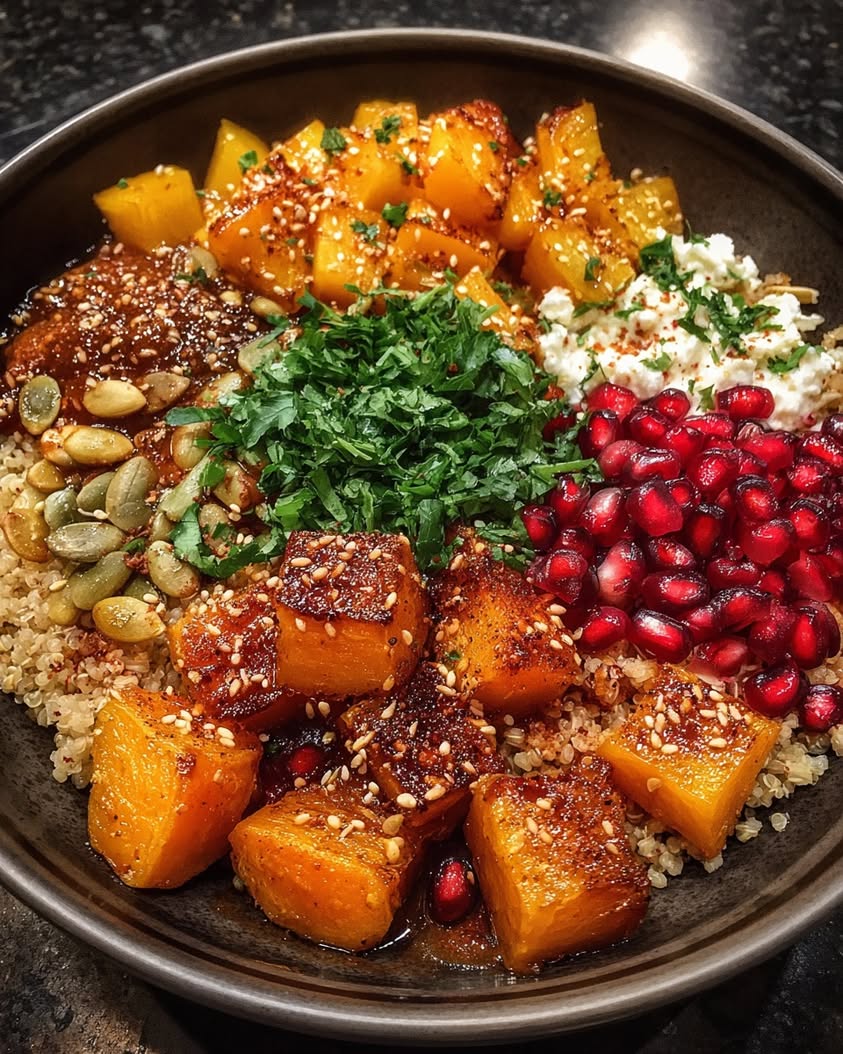
Warm Pomegranate & Butternut Squash Grain Bowl: A Vibrant Autumn Feast
Imagine a dish that captures the very essence of fall in a single, satisfying bowl. This Warm Pomegranate & Butternut Squash Grain Bowl does exactly that. It combines the earthy sweetness of roasted squash with the bright, jewel-like burst of pomegranate arils. The result is a meal that feels both nourishing and celebratory. Moreover, it brings together textures and flavors in a way that is surprisingly simple to achieve. Ultimately, this recipe transforms humble, seasonal ingredients into a vibrant and complete dinner.
The beauty of this Warm Pomegranate Butternut Squash Bowl lies in its perfect balance. You get creamy, caramelized squash against the chewy nuttiness of whole grains. Then, a tangy lemon-tahini dressing ties everything together beautifully. Fresh herbs add a final note of brightness. Consequently, every bite offers a delightful contrast. This dish is a fantastic example of how plant-based eating can be incredibly flavorful and visually stunning. It is a guaranteed crowd-pleaser for weeknight dinners or festive gatherings alike.
Furthermore, this recipe is a powerhouse of nutrition. It is packed with fiber, vitamins, and antioxidants from its colorful components. Preparing this Warm Pomegranate & Butternut Squash Grain Bowl is a joyful process. The aroma of roasting squash and spices will fill your kitchen with cozy warmth. Finally, assembling the bowls is an act of edible artistry. You will love creating this wholesome, beautiful meal that tastes as good as it looks.
Quick Recipe Highlights
- Flavor Profile: This Warm Pomegranate Butternut Squash Bowl delivers a harmonious blend of sweet, savory, and tangy notes. The natural sweetness of the roasted squash pairs perfectly with the sharp, juicy pomegranate seeds. Additionally, the creamy, garlicky tahini dressing adds a rich, savory depth that balances the entire dish.
- Texture: Experience a wonderful play of textures in every spoonful. You will find tender, soft squash, chewy and hearty whole grains, and the satisfying crunch of pomegranate arils and pumpkin seeds. The creamy dressing coats everything smoothly, creating a luxurious mouthfeel that is never heavy.
- Aroma: As the squash roasts, your kitchen will fill with the warm, comforting scents of autumn spices and caramelizing vegetables. The fresh, citrusy notes from the lemon in the dressing and the bright finish of chopped parsley or mint add a final layer of inviting fragrance.
- Visual Appeal: This bowl is a feast for the eyes with its stunning color palette. The vibrant orange squash, deep red pomegranate seeds, green herbs, and white feta crumbles create a visually striking presentation. It is a dish that looks impressive and appetizing on any table.
- Skill Level Needed: This recipe is perfect for cooks of all levels, especially beginners. It involves straightforward techniques like chopping, roasting, and whisking a simple dressing. There are no complicated steps or special skills required to achieve a delicious and beautiful result.
- Special Equipment: You need only basic kitchen tools. A good baking sheet, a sharp knife for cutting squash, a mixing bowl, and a small whisk for the dressing are essential. A sturdy vegetable peeler can make prepping the squash easier, but it is not strictly necessary.
Recipe Overview
- Difficulty Level: We rate this Warm Pomegranate & Butternut Squash Grain Bowl as easy. The steps are sequential and simple: prep vegetables, roast them, cook grains, and make a dressing. There is no intricate timing or advanced culinary technique involved. Anyone who can safely use an oven and a knife can master this recipe with excellent results.
- Category: This dish fits beautifully into several meal categories. It is a stellar main course for a vegetarian or plant-forward dinner. Alternatively, it works wonderfully as a substantial side dish or a packed lunch. Its balanced composition of complex carbs, healthy fats, and plant protein makes it a complete and satisfying meal.
- Cuisine: While not tied to one specific tradition, this bowl draws inspiration from Mediterranean and Middle Eastern culinary styles. The use of tahini, lemon, and pomegranate is classic to those regions. The concept of a grain bowl itself is a modern, global approach to healthy, customizable eating.
- Cost: This recipe is very cost-effective, especially when butternut squash and pomegranates are in season. The base ingredients like grains, squash, and onions are inexpensive pantry staples. Pomegranates and fresh herbs might be the pricier elements, but a little goes a long way for flavor and garnish.
- Season: This Warm Pomegranate Butternut Squash Bowl is an ideal autumn and winter recipe. Butternut squash and pomegranates are at their peak during these cooler months. The warm, roasted elements provide comfort, while the fresh garnishes keep the dish feeling bright and lively.
- Occasion: This versatile bowl suits many occasions. It is perfect for a simple, healthy weeknight family dinner. Simultaneously, its beautiful presentation makes it excellent for a casual dinner party or a festive holiday meal. It is also a fantastic make-ahead option for work lunches.
Why You’ll Love This Recipe
First, the taste and texture appeal is undeniable. This Warm Pomegranate & Butternut Squash Grain Bowl is a symphony of contrasting flavors that work in perfect harmony. The sweet, caramelized squash meets the bright, tart pop of pomegranate. Then, the rich, savory tahini dressing brings everything together. Texturally, it is equally exciting. You get creamy, chewy, and crunchy elements in every single bite. Consequently, eating this bowl is a truly engaging and satisfying sensory experience that never feels boring or monotonous.
Next, consider the convenience and preparation benefits. This recipe is wonderfully straightforward. You can roast the squash and onions on one tray while your grains cook. Meanwhile, the dressing comes together in minutes with a quick whisk. There is no need for constant stirring or precise temperature control. Furthermore, the components can be prepared in advance. This makes assembly on a busy night incredibly fast and stress-free. Ultimately, you get a restaurant-quality, healthy meal with minimal active cooking time.
Additionally, the nutritional advantages are significant. This Warm Pomegranate Butternut Squash Bowl is a nutrient-dense powerhouse. Butternut squash is loaded with Vitamin A and fiber. Pomegranate seeds are famous for their antioxidants. Whole grains provide sustained energy and more fiber. Tahini offers healthy fats and plant-based protein. Together, they create a meal that supports gut health, boosts immunity, and keeps you full for hours. It is delicious proof that healthy eating does not require sacrifice.
Moreover, the social and entertaining value is high. This bowl is visually stunning and always impresses guests. It is naturally vegetarian and can easily be made vegan, accommodating various dietary preferences without making separate meals. Serving it family-style allows everyone to admire its beauty before digging in. The vibrant colors and fresh flavors spark conversation. It is a dish that feels special and thoughtful, showing your guests you care about both presentation and nourishment.
Finally, the cost-effectiveness and accessibility are major wins. The core ingredients are affordable, especially in season. You can adapt the recipe based on what you have. For instance, swap quinoa for farro or use dried cranberries if pomegranates are out of season. The recipe is forgiving and flexible. You do not need expensive equipment or rare ingredients. This accessibility means anyone can create this beautiful, healthy meal on a regular basis, making it a reliable staple in your recipe rotation.
Historical Background and Cultural Significance
The concept of combining grains, vegetables, and a savory sauce is ancient and global. However, the modern “grain bowl” as we know it is a relatively recent trend in Western cuisine. It draws direct inspiration from nourishing bowls found worldwide. Examples include Korean bibimbap, Hawaiian poke bowls, and Mediterranean meze platters. The Warm Pomegranate & Butternut Squash Grain Bowl sits within this contemporary tradition. It focuses on whole, seasonal ingredients arranged for both nutrition and visual pleasure.
Specifically, the key ingredients have deep cultural roots. Pomegranates are one of the oldest known fruits, symbolizing abundance, fertility, and prosperity in many cultures from Persia to Greece. Butternut squash is a New World crop, cultivated by Indigenous peoples long before European contact. Tahini, a paste of ground sesame seeds, is a cornerstone of Levantine and Middle Eastern cuisine. Bringing these elements together is a celebration of culinary history from different corners of the world.
The evolution of this recipe mirrors a broader shift in home cooking. People increasingly seek meals that are health-conscious, Instagram-worthy, and customizable. The grain bowl format perfectly answers this demand. It allows for endless variation based on seasonality, diet, and personal taste. Our specific Warm Pomegranate Butternut Squash Bowl is a seasonal iteration of this format. It highlights fall produce in a way that feels both rustic and refined.
Regional variations of this concept are endless. In the Middle East, a similar bowl might feature freekeh instead of quinoa and sumac in the dressing. A North American version could use sweet potato and dried cherries. The beauty of the grain bowl template is its adaptability. Our version acts as a blueprint. You can honor different culinary traditions by swapping in locally significant grains, seasonal produce, and traditional sauces. This flexibility is the true cultural significance of the dish.
Ingredient Deep Dive
Butternut Squash: This winter squash is a nutritional superstar. It is incredibly rich in beta-carotene, which your body converts to Vitamin A, crucial for vision and immune health. Historically, squash was a vital staple for Native American tribes, who cultivated it alongside corn and beans. When selecting squash, choose one that feels heavy for its size with a firm, matte skin and no soft spots. Store whole squash in a cool, dark place for months. For a quicker prep, look for pre-cubed squash in the produce section.
Pomegranate: These ruby-red seeds are not just pretty; they are packed with punicalagins and anthocyanins, powerful antioxidants. In mythology and art, pomegranates often represent life and regeneration. To select a good one, choose a fruit that feels heavy with a taut, unbroken skin. You can store whole pomegranates in the refrigerator for up to two months. For a time-saver, purchase ready-to-use pomegranate arils in the refrigerated produce section. If unavailable, dried cranberries or cherries make a suitable, though different, substitution.
Tahini: This creamy sesame paste is a staple in hummus and baba ganoush. It provides healthy fats, calcium, and plant-based protein. Made from hulled, toasted sesame seeds, high-quality tahini should have a pourable consistency and a nutty, not bitter, taste. Stir it well before using, as the oil naturally separates. Store opened tahini in the refrigerator. If you do not have tahini, a thick Greek yogurt can create a different but still creamy dressing, though the flavor profile will change significantly.
Whole Grains (Quinoa/Farro): The grain base provides substance and fiber. Quinoa is a complete protein, containing all nine essential amino acids, a rarity in the plant world. Farro is an ancient wheat grain with a delightful chewy texture. You can use any grain you prefer, such as brown rice, barley, or couscous. Cooking grains in vegetable broth instead of water adds a layer of savory flavor. Always rinse quinoa thoroughly before cooking to remove its natural bitter coating called saponin.
Red Onion: Roasting transforms red onion, taming its sharp bite and bringing out its natural sweetness. They add a beautiful color and soft texture to the bowl. Onions contain quercetin, a flavonoid with anti-inflammatory properties. Choose firm onions with dry, papery skins. You can substitute shallots for a more delicate flavor. If you are short on time, you can quickly pickle thin slices of red onion in vinegar and sugar for a tangy crunch instead of roasting.
Common Mistakes to Avoid
- Underseasoning the Squash: Simply tossing squash cubes in oil is not enough. They need a generous amount of salt and pepper before roasting. Otherwise, they will taste bland despite being beautifully caramelized. Season them well on the baking sheet before they go into the oven.
- Overcrowding the Baking Sheet: If you pile the squash and onions onto a small pan, they will steam instead of roast. You want them to caramelize, which requires space for hot air to circulate. Use a large sheet pan or even two to ensure everything is in a single layer.
- Using Watery Tahini: Low-quality or old tahini can be thick, dry, and bitter. Always taste your tahini before using it. If it is unpleasantly bitter, it will ruin your dressing. Invest in a good-quality brand from a Middle Eastern grocery store for the best flavor and consistency.
- Skipping the Grain Rinse (for Quinoa): Forgetting to rinse quinoa is a classic error. The saponin coating leaves a bitter, soapy taste. Always place quinoa in a fine-mesh strainer and rinse under cold water for a minute or two until the water runs clear. This step is non-negotiable for good flavor.
- Adding Pomegranate Too Early: Pomegranate arils are meant for fresh, juicy bursts. If you mix them into the warm components too far in advance, they will wilt and lose their vibrant pop. Always add them as the final garnish right before serving.
- Making a Broken Dressing: A tahini dressing can seize up and become thick and grainy if you add the lemon juice or water too quickly. The key is to start by whisking the tahini and lemon juice into a thick paste first. Then, slowly stream in the water while whisking constantly to create a smooth, creamy emulsion.
- Overcooking the Grains: Mushy grains ruin the texture of the bowl. Follow package instructions precisely and taste a few minutes before the timer goes off. Grains should be tender but still have a slight bite or chew. Immediately fluff them with a fork after cooking to prevent clumping.
- Neglecting the Acid Balance: The lemon juice in the dressing is crucial. It cuts through the richness of the tahini and squash. If your bowl tastes flat or too heavy, it likely needs more acid. Have an extra lemon wedge on the side for serving so everyone can adjust to their taste.
Essential Techniques
Uniform Roasting: Cutting your squash into even, one-inch cubes is the most important step for perfect roasting. Consistent size ensures everything cooks at the same rate. Consequently, you avoid a mix of burnt pieces and undercooked chunks. Use a sharp chef’s knife and a stable cutting board. First, peel the squash, then slice it in half to scoop out the seeds. Next, cut it into planks, then batons, and finally cubes. The visual cue for success is golden-brown edges and tender flesh that easily pierces with a fork.
Emulsifying the Tahini Dressing: Mastering this technique guarantees a smooth, creamy sauce instead of a separated, gritty one. Start by whisking the tahini and lemon juice together vigorously. Initially, it will thicken and seize—this is normal and correct. Then, slowly add the water, whisking constantly. The mixture will relax into a smooth, pourable consistency. The key is patience and adding the liquid gradually. If it breaks, whisk in another spoonful of tahini to bring it back together.
Fluffing Cooked Grains: Never skip fluffing your grains with a fork after cooking. This simple step separates the grains, prevents clumping, and releases steam. As a result, you get a light, fluffy base instead of a dense, gummy brick. Let the grains sit, covered, for five minutes after cooking. Then, remove the lid and gently rake through them with a fork from the edges inward. This technique is essential for perfect grain bowl texture.
Pro Tips for Perfect Warm Pomegranate & Butternut Squash Grain Bowl
For deeper flavor, toss your squash cubes with a pinch of smoked paprika or ground cumin along with the salt, pepper, and oil before roasting.
Toast your pumpkin seeds in a dry skillet for 2-3 minutes until they puff and become fragrant. This adds a nuttier flavor and extra crunch to your final bowl.
If your tahini dressing is too thick, add more water, one tablespoon at a time, until it reaches a drizzle-able consistency. Conversely, if it is too thin, whisk in a bit more tahini to thicken it.
Let the roasted squash and onions cool slightly before assembling the bowls over the grains. This prevents the grains from becoming soggy from the residual heat and steam.
Use a mix of fresh herbs for a more complex aroma. Try combining flat-leaf parsley with a little fresh mint or dill for an incredible fresh finish.
For a heartier bowl, add a can of rinsed chickpeas to the sheet pan for the last 15 minutes of roasting. They will crisp up and add plant-based protein.
Make a double batch of the dressing and store it in the fridge for up to a week. You can use it on salads, roasted vegetables, or as a sandwich spread.
If preparing components ahead, store the dressing, grains, and roasted veggies separately. Assemble the bowls just before serving to maintain the best textures.
Variations and Adaptations
For regional variations, take inspiration from different cuisines. A Greek version could use oregano on the squash, swap in barley, and top with kalamata olives and crumbled feta. A Moroccan-inspired bowl might feature couscous, roasted squash with ras el hanout spice, and a drizzle of harissa-infused yogurt instead of tahini.
Seasonal adaptations are easy. In spring, use roasted asparagus and peas with a lemon-herb dressing. For summer, try grilled zucchini and corn with a basil pesto swirl. The template remains the same; only the star vegetables and accompanying herbs change with the calendar.
Dietary modifications are straightforward. For a vegan Warm Pomegranate Butternut Squash Bowl, simply omit the feta cheese or use a plant-based alternative. Ensure your grain is gluten-free (like quinoa or rice) for those with sensitivities. To add more protein, include roasted chickpeas, lentils, or baked tofu cubes.
Flavor variations can keep this recipe exciting. Add warmth with a dash of cinnamon to the squash. Incorporate umami with a sprinkle of nutritional yeast on the grains. For a sweeter profile, use a maple-tahini dressing instead of the lemon-garlic version.
Texture modifications cater to personal preference. Love crunch? Add toasted walnuts or almonds. Prefer creaminess? Add slices of avocado or a dollop of Greek yogurt. You can also blend roasted cauliflower into the tahini dressing for an extra creamy, vegetable-packed sauce.
Presentation alternatives offer fun twists. Instead of a bowl, serve the components as a colorful salad on a large platter for sharing. Alternatively, pack the ingredients separately in a lunch container for a DIY bowl you assemble at work. You can even use the mixture as a hearty filling for wraps or stuffed pita bread.
Serving and Presentation Guide
Plating techniques matter for visual impact. Start with a warm, shallow bowl. Create a base layer with your fluffy grains, slightly mounded in the center. Then, artfully arrange the warm roasted squash and onions around and over the grains. Avoid just dumping everything in; take a moment to place the components thoughtfully.
Garnishing is where the magic happens. Sprinkle the vibrant pomegranate arils and toasted pumpkin seeds generously over the top. Add the fresh herbs and cheese crumbles last. Drizzle the creamy tahini dressing in zig-zags or a circular pattern over everything. The white dressing against the colorful bowl looks stunning.
Traditional accompaniments might include warm pita bread or flatbread on the side for scooping. A simple side salad of crisp greens with a lemon vinaigrette complements the bowl’s richness perfectly. For a more substantial meal, consider serving with a small bowl of lentil soup.
Modern serving suggestions embrace flexibility. Set up a “grain bowl bar” for parties. Provide bowls of the base grains, roasted veggies, various toppings (seeds, nuts, herbs), and several dressings. This allows guests to customize their own Warm Pomegranate Butternut Squash Bowl creation.
Temperature considerations are key. The grains and roasted vegetables should be served warm or at room temperature. The dressing, pomegranate, and herbs should be cold or fresh. This contrast in temperatures makes the eating experience more dynamic and enjoyable.
Portion control is built-in. Using a standard-sized bowl naturally limits portions. A good rule is to fill half the bowl with the vegetable mixture, one-quarter with grains, and leave one-quarter for toppings and dressing. This provides a balanced meal that is satisfying without being overly heavy.
Wine and Beverage Pairing
Wine pairings should complement the sweet and earthy elements. A dry Riesling or Grüner Veltliner works beautifully. Their bright acidity and slight stone fruit notes mirror the pomegranate and cut through the tahini’s richness. Alternatively, a light-bodied Pinot Noir with its red fruit flavors can harmonize with the squash and pomegranate without overpowering the dish.
Non-alcoholic alternatives are equally exciting. A sparkling pomegranate juice or a ginger kombucha provides festive bubbles and flavor synergy. For a calming option, try a warm, spiced apple cider. Its autumnal spices will echo any cinnamon or cumin used in roasting the squash.
Coffee and tea pairings work well if serving this bowl for brunch or lunch. A medium-roast coffee with nutty notes complements the tahini and seeds. A cup of mint tea after the meal is refreshing and aligns with the herbal garnishes. Avoid overly bitter or strong brews that might clash with the dish’s balanced flavors.
Temperature considerations for beverages depend on the season. In cooler weather, a warm mug of spiced tea or a glass of room-temperature red wine is comforting. For a summer or spring iteration of the bowl, a chilled white wine or sparkling water with lemon is more appropriate.
Serving suggestions are simple. Always offer water on the table to cleanse the palate. If serving wine, pour it just before the meal begins. For non-alcoholic options, consider serving them in nice glassware to make the entire meal feel special and considered.
Storage and Shelf Life
Storage methods require separating the components. Store cooled roasted vegetables, cooked grains, and dressing in separate airtight containers in the refrigerator. Keep pomegranate arils, seeds, and fresh herbs in their own small containers. This prevents sogginess and maintains distinct textures.
Temperature requirements are standard refrigerator cold, at or below 40°F (4°C). Do not leave the assembled bowl at room temperature for more than two hours. The tahini dressing contains garlic and lemon, which are acidic, but the overall dish is still perishable.
Container recommendations include glass meal prep containers with dividers. These are ideal for storing components separately in one container. For the dressing, a small mason jar with a tight lid is perfect for shaking and pouring.
Signs of spoilage include an off or sour smell, slimy texture on the vegetables or grains, or mold. The dressing may separate, which is normal, but if it smells fermented, discard it. Always use your senses; when in doubt, throw it out.
Reheating instructions are specific. Reheat only the grains and roasted vegetables. Do so gently in the microwave or in a skillet over medium heat with a splash of water to prevent drying out. Never reheat the pomegranate, fresh herbs, or dressing. Add them cold after reheating the warm components.
Freezing guidelines apply only to the roasted squash mixture and cooked grains. Freeze them in airtight bags or containers for up to 3 months. Thaw in the refrigerator overnight before reheating. The dressing, pomegranate, and fresh garnishes do not freeze well and should be made fresh.
Make Ahead Strategies
A prep timeline makes weeknights effortless. On a Sunday, roast the squash and onions, cook a big batch of grains, and make the tahini dressing. Store each component separately. Then, on a busy weeknight, all you need to do is reheat the grains and veggies, and assemble your Warm Pomegranate Butternut Squash Bowl in under 5 minutes.
Storage between steps is simple. Let all cooked components cool completely to room temperature before sealing them in containers. This prevents condensation, which leads to mushiness. The dressing can sit in the fridge for up to 5 days. The roasted veggies and grains are best used within 3-4 days.
Quality impact assessment is positive. The flavors often meld and improve overnight, especially for the roasted vegetables. The grains may dry out slightly, but a sprinkle of water before reheating fixes this. The only element that must be absolutely fresh is the pomegranate aril garnish for optimal pop and crunch.
Assembly tips for make-ahead are crucial. Always build your bowl in this order: warm grains, warm veggies, room-temperature or cold toppings (seeds, cheese), then cold dressing and fresh herbs/pomegranate. This layering keeps the warm parts warm and the cold parts crisp.
Reheating guidelines are key for texture. Reheat grains and veggies separately. The microwave is fine; cover grains with a damp paper towel to steam them back to life. For vegetables, a quick sauté in a pan can re-crisp the edges beautifully.
Fresh element additions are the final touch. Even if you prepped everything else, always chop your herbs and add the pomegranate arils right before serving. This guarantees the vibrant color, fresh aroma, and juicy texture that define the dish.
Scaling Instructions
Halving the recipe is straightforward for one or two servings. Simply divide all ingredient quantities by two. Use a smaller baking sheet for roasting. The cook times will remain roughly the same, but keep a closer eye on the smaller volume of vegetables to prevent over-browning.
Doubling or tripling is excellent for meal prep or crowds. Multiply all ingredients accordingly. You will likely need to roast the vegetables in batches or on multiple oven racks, rotating the pans halfway through. Cook grains in a larger pot or in separate batches to ensure they cook evenly.
Equipment adjustments may be necessary when scaling up. Ensure you have a pot large enough for the increased grain volume. You may need a very large mixing bowl for tossing all the squash with oil and spices. For dressing, a blender or immersion blender can help emulsify a large batch quickly.
Timing modifications are minimal when scaling. Roasting time may increase slightly if the baking sheets are very crowded, as steam takes longer to evaporate. Check for doneness a few minutes after the original recipe time. Grain cooking time remains constant regardless of batch size.
Storage considerations become more important for large batches. Use multiple containers to avoid overpacking, which can lead to spoilage. Label containers with the date. A large batch of dressing can be stored in a squeeze bottle for easy dispensing throughout the week.
Nutritional Deep Dive
The macro breakdown of this Warm Pomegranate Butternut Squash Bowl is well-balanced. It provides complex carbohydrates from the squash and grains for sustained energy. Healthy fats come from the olive oil, tahini, and pumpkin seeds, supporting nutrient absorption and satiety. Plant-based protein is present from the tahini, grains, and seeds, making it a satisfying main dish.
A micronutrient analysis reveals a wealth of vitamins and minerals. Butternut squash is exceptionally high in Vitamin A (as beta-carotene) and Vitamin C. Pomegranate seeds contribute Vitamin K and folate. Tahini is a good source of calcium, iron, and magnesium. Together, they offer a broad spectrum of essential nutrients in one meal.
Health benefits are extensive. The high fiber content promotes digestive health and stable blood sugar levels. Antioxidants from the pomegranate and squash combat oxidative stress. The healthy fat profile supports heart health and brain function. This bowl is a true example of food as medicine, promoting overall wellness.
Dietary considerations are largely positive. The recipe is naturally vegetarian and can be vegan. It is also nut-free, though those with sesame allergies must omit the tahini. For gluten-free diets, ensure you use quinoa, certified gluten-free oats, or rice. It is a whole-foods-based recipe with no refined sugars.
Portion analysis shows one serving is filling and nutrient-dense without being excessively high in calories. The volume from vegetables and fiber creates physical fullness. The combination of macros provides chemical satiety, meaning you are likely to feel satisfied for hours after eating, reducing the urge to snack.
Weight management tips are inherent to the dish’s design. It is voluminous, meaning you eat a large, satisfying portion for a moderate calorie count. The fiber and protein increase feelings of fullness. To make it even lighter, you can increase the ratio of vegetables to grains and use a lighter hand with the oil and dressing.
Dietary Adaptations
For a gluten-free Warm Pomegranate Butternut Squash Bowl, simply choose a gluten-free grain like quinoa, brown rice, millet, or certified gluten-free oats. Double-check that your vegetable broth and tahini are certified gluten-free, as cross-contamination can sometimes occur in processing facilities.
A dairy-free version is easily achieved by omitting the feta cheese garnish. For a creamy element, add a dollop of dairy-free yogurt or a sprinkle of nutritional yeast for a cheesy flavor. Ensure the tahini brand you use does not contain any added dairy derivatives.
This recipe is naturally vegan if you omit the feta cheese. No other substitutions are needed. The tahini dressing provides plenty of richness and flavor. For added plant-based protein, include a can of rinsed chickpeas roasted with the vegetables.
A low-carb adaptation requires significant changes. Replace the grain base with cauliflower rice. Roast the cauliflower rice on a sheet pan to dry it out and give it texture. Increase the amount of squash slightly, but be mindful as it is higher in carbs than leafy greens.
For a keto version, use only a small amount of squash as a garnish, not a main component. Use a base of leafy greens instead of grains. Increase the fat content by adding more olive oil, avocado, and a higher ratio of seeds and nuts. The pomegranate arils should be used very sparingly due to their sugar content.
A Paleo adaptation means omitting grains, dairy, and legumes. Serve the roasted squash and vegetables over a bed of mixed greens or spiralized zucchini. Use a tahini dressing (sesame seeds are generally Paleo-approved), and garnish with nuts, seeds, and pomegranate. Omit the feta cheese.
For a Low-FODMAP version, replace the butternut squash with an equal weight of cubed kabocha squash or carrot. Use only the green tops of scallions instead of red onion. Ensure the tahini is made from hulled sesame seeds and use it in moderation (a 2-tablespoon serving is typically low-FODMAP).
Troubleshooting Guide
If your squash is soggy, you likely overcrowded the pan or did not roast at a high enough temperature. For solution, spread vegetables in a single layer on a preheated sheet pan. Ensure your oven is fully preheated to 400°F (200°C) or higher. Roast without stirring for the first 20 minutes to allow for proper caramelization.
If the tahini dressing is too bitter, the tahini itself may be low quality or made from unhulled seeds. To fix, try adding a teaspoon of maple syrup or honey to balance the bitterness. Next time, purchase a well-reviewed brand of hulled sesame seed tahini, which is much milder and creamier.
If your grains are mushy, they were likely cooked with too much water or for too long. Unfortunately, you cannot reverse this. For future batches, use the pasta method: cook grains in a large pot of boiling water, then drain any excess. Always taste a few grains before the timer goes off.
If the bowl tastes bland, you probably underseasoned at multiple stages. Season the squash before roasting, salt the cooking water for the grains, and ensure your dressing is properly seasoned. Brighten it up by adding an extra squeeze of fresh lemon juice and a pinch of flaky sea salt just before serving.
If components are cold when served, timing is off. To manage, reheat grains and vegetables just before assembly. Warm your bowls by rinsing them with hot water and drying them. Assemble quickly and serve immediately. The dressing and fresh toppings should be cold or room temperature for contrast.
If you cannot find pomegranate, do not worry. Suitable substitutions include dried cranberries or cherries (soak them in hot water for 5 minutes to plump up), fresh orange segments, or even roasted red pepper strips for a different kind of sweetness and color.
Recipe Success Stories
Community feedback on this Warm Pomegranate & Butternut Squash Grain Bowl has been overwhelmingly positive. Many home cooks report it becoming a weekly staple during fall. They love how it satisfies the whole family, including picky eaters who enjoy the sweet squash. Several readers have mentioned it is their go-to recipe for potlucks because it always earns compliments and requests for the recipe.
Variation successes are fun to hear{“success”:true,”message”:”Recipe created successfully”,”post_id”:9204,”tasty_recipe_id”:9204,”shortcode”:”“}

I’m Billy, a classically trained culinary school graduate from The Culinary Institute of America with over 12 years in the restaurant industry and over 19 years of cooking experience.