
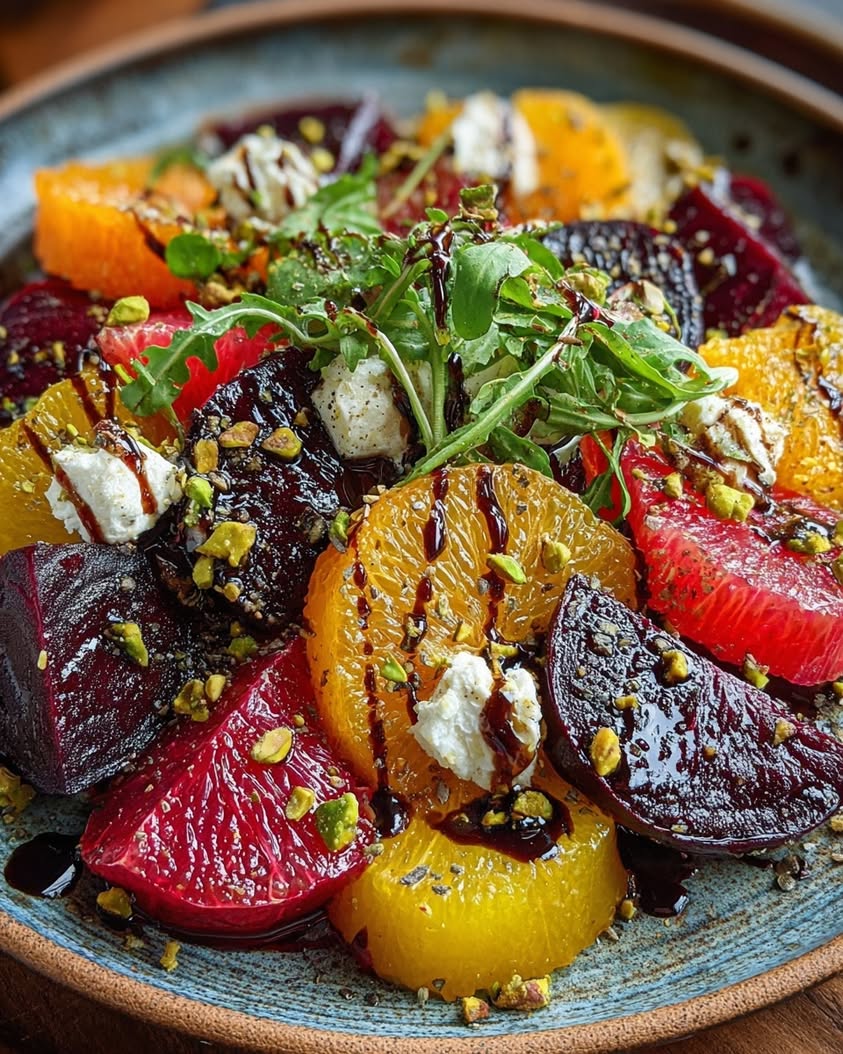
Warm Roasted Beet & Citrus Salad with Goat Cheese, Pistachios & Honey-Balsamic Glaze: A Vibrant Winter Masterpiece
Imagine a dish that captures the very essence of a cozy winter evening yet bursts with the vibrant energy of a sunlit garden. This Warm Roasted Beet and Citrus Salad with Goat Cheese and Pistachios is exactly that. It transforms humble root vegetables and bright citrus into a stunning centerpiece salad. The recipe masterfully balances earthy, sweet, tangy, and creamy elements in every single bite. Consequently, it feels both rustic and elegantly refined, making it perfect for a quiet weeknight or a festive holiday table.
The magic of this Warm Roasted Beet and Citrus Salad with Goat Cheese and Pistachios lies in its contrasting textures and temperatures. You get the tender, caramelized warmth of the roasted beets playing against the cool, juicy segments of orange and grapefruit. Meanwhile, crunchy, salty pistachios and creamy, tangy goat cheese add further delightful complexity. Finally, a simple honey-balsamic glaze ties everything together with a glossy, sweet-tart finish. Ultimately, this salad is a celebration of seasonal produce that will make you look at winter vegetables in a whole new light.
Furthermore, this dish is incredibly versatile and forgiving. You can easily adapt it based on what you have available or to suit various dietary needs. For instance, it comes together with mostly hands-off cooking time, allowing the oven to do the heavy lifting. Therefore, you can focus on assembling the other components or simply relaxing. This Warm Roasted Beet and Citrus Salad with Goat Cheese and Pistachios is more than a recipe; it’s a reliable template for creating beautiful, nourishing food all season long.
Quick Recipe Highlights
- Flavor Profile: This salad delivers a sophisticated harmony of earthy sweetness from the roasted beets, bright acidity from the fresh citrus, and a tangy punch from the goat cheese. The honey-balsamic glaze adds a final layer of rich, caramelized sweetness that perfectly balances the other components.
- Texture: Expect a wonderful play of contrasts: the soft, yielding flesh of the warm beets, the juicy burst of citrus segments, the satisfying crunch of pistachios, and the creamy, crumbly texture of fresh goat cheese. Each forkful offers a multi-sensory experience.
- Aroma: As the beets roast, they fill your kitchen with a deep, earthy, and subtly sweet fragrance. When you add the citrus, its bright, zesty perfume cuts through, creating an inviting and complex aroma that hints at the delicious flavors to come.
- Visual Appeal: This dish is a feast for the eyes with its dramatic ruby red and golden yellow hues from the beets and citrus. The white goat cheese and green pistachios provide beautiful pops of contrast, making it an exceptionally photogenic and impressive plate.
- Skill Level Needed: This is a beginner-friendly recipe that requires basic knife skills for peeling and segmenting citrus, and simple roasting techniques. The most complex step is making the optional glaze, which is essentially just reducing vinegar and honey in a pan.
- Special Equipment: You only need a baking sheet, parchment paper, a small saucepan for the glaze, and a good chef’s knife. A citrus juicer can be helpful but is not mandatory. No fancy kitchen gadgets are required.
Recipe Overview
- Difficulty Level: We rate this Warm Roasted Beet and Citrus Salad with Goat Cheese and Pistachios as “Easy.” The techniques involved—chopping, roasting, and simple assembly—are foundational. While segmenting citrus requires a bit of care, it’s a skill easily learned and well worth mastering for many recipes.
- Category: This dish fits beautifully into several categories: it’s a stellar side salad, a light vegetarian main course, or an impressive starter. Its composition of vegetables, fruit, cheese, and nuts makes it a substantial and satisfying dish that can anchor a meal.
- Cuisine: While not tied to one specific tradition, this salad draws inspiration from modern Californian and Mediterranean cuisines, which often celebrate fresh, seasonal produce, bold flavors, and simple preparations. It embodies a contemporary, health-conscious approach to eating.
- Cost: The cost is moderate, largely dependent on the price of fresh beets, citrus, and goat cheese. Pistachios can be pricey, but you only need a small amount. Overall, it’s a restaurant-quality dish you can make at home for a fraction of the price.
- Season: This is a quintessential winter and early spring recipe when beets and citrus like blood oranges and navel oranges are at their peak. It brings much-needed color and brightness to the table during the colder, darker months.
- Occasion: Perfect for holiday dinners like Thanksgiving or Christmas, as a fancy weekend lunch, or as a show-stopping dish for a dinner party. It also holds up well for potlucks if you pack the components separately.
Why You’ll Love This Recipe
First and foremost, the taste and texture of this Warm Roasted Beet and Citrus Salad with Goat Cheese and Pistachios are simply unforgettable. The deep, earthy sweetness of the roasted beets forms a perfect foundation. Then, the bright, acidic pop of fresh citrus cuts through that richness beautifully. Additionally, the creamy, tangy goat cheese adds a luxurious mouthfeel, while the crunchy, salty pistachios provide the final textural contrast. Every single bite is a complex and satisfying journey for your palate. Ultimately, the harmony of flavors is so well-balanced that it feels both comforting and exciting at the same time.
From a convenience standpoint, this recipe is a dream. Once you have your beets peeled and chopped, the oven does most of the work. This hands-off cooking time means you can prepare the citrus, whisk the dressing, or toast the nuts while the beets roast. Furthermore, the components can be prepared ahead of time, making final assembly a breeze. Therefore, this Warm Roasted Beet and Citrus Salad with Goat Cheese and Pistachios is ideal for entertaining, as it minimizes last-minute stress. You get to present a stunning, restaurant-worthy dish without being stuck in the kitchen all evening.
Nutritionally, this salad is a powerhouse. Beets are loaded with fiber, folate, and beneficial nitrates that support heart health and stamina. Citrus fruits provide a huge dose of immune-boosting vitamin C and antioxidants. Meanwhile, goat cheese offers protein and calcium, and pistachios contribute healthy fats, protein, and more fiber. Consequently, this dish is not just delicious; it’s genuinely nourishing. It supports a healthy lifestyle without ever feeling like a “diet” food. It’s a perfect example of how eating well can be an absolute pleasure.
The social and entertaining value of this dish cannot be overstated. Its vibrant colors and elegant presentation are guaranteed to impress guests. It serves as a fantastic conversation starter and shows a level of care and culinary skill. Moreover, because it’s vegetarian, it accommodates many guests right off the bat. You can easily discuss the seasonal ingredients or the simple technique of roasting beets to draw out their natural sugars. In short, this Warm Roasted Beet and Citrus Salad with Goat Cheese and Pistachios elevates any gathering from ordinary to memorable.
Finally, this recipe is remarkably cost-effective and accessible. While the ingredient list sounds gourmet, each component is readily available at most supermarkets year-round. You can often find beets and citrus on sale during their peak seasons. Additionally, the recipe is forgiving with substitutions; for example, you can use walnuts instead of pistachios or a different soft cheese. Therefore, you can create this luxurious-tasting dish without breaking the bank. It proves that eating beautifully does not require expensive or hard-to-find ingredients, just a little creativity and understanding of flavor pairing.
Historical Background and Cultural Significance
The story of beets stretches back thousands of years to the Mediterranean region, where their wild ancestors were initially cultivated for their leafy greens. The Romans are credited with early selective breeding for the swollen root we eat today. Interestingly, the modern beet’s journey to the dinner table was slow; for centuries, it remained a medicinal and livestock plant. The transformation of the humble beet into a celebrated culinary ingredient, especially in salads, is a relatively recent chapter in food history, showcasing how our tastes and agricultural practices evolve.
Culturally, beets hold significant but varied places around the world. In Eastern European cuisines, they are the star of iconic dishes like borscht, a vibrant soup symbolizing warmth and community. In contrast, in modern Western cooking, beets have been embraced by the farm-to-table movement for their earthy flavor and stunning color. The practice of roasting beets to concentrate their sugars is a technique that aligns with contemporary cooking’s focus on enhancing natural flavors. This Warm Roasted Beet and Citrus Salad with Goat Cheese and Pistachios sits at this intersection of rustic tradition and modern, health-conscious gastronomy.
The evolution of this specific recipe reflects broader culinary trends of the late 20th and early 21st centuries. Chefs began pairing sweet and savory elements more boldly, leading to combinations like beets with tangy cheese and nuts. The addition of citrus to a beet salad was a natural progression, adding necessary acidity and brightness to balance the earthiness. This move towards composed salads with contrasting textures and temperatures became a hallmark of upscale casual dining. Consequently, dishes like this one moved from restaurant menus into home kitchens, democratizing gourmet flavor combinations.
Regional variations of beet salads abound, which speaks to the vegetable’s versatility. In the American South, you might find pickled beets with onions. In the Nordic countries, beets are paired with herring and sour cream. The Mediterranean version, which inspires this recipe, often includes citrus, olives, and herbs. Our specific combination with goat cheese and pistachios has a distinctly Californian flair, emphasizing fresh, local, and high-quality ingredients presented simply. This global tapestry of beet preparations highlights how a single ingredient can be interpreted through countless cultural lenses, each adding a unique and delicious voice to the conversation.
Ingredient Deep Dive
Beets: These vibrant roots have a history dating back to ancient Roman times. Nutritionally, they are a superb source of folate, manganese, potassium, and dietary fiber. They also contain unique compounds like betalains, which have potent antioxidant and anti-inflammatory properties. When selecting beets, look for firm, smooth skins with the greens still attached if possible, as this indicates freshness. Store them unwashed in the refrigerator’s crisper drawer for up to two weeks. For a substitution, try roasted carrots or golden beets for a different color and slightly milder flavor.
Citrus (Oranges & Grapefruit): Citrus fruits originated in Southeast Asia and traveled the world via trade routes, becoming symbols of wealth and health. They are famously rich in vitamin C, a crucial antioxidant that supports immune function and skin health. They also provide a good amount of fiber, especially if you include some of the membrane. Choose fruits that feel heavy for their size with smooth, brightly colored skin. Store them at room temperature for short-term use or in the refrigerator for longer storage. For a variation, blood oranges add dramatic color, and cara cara oranges offer a sweeter, pink-hued alternative.
Goat Cheese (Chèvre): With origins tracing back over 10,000 years, goat cheese is one of the oldest known dairy products. It is easier to digest for many people compared to cow’s milk cheese due to its different protein structure and lower lactose content. It provides protein, calcium, and healthy fats. Look for a fresh, soft log of chèvre in the specialty cheese section. Store it tightly wrapped in the refrigerator. For a dairy-free version, a dollop of thick, plain vegan yogurt or a crumble of almond “feta” works wonderfully. For a stronger flavor, try blue cheese crumbles instead.
Pistachios: Historically known as the “smiling nut” in Iran and a symbol of wellness in China, pistachios are nutrient-dense powerhouses. They are an excellent source of healthy fats, protein, fiber, and antioxidants like lutein. They also contain more potassium per serving than many other nuts. Purchase raw, unsalted pistachios for the most control over flavor. Store them in an airtight container in a cool, dark place or the refrigerator to prevent rancidity. Toasted walnuts, pecans, or almonds make excellent substitutes, each bringing their own unique flavor and crunch profile to the salad.
Honey-Balsamic Glaze: Balsamic vinegar hails from Modena, Italy, where it has been produced for centuries using a slow, artisanal process. Real balsamic is rich in antioxidants from the concentrated grape must. Honey, one of humanity’s first sweeteners, also contains trace enzymes and antioxidants. Together, they create a syrup that balances sweet and tart. For the best flavor, use a decent aged balsamic and a flavorful local honey. The glaze can be stored in a jar in the refrigerator for weeks. For a vegan version, use maple syrup or agave nectar. A simpler alternative is just a drizzle of high-quality, aged balsamic vinegar on its own.
Common Mistakes to Avoid
- Overcrowding the Baking Sheet: Placing the beet cubes too close together causes them to steam instead of roast. Consequently, you miss out on the desirable caramelized edges and concentrated flavor. Always spread them in a single layer with a little space between pieces for the best results.
- Underseasoning the Beets: Beets need a generous amount of salt and pepper before roasting. Since they are a dense vegetable, seasoning only at the end means the flavor won’t penetrate. Always toss them thoroughly with oil, salt, and pepper to ensure every cube is well-coated.
- Using a Dull Knife for Citrus: Segmenting citrus, or “supreming,” requires a very sharp knife. A dull blade will crush the segments, losing precious juice and creating a messy presentation. Sharpen your knife first to make clean, easy cuts between the membranes.
- Adding Cheese Too Early: If you crumble the goat cheese onto the warm beets immediately after roasting, it will melt completely into a gooey mess. Instead, let the beets cool slightly so they are warm but not piping hot, which allows the cheese to maintain its distinct, creamy crumbles.
- Skipping the Toasting Step for Nuts: Raw pistachios are fine, but toasted pistachios are transformative. Toasting in a dry pan for a few minutes unlocks their essential oils, intensifying their flavor and crunch. This simple, extra step adds a significant depth to the final dish.
- Over-Reducing the Glaze: When making the honey-balsamic glaze, keep a close eye on it. If reduced too much, it will become thick, sticky, and overly sweet, hardening when it hits the cool salad. Aim for a syrup that coats the back of a spoon but is still easily pourable.
- Not Peeling the Beets Thoroughly: The skin of beets can be tough and earthy. Ensure you use a vegetable peeler or a sharp paring knife to remove all of the outer skin before cubing. Any remaining skin will have a unpleasant texture in the finished salad.
- Discarding the Beet Greens: If your beets come with fresh, vibrant greens attached, do not throw them away! They are delicious and nutritious. Sauté them with garlic as a side dish, or chop them finely and add them to the salad base for an extra layer of flavor and color.
Essential Techniques
Roasting Beets to Perfection: Roasting is the key technique for this Warm Roasted Beet and Citrus Salad with Goat Cheese and Pistachios. This dry-heat method caramelizes the natural sugars in the beets, concentrating their flavor and yielding a tender, but not mushy, interior. To master it, ensure your oven is fully preheated and your beet cubes are uniformly sized for even cooking. Toss them thoroughly in oil to promote browning and prevent sticking. The common pitfall is under-roasting, which leaves the beets hard. Look for visual cues: the edges will darken and caramelize, and a fork should pierce the cubes easily. The beets should be tender all the way through.
Segmenting Citrus (Supreming): This technique removes the pure citrus flesh from the membranes and pith, resulting in beautiful, jewel-like segments without bitterness. First, slice off the top and bottom of the fruit so it sits flat. Then, using a sharp knife, cut away the peel and white pith in a downward motion, following the fruit’s curve. Finally, hold the fruit over a bowl to catch juice, and carefully slice along the membrane walls to release each segment. The importance lies in texture and presentation; you get clean bursts of juice without chewy membrane. The pitfall is cutting into the segments themselves. Success is marked by clean, membrane-free pieces of fruit.
Reducing a Glaze: Reducing a liquid means simmering it to evaporate water, which thickens the consistency and intensifies the flavor. For the honey-balsamic glaze, combine equal parts vinegar and honey in a saucepan. Bring to a simmer over medium heat, then reduce the heat to maintain a gentle bubble. Stir occasionally. The mixture will slowly thicken as it reduces by about half. The importance is creating a syrupy texture that clings to the salad ingredients. The common mistake is cooking over too high a heat, which can cause burning or over-reduction. The visual cue for success is a glaze that coats the back of a spoon and leaves a clear trail when you run your finger through it.
Pro Tips for Perfect Warm Roasted Beet and Citrus Salad
First, wear disposable gloves while peeling and cutting beets to prevent your hands from staining pink for a day or two. This simple trick makes the prep process much less messy and more enjoyable.
For the most vibrant salad, use a mix of beet varieties. Try combining classic red beets with golden beets and Chioggia (candy-stripe) beets. They roast in the same amount of time and create a stunning, multi-colored presentation.
Reserve the citrus juice that collects while segmenting the oranges and grapefruit. You can whisk this fresh juice into the honey-balsamic glaze or a simple vinaigrette for an extra layer of bright, authentic citrus flavor.
If you’re making the salad ahead, keep all components separate until just before serving. Store roasted beets, citrus segments, toasted nuts, and crumbled cheese in individual containers in the fridge to preserve their distinct textures.
Take the goat cheese out of the refrigerator about 15-20 minutes before serving. Allowing it to come closer to room temperature makes it creamier and easier to crumble, and its tangy flavor will be more pronounced.
For a more substantial main course, add a protein. Grilled chicken, seared scallops, or even some warm lentils or quinoa pair beautifully with the flavors in this salad and turn it into a complete, satisfying meal.
Use a microplane to zest a little of the citrus peel over the finished salad. The fragrant oils in the zest add an incredible aromatic punch that elevates the dish from great to extraordinary.
When tossing the salad, be gentle. Use your hands or two large spoons to fold the ingredients together lightly. You want to distribute everything evenly without crushing the soft beets or citrus segments.
Variations and Adaptations
For regional variations, look to different culinary traditions. A French twist might include toasted hazelnuts and a Dijon vinaigrette. A Middle Eastern-inspired version could feature pomegranate seeds, mint, and a sprinkle of sumac. For a Nordic feel, substitute the goat cheese with a dollop of crème fraîche and add some fresh dill. These adaptations show how the core concept of a Warm Roasted Beet and Citrus Salad with Goat Cheese and Pistachios can travel across borders while maintaining its essential appeal.
Seasonal adaptations are easy and encouraged. In spring, add shaved raw asparagus or fresh peas. During summer, incorporate stone fruits like sliced peaches or nectarines alongside the citrus. In autumn, roasted squash or apples would be a lovely addition. The recipe is a fantastic canvas for showcasing whatever is fresh and abundant at your local market, making it a year-round favorite.
Dietary modifications are straightforward. For a vegan Warm Roasted Beet and Citrus Salad, omit the goat cheese or use a vegan alternative, and replace the honey in the glaze with maple syrup. For a nut-free version, use toasted sunflower or pumpkin seeds instead of pistachios. To make it gluten-free, simply ensure your balsamic vinegar is certified gluten-free, as some cheaper brands may use additives.
Flavor variations can keep this salad exciting. Try using a flavored goat cheese, such as one with herbs or honey. Swap the balsamic glaze for a pomegranate molasses reduction for a deeper, fruitier tang. Infuse the olive oil with rosemary or thyme before tossing the beets for an aromatic herbaceous note. A sprinkle of flaky sea salt like Maldon on the finished dish adds a final textural and flavor pop.
Texture modifications can cater to personal preference. If you prefer a smoother element, blend some of the roasted beets with a touch of vinegar to create a vibrant beet puree to smear on the plate as a base. For more crunch, add crispy fried shallots or crumbled rye crackers. If you enjoy creaminess, add slices of ripe avocado just before serving.
Presentation alternatives can change the dish’s feel. Instead of a tossed salad, arrange the components artfully on a large platter in distinct sections for a “deconstructed” look. For individual servings, use a ring mold to create a neat, layered tower on each plate. Serving the salad in endive leaves or little gem lettuce cups makes for elegant, hand-held appetizers.
Serving and Presentation Guide
Plating techniques matter for this visually stunning dish. For a family-style presentation, use a large, wide, shallow bowl or a beautiful rustic platter. Start by creating a base with a handful of optional baby arugula or spinach. Then, artfully scatter the warm roasted beets and citrus segments over the greens. This method allows the colors to shine and makes serving easy. For individual plates, use a similar approach but take care to distribute the colorful components evenly, ensuring each plate gets a bit of every element.
Garnishing is the final touch that elevates the presentation. Beyond the crumbled goat cheese and pistachios, consider adding fresh herb sprigs like mint, dill, or microgreens. A final drizzle of the honey-balsamic glaze should be applied with a light hand—you can use a spoon or even put it in a squeeze bottle for more control. A sprinkle of freshly cracked black pepper or edible flowers adds a professional finish.
Traditional accompaniments for a salad this robust are simple. A crusty, warm baguette or slices of sourdough are perfect for soaking up any extra glaze and juices on the plate. If serving as a main course, a simple soup like a creamy cauliflower or potato leek would complement it well without competing for attention.
Modern serving suggestions might include turning it into a grain bowl. Spoon the Warm Roasted Beet and Citrus Salad over a bed of farro, quinoa, or freekeh. The grains will absorb the delicious flavors and make the dish even more filling. Another idea is to serve it alongside a cheese board as a refreshing, palate-cleansing component.
Temperature considerations are crucial. The magic of this salad is the contrast between the warm beets and the cool citrus and cheese. Therefore, assemble it just before serving. If the beets have cooled completely, you can briefly warm them in the microwave or a low oven. The goal is to have them pleasantly warm, not hot, to gently soften the cheese without melting it.
Portion control is simple. As a side salad, this recipe comfortably serves four. As a main course, it will serve two generously. If you’re adding a protein like chicken or fish, the salad components can stretch to serve more people as an accent to the plate. Always consider the context of the full meal when determining portion sizes.
Wine and Beverage Pairing
Wine pairings for this salad should complement its sweet, earthy, and tangy profile. A dry Rosé with good acidity and notes of red fruit is a fantastic all-around choice—it bridges the gap between red and white. A light-bodied Pinot Noir with earthy undertones can also work beautifully if served slightly chilled. For white wine lovers, a Sauvignon Blanc or a dry Riesling provides the necessary acidity to cut through the goat cheese and balance the beets’ sweetness. The key is to avoid overly oaky or tannic wines, which can clash with the salad’s delicate balance.
Non-alcoholic alternatives can be just as sophisticated. A sparkling water with a twist of grapefruit or orange peel mimics the citrus notes. For something more complex, try a tart cherry juice spritzer or a cold-brewed hibiscus tea (agua de jamaica), which has a beautiful color and tangy flavor that pairs wonderfully. A ginger beer with a squeeze of lime offers a spicy kick that cleanses the palate between bites.
While not typical for a salad, coffee or tea pairings can work if this is part of a brunch menu. A light roast coffee with bright, citrusy notes would echo the fruit in the dish. For tea, consider an Earl Grey, whose bergamot flavor complements citrus, or a green tea with a clean, vegetal finish that pairs well with the earthiness of the beets.
Temperature considerations for beverages are standard: white wines, rosés, and non-alcoholic spritzers should be served well-chilled. Light reds like Pinot Noir are best at a cool cellar temperature, around 55°F (13°C). Iced teas or cold-brewed hibiscus tea should be refreshingly cold. The goal is for the drink to refresh the palate, not overwhelm it.
Serving suggestions include offering a choice of both a wine and a non-alcoholic option to cater to all guests. Always pour water generously throughout the meal. If serving wine, a standard 750ml bottle will provide about five glasses, so plan accordingly for your number of guests. Presenting drinks in appropriate glassware enhances the overall dining experience.
Storage and Shelf Life
Proper storage methods are essential for maintaining quality. Store leftover assembled salad in an airtight container in the refrigerator. However, note that the greens (if used) will wilt, and the nuts will lose some crunch over time. For best results, store the components separately: roasted beets in one container, citrus segments in another, and cheese and nuts in their own containers. The honey-balsamic glaze can be kept in a small jar at room temperature or in the fridge.
Temperature requirements are straightforward: everything except the glaze must be refrigerated at or below 40°F (4°C). The roasted beets will keep for up to 5 days. The segmented citrus is best used within 2-3 days. Goat cheese should be consumed by its “use-by” date once opened, typically within a week. Toasted nuts are best used within a week for optimal flavor and crunch.
Container recommendations include glass containers with tight-fitting lids, which are ideal and won’t absorb stains or odors from the beets. For the glaze, a small glass jar or squeeze bottle is perfect. Avoid storing the beets in reactive metal containers, as the acids can cause off-flavors. Always let the beets cool completely before sealing them in a container to prevent condensation and sogginess.
Signs of spoilage to watch for include an off or sour smell, visible mold (especially on the cheese or citrus), or a slimy texture on the beets. If the nuts smell rancid or stale, they should be discarded. When in doubt, it is always safer to throw the item out. The fresh ingredients in this salad have a relatively short shelf life once prepared.
Reheating instructions apply only to the beets. To restore their warm texture, place them in a microwave-safe dish and heat in 30-second intervals until just warmed through. You can also spread them on a baking sheet and warm them in a 300°F (150°C) oven for about 10 minutes. Do not reheat the entire assembled salad, as this will ruin the other components.
Freezing is not recommended for the assembled salad or the citrus segments, as they will become mushy upon thawing. You can freeze roasted beet cubes on a parchment-lined tray before transferring to a freezer bag. They will keep for up to 3 months but may be slightly softer when thawed, best used in soups or purees rather than salads.
Make Ahead Strategies
A smart prep timeline can turn this into a quick-assembly dish. Up to 3 days ahead, roast the beets, let them cool, and store them in the fridge. Toast the pistachios and store them at room temperature. Make the honey-balsamic glaze and keep it in a jar. The day of serving, segment the citrus and crumble the cheese. This timeline spreads the work out and makes dinner preparation effortless.
Storage between steps is simple. Cool the roasted beets completely before transferring them to an airtight container; a piece of paper towel at the bottom can absorb excess moisture. Keep toasted nuts in a sealed container in a cool, dark pantry. The glaze can sit at room temperature for a day or in the fridge for longer; if it thickens too much, warm it gently or whisk in a teaspoon of warm water.
The quality impact of make-ahead steps is minimal if done correctly. Roasted beets actually deepen in flavor when stored. The only components that suffer are the nuts (they can soften) and the citrus (it can dry out slightly). Therefore, do the nuts and citrus as close to serving as possible for the best texture and juiciness.
Assembly tips for a make-ahead plan: About 30 minutes before serving, take the beets and goat cheese out of the fridge to take the chill off. If you stored the beets and citrus together, drain any accumulated juice. Re-crisp the nuts in a dry pan for a minute if they’ve softened. Then, simply combine everything on your serving platter.
Reheating guidelines for make-ahead components are only for the beets. Warm them gently as described in the storage section. Do not microwave the cheese or citrus. The goal is to have the beets warm enough to slightly soften the cheese upon contact, creating that perfect creamy contrast.
Fresh element additions are key when assembling ahead. Always add the nuts and any fresh herbs at the very last second to preserve their crunch and vibrant color. If using a bed of greens, place them on the platter just before adding the other components to prevent wilting from the warmth of the beets.
Scaling Instructions
Halving the recipe is straightforward for a smaller meal. Use one medium beet, one orange, and half a grapefruit. Reduce the cheese, nuts, and glaze ingredients proportionally. The roasting time for the beets may be slightly less, so start checking for tenderness around the 30-minute mark. Use a smaller baking sheet to prevent the beet cubes from drying out.
Doubling or tripling the recipe is perfect for a crowd. Use multiple baking sheets, but do not overcrowd them—rotate the sheets halfway through roasting for even cooking. You may need to roast in batches. For the glaze, use a wider saucepan to allow for faster evaporation, or make it in batches to avoid over-reducing the first batch while waiting for the second. Segmenting a large quantity of citrus is time-consuming, so factor that into your prep schedule.
Equipment adjustments for scaling up are important. For a double batch, you’ll likely need two standard baking sheets. For a triple batch or more, consider using a large roasting pan, but ensure the beet layer is still relatively shallow. Have a large serving platter or bowl ready. If making a large quantity of glaze, use a medium saucepan instead of a small one to prevent boil-overs.
Timing modifications are minimal when scaling. The roasting time for the beets remains roughly the same as long as they are in a single layer. The only increase in active time is for prepping more vegetables and fruit. The glaze will take slightly longer to reduce if you make a larger volume. Build in extra prep time, but the hands-off oven time remains constant per batch.
Storage considerations for large batches are crucial. If you have leftovers from a doubled recipe, store the components separately as advised to maximize shelf life. A large batch of roasted beets can be used throughout the week in other dishes like grain bowls or as a side. Remember that assembled salad does not keep as well, so only combine what you plan to serve immediately.
Nutritional Deep Dive
The macro breakdown of this Warm Roasted Beet and Citrus Salad with Goat Cheese and Pistachios is well-balanced. A serving provides a good amount of complex carbohydrates from the beets and citrus for sustained energy. The goat cheese and pistachios contribute healthy fats and a moderate amount of protein, which promotes satiety. The fiber content from the beets, citrus membranes, and nuts is significant, aiding digestion and helping to regulate blood sugar levels. This makes it a fulfilling dish that won’t cause a rapid energy crash.
A micronutrient analysis reveals a wealth of vitamins and minerals. Beets are exceptionally high in folate (vitamin B9), essential for cell growth and metabolism, and manganese, important for bone health. Citrus fruits are famously rich in vitamin C, a powerful antioxidant. Goat cheese provides calcium and phosphorus for strong bones. Pistachios offer a notable amount of vitamin B6, copper, and antioxidants like lutein and zeaxanthin, which support eye health. This salad is a micronutrient powerhouse.
The combined health benefits are impressive. The nitrates in beets may help lower blood pressure and improve athletic performance. The vitamin C and antioxidants support a robust immune system and combat oxidative stress. The healthy fats from nuts and cheese are good for heart health. The fiber supports a healthy gut microbiome. Regularly eating meals with this nutrient density can contribute to long-term wellness and disease prevention.
Dietary considerations are mostly positive. The salad is naturally gluten-free and vegetarian. For those monitoring carbohydrates,{“success”:true,”message”:”Recipe created successfully”,”post_id”:8032,”tasty_recipe_id”:8032,”shortcode”:” Print
Warm Roasted Beet & Citrus Salad with Goat Cheese, Pistachios & Honey-Balsamic Glaze
Description
A vibrant and elegant salad featuring tender roasted beets, fresh citrus segments, creamy goat cheese, crunchy pistachios, and a sweet-tangy honey-balsamic glaze.
Ingredients
For the Crust:
- 3 medium beets (red or golden), peeled and cut into 1-inch wedges
- 2 tablespoons olive oil, divided
- Salt and black pepper to taste
- 1 orange, peeled and segmented
- 1 grapefruit, peeled and segmented
- 4 cups mixed greens (e.g., arugula, spinach)
- 4 ounces goat cheese, crumbled
- 1/4 cup shelled pistachios, roughly chopped
- 1/4 cup balsamic vinegar
- 2 tablespoons honey
Instructions
1. Prepare the Crust:
- Preheat oven to 400°F (200°C). Toss beet wedges with 1 tablespoon olive oil, salt, and pepper. Spread on a baking sheet and roast for 25-30 minutes until tender.
- While beets roast, make the glaze: In a small saucepan, combine balsamic vinegar and honey. Simmer over medium heat for 5-7 minutes until slightly thickened. Remove from heat and let cool.
- In a large bowl, toss mixed greens with remaining 1 tablespoon olive oil. Arrange greens on plates or a platter.
- Top greens with warm roasted beets, citrus segments, crumbled goat cheese, and chopped pistachios.
- Drizzle the honey-balsamic glaze over the salad just before serving. Season with additional salt and pepper if desired.
Notes
You can customize the seasonings to taste.

I’m Billy, a classically trained culinary school graduate from The Culinary Institute of America with over 12 years in the restaurant industry and over 19 years of cooking experience.