
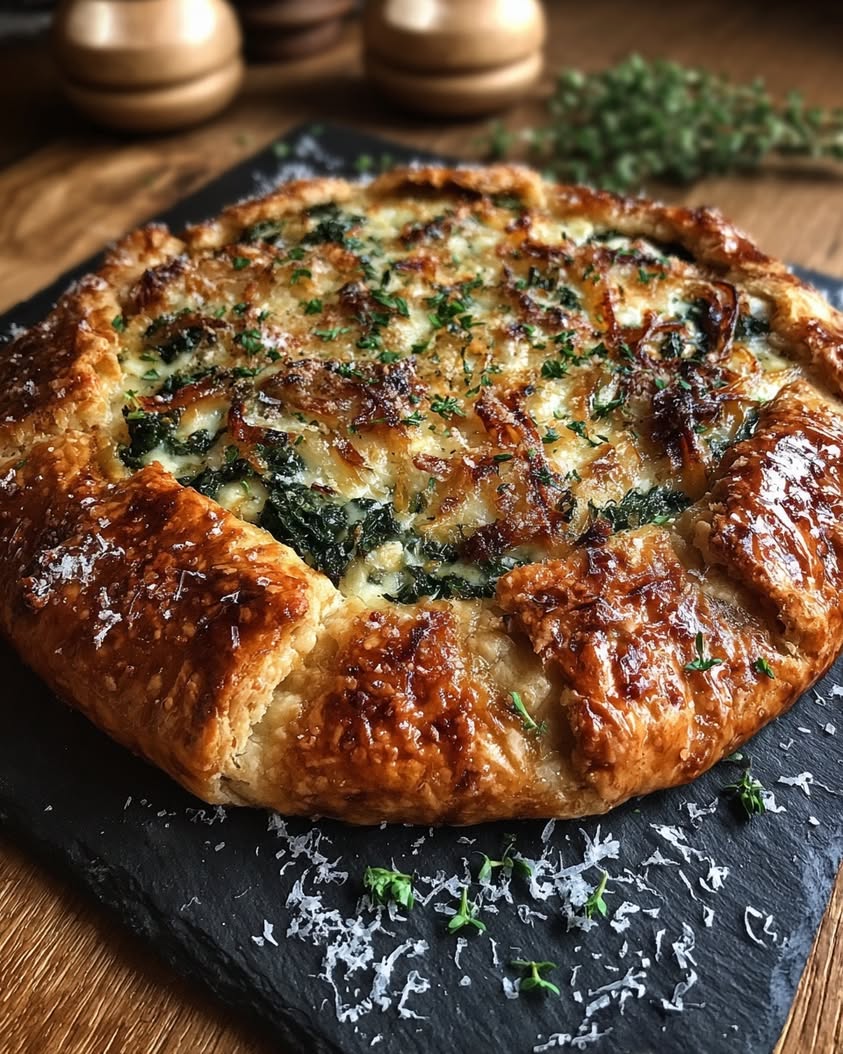
White Bean & Kale Galette with Gruyère & Caramelized Onions: A Rustic, Savory Masterpiece
Imagine a dish that perfectly balances rustic charm with sophisticated flavor. This White Bean & Kale Galette with Gruyère & Caramelized Onions is exactly that. Essentially, it is a free-form savory tart with a flaky, buttery crust cradling a hearty, flavorful filling. Consequently, it delivers a stunning centerpiece for any meal, from a cozy family dinner to an impressive brunch with friends. The aroma alone, as it bakes, will draw everyone into the kitchen with anticipation.
This White Bean & Kale Gruyère Galette Recipe masterfully combines humble, nourishing ingredients into something truly extraordinary. The sweet depth of slowly caramelized onions melds with earthy kale and creamy white beans. Meanwhile, nutty Gruyère cheese adds a rich, melty layer that binds everything together. Ultimately, each component plays a crucial role, creating a symphony of textures and tastes in every single bite. This dish is a celebration of plant-forward eating without sacrificing an ounce of comfort or satisfaction.
Quick Recipe Highlights
- Flavor Profile: This galette boasts a complex, savory-sweet flavor. Deeply caramelized onions provide a foundational sweetness, while the kale adds a pleasant, earthy bitterness. The white beans contribute a creamy, mild note, and the Gruyère cheese brings a sharp, nutty richness that ties the whole filling together beautifully.
- Texture: You will experience a wonderful contrast in textures. The crust is supremely flaky and tender, shattering with each forkful. Inside, the filling is a delightful mix of creamy mashed beans, tender-crisp kale, and soft, jammy onions. The melted Gruyère adds a gooey, stringy quality that is utterly irresistible.
- Aroma: As this White Bean & Kale Galette bakes, it fills your home with an incredible fragrance. First, you will smell the sweet, buttery scent of caramelizing onions. Then, the earthy notes of kale and the toasty, nutty aroma of Gruyère cheese will join in. Finally, the golden, baking pastry crust completes the olfactory experience.
- Visual Appeal: This dish is a feast for the eyes with its rustic, golden-brown crust folded casually over the vibrant filling. The deep green kale and white beans peek through, creating a beautiful, natural presentation. Served on a wooden board or simple platter, it looks both artisanal and inviting.
- Skill Level Needed: This recipe is approachable for a confident home cook. It involves making a simple pastry dough, a straightforward caramelization process, and basic vegetable sautéing. However, the assembly requires a gentle touch. Therefore, patience and attention to detail are your best tools for success.
- Special Equipment: You need a few key tools. A food processor makes the pastry dough in seconds. Additionally, a large skillet is essential for caramelizing the onions and wilting the kale properly. Finally, a rolling pin and a parchment-lined baking sheet are non-negotiable for shaping and baking your galette.
Recipe Overview
- Difficulty Level: We rate this White Bean & Kale Gruyère Galette Recipe as intermediate. The steps are simple, but they require timing and technique. For instance, making a flaky pastry from scratch and achieving perfectly caramelized onions demand focus. However, with clear instructions, even a determined beginner can achieve fantastic results.
- Category: This versatile dish straddles several meal categories perfectly. It is substantial enough to be a vegetarian main course for lunch or dinner. Alternatively, slice it into smaller pieces for an elegant appetizer or a standout item on a brunch buffet. It truly adapts to your dining needs.
- Cuisine: The galette has its roots in French country cooking, known for its rustic, free-form tarts. This recipe takes that tradition and gives it a modern, hearty twist with the addition of protein-rich white beans and superfood kale. It is a beautiful fusion of classic technique and contemporary, health-conscious ingredients.
- Cost: This is an incredibly cost-effective meal. Pantry staples like flour, butter, and canned white beans form the base. Kale and onions are typically very affordable, especially in season. Gruyère is the splurge ingredient, but a little goes a long way. Overall, you can feed six people a gourmet-quality meal for a fraction of a restaurant price.
- Season: This White Bean & Kale Galette shines in the cooler months of fall and winter. Hearty kale is at its sweetest after a frost, and the warm, comforting nature of the dish is ideal for chilly evenings. That said, with kale available year-round, it makes a satisfying meal any time you crave something wholesome and baked.
- Occasion: This galette is perfect for so many occasions. Serve it as the star of a casual weeknight dinner with a simple salad. It also makes an impressive centerpiece for a vegetarian holiday meal or a special weekend lunch. Furthermore, it travels well for potlucks and picnics, always earning rave reviews.
Why You’ll Love This Recipe
First and foremost, the taste and texture of this White Bean & Kale Gruyère Galette Recipe are utterly captivating. Each bite delivers a harmonious blend of sweet, savory, earthy, and rich flavors. The flaky, buttery crust provides the perfect contrast to the creamy, hearty filling. Moreover, the combination of melted Gruyère and caramelized onion creates a deeply satisfying umami experience that keeps you coming back for another slice. It is the kind of dish that feels both nourishing and indulgent at the very same time.
From a convenience standpoint, this recipe offers fantastic flexibility. You can prepare several components ahead of time. For example, make the pastry dough a day or two in advance. Similarly, caramelize the onions and cook the kale filling ahead of schedule. Then, when you are ready to eat, simply assemble and bake. This make-ahead strategy makes hosting stress-free and turns a seemingly elaborate dish into a manageable weeknight option.
Nutritionally, this White Bean & Kale Galette is a powerhouse. Kale is loaded with vitamins A, C, and K, along with antioxidants and fiber. White beans contribute a significant amount of plant-based protein and fiber, promoting fullness and stable energy. Using whole wheat flour in the crust adds extra fiber and nutrients. Consequently, this is a meal that fuels your body beautifully while delighting your taste buds, a true win-win scenario.
For social and entertaining value, this galette is a superstar. Its rustic, beautiful appearance immediately impresses guests. It is a conversation starter that looks like you spent all day in the kitchen. Since it is a self-contained pie, serving is incredibly easy. You just slice and plate. It accommodates vegetarians effortlessly and can be easily adapted for other dietary needs, making you a thoughtful and skilled host.
Finally, the cost-effectiveness and accessibility of this dish cannot be overstated. You create a restaurant-quality, show-stopping meal from simple, affordable ingredients. Canned beans, basic vegetables, and common pantry items form the foundation. This approach demonstrates how cooking at home can be both economical and extraordinarily delicious. It empowers you to create gourmet experiences without the gourmet price tag.
Historical Background and Cultural Significance
The galette finds its origins in the rustic kitchens of France, particularly in the Brittany region. Traditionally, a galette referred to a flat, round cake often made from buckwheat. Over time, the term evolved to describe any free-form, crusty pastry, both sweet and savory. These dishes were the food of the people, practical and forgiving. Cooks used what they had, folding dough over seasonal fillings foraged from the garden or farm. This utilitarian beginning is the soul of the dish we know today.
Culturally, the galette represents a beautiful simplicity and connection to the land. Unlike a precise, double-crusted pie, the galette is intentionally imperfect. The edges are folded roughly over the filling, celebrating the homemade and the heartfelt. This style of cooking emphasizes flavor and sustenance over meticulous presentation. In many ways, baking a galette is an act of resourcefulness and creativity, a tradition passed down through generations of home cooks making the most of their harvest.
The evolution of the galette recipe is a story of adaptation. The classic French galette often featured simple fillings like sautéed greens, goat cheese, or mushrooms. As the concept traveled and modern palates evolved, cooks began incorporating global ingredients and dietary preferences. The addition of protein-rich white beans and superfood kale, as in this White Bean & Kale Gruyère Galette Recipe, is a perfect example. It maintains the rustic spirit while updating the nutrition profile and heartiness for contemporary eaters.
Regional variations of the galette are endless. In Italy, a similar dish might be called a crostata. Across Europe, different grains and fats influence the crust. The beauty of the format is its infinite adaptability. You can find sweet versions with fruit, savory ones with meat, and everything in between. This particular version, with its Swiss Gruyère and hearty beans, is a delicious fusion of French technique and a modern, plant-forward sensibility. It honors the past while eating for the future.
Ingredient Deep Dive
White Beans, such as cannellini or Great Northern, are the creamy heart of this filling. Historically, beans have been a dietary staple across the globe for millennia, valued for their long shelf life and nutritional density. They are an excellent source of plant-based protein, fiber, iron, and folate. For this White Bean & Kale Galette, their mild flavor and soft texture help bind the filling and balance the stronger tastes of kale and onion. Always rinse canned beans thoroughly to remove excess sodium. For a smoother texture, you can mash them slightly with a fork before adding to the mix.
Kale is the mighty green that gives this dish its vibrant color and earthy depth. A member of the cabbage family, kale has seen a dramatic resurgence in popularity due to its “superfood” status. It is incredibly rich in vitamins A, C, and K, as well as antioxidants and anti-inflammatory compounds. For the best texture, use lacinato (Tuscan) kale if available; its flat, dark leaves are more tender. Remove the tough central stems and chop the leaves finely. Massaging the kale with a little oil or lemon juice before cooking can further tenderize it and reduce bitterness.
Gruyère Cheese is the flavor powerhouse that brings everything together. This famous Swiss cheese, aged for months, has a complex, nutty, and slightly salty taste that melts beautifully. Its history dates back to the early 12th century in the Swiss canton of Fribourg. The aging process develops crystals that give it a distinctive granular texture. In this galette, Gruyère provides essential richness and umami. If unavailable, a good Comté, Emmental, or even a sharp white cheddar can work as a substitute. Always grate it fresh for the best melt.
Caramelized Onions are the secret weapon for deep, savory-sweet flavor. This process is not just cooking onions; it is transforming them. Slowly cooking sliced onions over medium-low heat for 30-45 minutes breaks down their sugars, turning them a deep golden brown and developing an incredibly rich, jammy consistency. Patience is key. Rushing this step by using high heat will burn the sugars and create bitterness. A pinch of salt helps draw out moisture, and a splash of water or vinegar can deglaze the pan and incorporate all the tasty browned bits into the onions themselves.
The Galette Dough is the foundational element that makes it all work. A simple dough of flour, cold butter, salt, and ice water creates a flaky, tender crust. The key is keeping everything cold. Small pieces of solid butter layered within the dough create steam pockets during baking, resulting in flakiness. Using a combination of all-purpose and whole wheat flour adds a nutty flavor and extra fiber. Handle the dough minimally to avoid developing gluten, which can make it tough. Letting it rest in the refrigerator is non-negotiable for easy rolling and to prevent shrinkage.
Common Mistakes to Avoid
- Using Warm Butter for the Dough: This is the cardinal sin of pastry. If your butter is soft or melted, it will blend completely into the flour, resulting in a dense, cookie-like crust instead of a flaky one. Always start with butter straight from the fridge, and work quickly to keep it cold.
- Rushing the Caramelized Onions: Trying to caramelize onions over high heat in ten minutes will only give you burnt, bitter pieces. True caramelization is a slow, gentle process that takes at least 30 minutes. Low and slow is the only way to achieve that deep, sweet, jammy consistency essential to this White Bean & Kale Galette.
- Overworking the Dough: After adding the water, mix the dough just until it comes together. Excessive kneading develops the gluten in the flour, leading to a tough, chewy crust that shrinks dramatically when baked. It should look shaggy and uneven, not smooth and elastic.
- Skipping the Dough Chill Time: Rolling out warm dough is a frustrating mess. Chilling the dough for at least an hour relaxes the gluten, firms up the butter, and makes the dough much easier to handle. It also ensures your galette holds its shape and bakes up flaky.
- Adding Wet Filling to the Crust: If your kale and bean mixture is too watery, it will steam the bottom crust and make it soggy. Ensure you drain the beans well and cook the kale until most of its released moisture has evaporated. A dry-ish filling is crucial for a crisp base.
- Not Creating a Substantial Crust Border: When folding the edges over, leave a good 2-3 inch border of crust. A skimpy border cannot contain the filling, which may leak out during baking. The generous folded edge is part of the galette’s rustic charm and structural integrity.
- Underbaking the Galette: The crust should be a deep, golden brown all over. A pale crust means the bottom is likely undercooked and doughy. Bake until the filling is bubbly and the crust is richly colored. Trust the visual cues more than the timer alone.
- Cutting the Galette Immediately After Baking: Let the White Bean & Kale Gruyère Galette Recipe rest for at least 15-20 minutes after pulling it from the oven. This allows the cheesy filling to set slightly. Cutting into it too soon will cause a messy, runny slice instead of a neat, beautiful one.
Essential Techniques
Making Flaky Pastry Dough is the first essential technique. The goal is to create layers. You achieve this by cutting cold butter into the flour until the mixture resembles coarse crumbs with pea-sized butter pieces. When you add ice water, the flour hydrates just enough to hold the dough together, while the butter pieces remain distinct. During baking, the water in the butter turns to steam, pushing the layers of dough apart. The key is to handle the dough as little as possible with warm hands. Use a food processor for speed or a pastry cutter and a light touch by hand.
Caramelizing Onions is a transformative technique that builds foundational flavor. Start by slicing onions uniformly so they cook evenly. Cook them in a heavy-bottomed skillet with butter or oil over medium-low heat. Stir occasionally, but not constantly. At first, they will sweat and soften, then they will slowly turn golden. The process requires patience; true caramelization takes 30-45 minutes. If the pan gets too dry or bits start to burn, add a tablespoon of water to deglaze. The finished onions should be a uniform deep brown, soft, and sweet, with no sharp onion bite remaining.
Blanching or Sautéing Kale properly ensures it is tender, not tough or bitter. For this galette, sautéing is ideal. After removing the tough stems, chop the leaves. Heat oil in a pan, add the kale in batches if necessary, and cook until wilted and bright green. Season with salt, which helps draw out moisture. Continue cooking until most of that released liquid evaporates. This step is crucial to prevent a soggy galette filling. The kale should be tender but still have some texture, not mushy.
Assembling the Galette is the final, artistic technique. Roll your chilled dough into a rough circle on parchment paper. This allows for easy transfer. Spread the filling in the center, leaving a wide border. Fold the edges of the dough over the filling, pleating as you go. There is no need for perfection; the rustic look is part of the appeal. The pleats should overlap slightly to contain the filling securely. Before baking, brush the crust with an egg wash for a glossy, golden finish and sprinkle with flaky salt for extra flavor and texture.
Pro Tips for Perfect White Bean & Kale Galette
Grate your cheese from a block. Pre-shredded cheese contains anti-caking agents like cellulose, which can prevent it from melting smoothly and becoming beautifully stringy in your White Bean & Kale Galette. Freshly grated Gruyère will integrate perfectly into the filling.
Use a mix of flours for the crust. Replacing up to half of the all-purpose flour with whole wheat or spelt flour adds a wonderful nutty flavor and extra nutritional benefits. It also makes the crust more sturdy and less prone to tearing when you fold it.
Let your skillet cool slightly before adding the kale to the onions. If you add the kale directly to a scorching hot pan, it might burn before wilting. A warm pan is perfect for gently cooking the greens and integrating them with the sweet onions.
Chill the assembled galette before baking. After you have pleated the crust, pop the entire baking sheet into the freezer for 10-15 minutes. This re-solidifies the butter in the dough, guaranteeing maximum flakiness and helping the galette hold its shape in the oven’s initial high heat.
Place a baking sheet on the rack below. Sometimes, buttery fillings can bubble over. Putting a second baking sheet or a piece of foil on the rack beneath your galette catches any drips and saves you from a smoky oven and a big cleanup job.
Test the bottom crust for doneness. Gently lift an edge of the galette with a spatula near the end of baking. The bottom should be firm and evenly browned, not pale or soft. If it needs more time, you can often leave it in the oven for a few extra minutes without harming the top.
Experiment with fresh herbs. While not in the base recipe, adding a tablespoon of fresh chopped thyme, rosemary, or sage to the filling or even into the dough itself can add another wonderful layer of aromatic flavor that complements the earthy kale and sweet onions beautifully.
Variations and Adaptations
For regional variations, look to different culinary traditions. A Mediterranean twist could include sun-dried tomatoes, Kalamata olives, and feta cheese instead of Gruyère. A French Provençal version might incorporate herbes de Provence and a layer of tomato confit. For a heartier take, add diced roasted mushrooms or a sprinkle of cooked, crumbled Italian sausage for meat-eaters. The basic galette format welcomes these global influences with open arms.
Seasonal adaptations keep this recipe exciting year-round. In spring, use asparagus and fresh peas with leeks instead of onions. A summer galette could feature zucchini, corn, and cherry tomatoes with basil. In the heart of winter, swap kale for Swiss chard or even roasted squash. The caramelized onion base works with almost any vegetable, allowing you to celebrate what is freshest at the market.
Dietary modifications are straightforward. For a gluten-free White Bean & Kale Galette, use a trusted gluten-free flour blend in the crust. To make it vegan, substitute the butter in the crust with cold vegan butter or coconut oil, and use a plant-based cheese or nutritional yeast in the filling. Ensure your egg wash substitute is simply plant milk or olive oil.
Flavor variations can personalize the dish immensely. Add a teaspoon of smoked paprika or a pinch of red pepper flakes to the filling for a subtle kick. A drizzle of balsamic glaze over the onions as they caramelize adds a sweet-tart complexity. A layer of whole grain mustard spread on the dough before adding the filling introduces a sharp, tangy note that cuts through the richness.
Texture modifications can cater to different preferences. For a smoother, more uniform filling, pulse the bean and kale mixture a few times in a food processor. For more distinct textures, keep the beans whole and chop the kale into larger ribbons. Adding a handful of toasted walnuts or pine nuts to the filling introduces a delightful crunch.
Presentation alternatives offer creative freedom. Instead of one large galette, make four to six individual-sized portions for a beautiful plated presentation. You can also shape the dough into a rectangle for a different look. For a more polished appearance, use a pastry brush to carefully egg wash only the crust, avoiding the filling, for a stark contrast between golden brown and the vibrant interior.
Serving and Presentation Guide
Plating this galette is part of its appeal. Transfer the baked and slightly cooled galette directly on its parchment paper to a large wooden cutting board or a simple, neutral-colored platter. The rustic presentation on wood enhances its homemade, artisanal feel. Use a sharp chef’s knife or a pizza cutter for clean slices. Wipe the blade between cuts to keep each piece looking pristine.
Garnishing adds the final touch of freshness and color. A scattering of microgreens, fresh parsley, or thyme leaves over the top just before serving adds a vibrant green contrast. A light sprinkle of flaky sea salt, such as Maldon, on the sliced edges enhances flavor and texture. A drizzle of high-quality extra virgin olive oil or a balsamic reduction around the plate adds a restaurant-quality finish.
Traditional accompaniments keep the focus on the galette. A simple, crisp green salad with a bright vinaigrette is the classic pairing, cutting through the richness of the pastry and cheese. For a heartier meal, serve with a bowl of soup, like tomato bisque or a puréed vegetable soup. These sides complement without competing with the star of the show.
Modern serving suggestions can elevate the experience. For brunch, pair a slice with a poached egg on top; the runny yolk creates a luxurious sauce. For a dinner party, serve alongside a grain salad like farro or quinoa with herbs and lemon. Chutneys or a dollop of garlicky aioli on the side can also provide a flavorful condiment for those who want an extra kick.
Temperature considerations are important. This White Bean & Kale Gruyère Galette Recipe is best served warm, not piping hot. The 15-20 minute rest after baking allows the filling to set for perfect slicing. It is also delicious at room temperature, making it excellent for picnics or buffets. If reheating, a brief stint in a warm oven is better than the microwave, which can make the crust soggy.
Portion control is easy with this dish. One large galette typically yields six generous slices as a main course or eight to ten smaller slices as an appetizer or side. When serving as part of a larger spread with multiple dishes, plan for smaller portions. Remember, it is rich and satisfying, so a little goes a long way, especially when paired with salads and other sides.
Wine and Beverage Pairing
Wine pairings for this savory galette should complement its earthy, rich, and slightly sweet flavors. A medium-bodied white wine like an Oregon Pinot Gris or a French Chardonnay (unoaked or lightly oaked) works beautifully. Their crisp acidity cuts through the richness of the cheese and butter. For red wine lovers, a lighter red like a Gamay (Beaujolais) or a Pinot Noir is ideal. These wines have enough structure to match the dish but won’t overpower the delicate flavors of kale and white bean. Ultimately, avoid heavily oaked or high-tannin wines that could clash.
Non-alcoholic alternatives can be just as sophisticated. A sparkling water with a twist of lemon or lime cleanses the palate between bites. For something more complex, try a tart cherry juice spritzer or a non-alcoholic ginger beer. The spice and effervescence of ginger beer contrast wonderfully with the creamy, savory filling. Herbal iced teas, like mint or rosemary-infused, also make refreshing and flavorful pairings that won’t dull your taste buds.
Coffee and tea pairings are excellent for a brunch setting. A medium-roast coffee with low acidity complements the galette’s savory notes without bitterness. For tea, consider a smoky Lapsang Souchong black tea; its unique character stands up to the caramelized onions and Gruyère. Alternatively, a green tea with grassy notes can echo the flavor of the kale. Serve these beverages hot to contrast with the warm, baked dish.
Temperature considerations for beverages are key. White wines and sparkling non-alcoholic drinks should be served well-chilled. Red wines should be served slightly below room temperature, around 60-65°F. Iced beverages should be cold but not diluted; use large ice cubes that melt slowly. Hot coffee and tea should be freshly brewed and served piping hot to provide a comforting contrast to the warm, but not scalding, galette.
Serving suggestions enhance the experience. Always offer water on the table to cleanse palates. If serving wine, pour a small taste first to allow guests to experience the pairing. For a crowd, consider offering one red and one white wine option, or a signature non-alcoholic spritzer. Presenting beverages in appropriate glassware—wine glasses, highball glasses, or nice mugs—elevates the entire meal from casual to special occasion.
Storage and Shelf Life
Proper storage methods are essential for maintaining quality. Once completely cooled to room temperature, wrap the leftover White Bean & Kale Galette tightly in plastic wrap or aluminum foil. Alternatively, place it in an airtight container. Store it in the refrigerator. The crust will soften slightly in the fridge due to moisture, but it will still be delicious. Avoid storing it while still warm, as condensation will form and make the crust very soggy.
Temperature requirements are straightforward. This galette must be refrigerated if not consumed within two hours of baking. The dairy and vegetable filling is perishable. Keep it in the main part of your refrigerator, not in the door where temperatures fluctuate. For longer storage, freezing is an excellent option (see below). Never leave the galette at room temperature overnight.
Container recommendations depend on your space. A large, shallow airtight container is best as it prevents the top from being crushed. If using foil or plastic wrap, you can place the wrapped galette on a plate or baking sheet for support. For individual slices, store them in a single layer in a container separated by parchment paper to prevent them from sticking together.
Signs of spoilage are important to recognize. Discard the galette if you notice any off odors, such as sourness or ammonia. Visible mold, of course, means it must be thrown away. If the filling becomes excessively watery or slimy, that is another indicator of bacterial growth. When stored properly, it should stay fresh for 3-4 days in the refrigerator.
Reheating instructions are crucial for restoring texture. The oven is always superior to the microwave. Preheat your oven to 350°F. Place the galette slice or portion on a parchment-lined baking sheet. Heat for 10-15 minutes, or until warmed through and the crust is re-crisped. The microwave will steam the crust, making it rubbery and soggy, so use it only as a last resort and for very short bursts.
Freezing guidelines allow for long-term storage. Wrap the cooled, whole galette or individual slices tightly in plastic wrap, then in a layer of foil. Label with the date. Freeze for up to 2 months. To reheat from frozen, do not thaw. Place the frozen galette directly on a baking sheet in a 375°F oven. Bake for 20-30 minutes, until heated through and the crust is crisp. This method works surprisingly well.
Make Ahead Strategies
A prep timeline can turn this into an easy weeknight or entertaining dish. You can break the work into stages. Day 1: Make the pastry dough, wrap it tightly, and refrigerate. Caramelize the onions and cook the kale and bean filling. Store these components separately in airtight containers in the fridge. Day 2 (or same day, hours later): Remove the dough to soften slightly for rolling. Assemble the galette with the cold filling, bake, and enjoy. This spaced-out approach makes the process feel much less daunting.
Storage between steps is simple. The dough disk can be refrigerated for up to 2 days or frozen for a month. The cooled filling components can be stored in the refrigerator for up to 3 days. Keeping them separate until assembly is key; combining them too early can make the kale release more liquid. Having everything prepped and chilled actually makes assembly faster and cleaner.
Quality impact assessment is positive. In fact, making the dough ahead often improves it, as the flour fully hydrates and the gluten relaxes. The flavors of the caramelized onions and kale filling also deepen and meld when stored overnight. The only potential downside is the kale may darken slightly, but this does not affect taste. The final baked product will be just as, if not more, flavorful than if made all at once.
Assembly tips for pre-made components are easy. Ensure your filling is cold or at least room temperature before placing it on the rolled-out dough. A warm filling will start to melt the butter in the crust, compromising flakiness. If the chilled dough is too firm to roll, let it sit on the counter for 5-10 minutes. It should yield to pressure but still feel cool.
Reheating guidelines for a fully assembled, unbaked galette are useful. You can assemble the galette completely, then wrap it tightly and refrigerate for several hours before baking. You may need to add a few extra minutes to the baking time since it’s going into the oven cold. For a frozen unbaked galette, bake directly from frozen, adding 10-15 minutes to the baking time and covering the edges with foil if they brown too quickly.
Fresh element additions can be done just before baking. If you pre-made the filling, taste it after it comes to room temperature. You might want to brighten it with a fresh squeeze of lemon juice or a sprinkle of fresh herbs before assembling. This little step right before baking ensures the flavors pop and don’t taste flat from sitting in the fridge.
Scaling Instructions
Halving the recipe is perfect for a smaller household. Simply divide all ingredient quantities by two. Use a 6-inch skillet for the onions and kale. The dough will be smaller, so roll it to about a 10-inch circle. Baking time may be reduced by 5-10 minutes; watch for the same visual cues of golden crust and bubbly filling. All other techniques remain identical. This yields a cozy galette perfect for two or three servings with leftovers.
Doubling or tripling the recipe is great for a crowd or meal prep. Multiply all ingredients consistently. You will need to caramelize the onions in batches to avoid steaming them; overcrowding the pan prevents proper browning. Make the dough in separate batches or in a very large bowl if doing by hand. You can either make one enormous galette on a large baking sheet (roll the dough on parchment for easy transfer) or multiple standard-sized ones. Baking multiple galettes may require rotating the baking sheets halfway through for even browning.
Equipment adjustments are necessary when scaling. For a double batch of dough, a standard food processor bowl may be too small; mix in two batches or use a large bowl and a pastry cutter. For a very large galette, ensure you have a baking sheet big enough to accommodate it, or use the back of a rimmed baking sheet turned upside down for more flat space. Having enough skillets or pots for the filling components is also crucial when scaling up.
Timing modifications are minimal but important. When making multiple galettes, assembly will take longer. Factor this in if you need them all ready at the same time. You can stagger the assembly and bake them one after the other, keeping the earlier ones warm in a low oven. The actual baking time per galette should remain roughly the same if they are the same size, though a single, massive galette may need a few extra minutes.
Storage considerations change with scale. A double batch means more leftovers. Plan your storage containers accordingly. If making multiple galettes for future meals, consider freezing one or two of them unbaked for a fantastic future convenience meal. Label everything clearly. Scaling up successfully turns this White Bean & Kale Gruyère Galette Recipe into a powerful tool for efficient and delicious cooking.
Nutritional Deep Dive
The macro breakdown of this galette is well-balanced. A typical serving provides a good mix of complex carbohydrates from the whole wheat crust and beans, plant-based protein primarily from the white beans, and healthy fats from the olive oil, butter, and cheese. The kale adds minimal calories but significant volume and nutrients. This combination promotes sustained energy release and satiety, helping you feel full and satisfied for hours after eating.
A micronutrient analysis reveals a wealth of vitamins and minerals. Kale is famously rich in Vitamin K for bone health, Vitamin A for vision and immunity, and Vitamin C. White beans are an excellent source of iron, potassium, and folate. The onions provide antioxidants like quercetin. Using whole wheat flour adds B vitamins and magnesium. Gruyère cheese contributes calcium and Vitamin B12. Together, they create a nutrient-dense meal that supports overall health.
Health benefits are numerous. The high fiber content from the beans, kale, and whole grain crust supports digestive health and helps regulate blood sugar levels. The plant-based compounds have anti-inflammatory properties. The meal is heart-healthy, providing potassium and fiber that can help manage blood pressure and cholesterol. It is a fantastic example of how delicious food can also be functional medicine for your body.
Dietary considerations are mostly positive. This dish is naturally vegetarian. It can be adapted to be gluten-free or vegan with simple swaps. For those monitoring sodium, you can control the salt added during cooking and opt for low-sodium canned beans. For diabetics, the fiber and protein help mitigate blood sugar spikes. It is generally a wholesome choice for most dietary{“success”:true,”message”:”Recipe created successfully”,”post_id”:8826,”tasty_recipe_id”:8826,”shortcode”:” Print
White Bean & Kale Galette with Gruyère & Caramelized Onions
Description
A rustic, savory galette featuring creamy white beans, tender kale, nutty Gruyère cheese, and sweet caramelized onions, all wrapped in a flaky, buttery crust.
Ingredients
For the Crust:
- 1 pre-made pie crust or homemade galette dough
- 1 large yellow onion, thinly sliced
- 2 tablespoons olive oil
- 1 teaspoon sugar
- 2 cups kale, stems removed and chopped
- 1 can (15 oz) white beans, drained and rinsed
- 1 cup shredded Gruyère cheese
- 2 cloves garlic, minced
- 1 teaspoon dried thyme
- Salt and black pepper to taste
- 1 egg, beaten (for egg wash)
Instructions
1. Prepare the Crust:
- Preheat oven to 400°F (200°C). Line a baking sheet with parchment paper.
- Heat olive oil in a skillet over medium heat. Add onions and sugar, cook for 15-20 minutes until caramelized, stirring occasionally.
- Add kale and garlic to the skillet, cook for 3-5 minutes until kale is wilted. Stir in white beans, thyme, salt, and pepper. Remove from heat.
- Roll out the dough on the prepared baking sheet. Sprinkle half the Gruyère over the center, leaving a 2-inch border. Top with the bean-kale mixture and remaining cheese.
- Fold the edges of the dough over the filling, pleating as needed. Brush the crust with beaten egg.
- Bake for 25-30 minutes until the crust is golden brown. Let cool slightly before serving.
Notes
You can customize the seasonings to taste.

I’m Billy, a classically trained culinary school graduate from The Culinary Institute of America with over 12 years in the restaurant industry and over 19 years of cooking experience.