
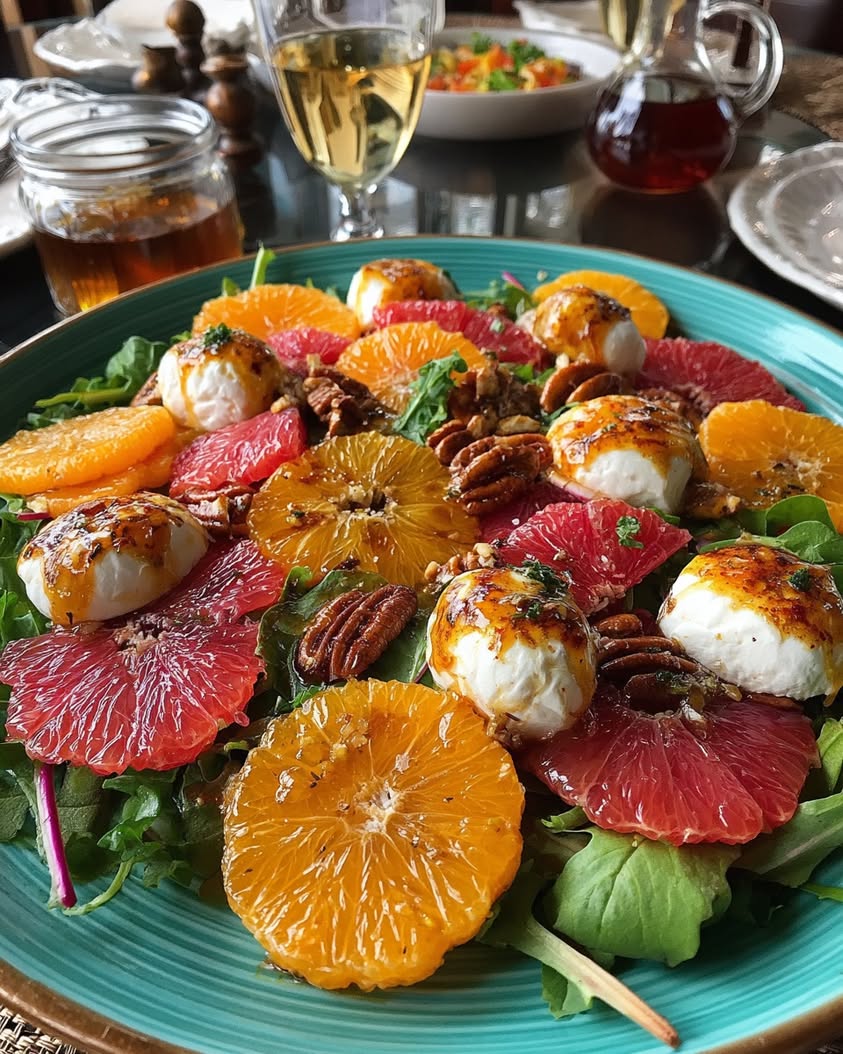
Winter Citrus Salad with Burrata, Candied Pecans & Honey Vinaigrette: A Bright and Luxurious Feast
This Winter Citrus Salad with Burrata, Candied Pecans & Honey Vinaigrette is a stunning celebration of the season’s best produce. It transforms simple, vibrant ingredients into a show-stopping dish that feels both luxurious and refreshingly light. Moreover, it brings a burst of sunshine to your table during the colder months. The combination of sweet, tart citrus with creamy burrata and crunchy pecans is nothing short of magical. Ultimately, this recipe is perfect for anyone seeking a beautiful, restaurant-quality salad that’s surprisingly simple to make at home.
Imagine juicy segments of blood orange, navel orange, and grapefruit arranged like edible jewels on a plate. They are paired with the rich, milky creaminess of fresh burrata cheese. Additionally, a quick batch of homemade candied pecans adds a warm, caramelized crunch. Finally, a simple honey vinaigrette ties everything together with a perfect balance of sweet and tangy notes. This Winter Citrus Salad with Burrata, Candied Pecans & Honey Vinaigrette is more than just a side dish. It’s a vibrant centerpiece that will impress your guests and delight your taste buds.
Furthermore, this salad is incredibly versatile. You can serve it as an elegant starter for a dinner party, a bright lunch, or even a lighter main course. The recipe requires minimal cooking, focusing instead on fresh assembly and simple techniques. Consequently, you can spend less time in the kitchen and more time enjoying the company of your loved ones. This Winter Citrus Salad with Burrata, Candied Pecans & Honey Vina Vinaigrette is your ticket to a memorable and delicious meal.
Quick Recipe Highlights
- Flavor Profile: This salad delivers a complex symphony of sweet, tart, creamy, and savory notes. The bright acidity of the citrus beautifully cuts through the rich burrata, while the honey vinaigrette adds a floral sweetness. Meanwhile, the candied pecans introduce a warm, buttery, and slightly spicy depth.
- Texture: You will experience a delightful contrast in every bite. The juicy, tender citrus segments meet the impossibly creamy, soft burrata. Then, you get the satisfying, crunchy snap of the candied pecans. This combination creates a truly engaging and enjoyable mouthfeel.
- Aroma: As you prepare this dish, the kitchen fills with the bright, zesty scent of freshly segmented citrus. Simultaneously, toasting the pecans releases a warm, nutty fragrance. Finally, the honey and olive oil in the vinaigrette add a subtle, sweet earthiness to the air.
- Visual Appeal: This salad is a feast for the eyes with its stunning color palette. Deep red blood oranges, bright navel oranges, and pink grapefruit create a vibrant mosaic. The white burrata and green arugula base provide a beautiful canvas, making the dish incredibly photogenic.
- Skill Level Needed: This is an accessible recipe for cooks of all levels. The techniques involve basic knife skills for segmenting citrus and simple stovetop cooking for the pecans. Therefore, even beginner cooks can achieve impressive, professional-looking results with ease.
- Special Equipment: You only need basic kitchen tools: a good chef’s knife, a cutting board, a small saucepan, and a baking sheet. A citrus juicer can be helpful but is not mandatory. Ultimately, no fancy equipment is required to make this stunning salad.
Recipe Overview
- Difficulty Level: This Winter Citrus Salad with Burrata, Candied Pecans & Honey Vinaigrette is rated easy. The steps are straightforward and logical. Segmenting citrus is the most technical part, but with a sharp knife, it’s simple to master. The candied pecans require just a few minutes of attentive stirring. Consequently, the entire dish comes together with minimal stress and maximum reward.
- Category: This dish fits beautifully into several categories. It is a perfect starter or appetizer for a multi-course meal. Alternatively, it can serve as a light main course for lunch. It also shines as a vibrant side salad alongside roasted chicken or fish. Its flexibility is one of its greatest strengths.
- Cuisine: The recipe draws inspiration from Italian and Californian culinary traditions. Burrata is a classic Italian cheese, while the use of abundant, fresh citrus reflects California’s produce-centric style. The honey vinaigrette is a modern, versatile dressing found in contemporary American cuisine. This fusion creates a uniquely delicious result.
- Cost: Making this Winter Citrus Salad with Burrata, Candied Pecans & Honey Vinaigrette is moderately priced. Burrata and fresh citrus are the primary investments. Fortunately, ingredients like arugula, pecans, honey, and olive oil are typically pantry staples. Overall, the cost is far less than ordering a similar salad at a restaurant.
- Season: This recipe is designed for peak winter and early spring. This is when citrus fruits like blood oranges and grapefruit are at their sweetest and most flavorful. Using in-season produce ensures the best taste and value. It’s a wonderful way to embrace the bright flavors of the colder months.
- Occasion: This salad is ideal for special occasions and entertaining. It’s perfect for holiday meals, dinner parties, Valentine’s Day, or a festive brunch. However, it’s also simple enough for a luxurious weeknight treat. It elevates any meal into something special.
Why You’ll Love This Recipe
First and foremost, the taste and texture of this Winter Citrus Salad with Burrata, Candied Pecans & Honey Vinaigrette are absolutely unforgettable. Each component is carefully chosen to complement the others. The juicy, vibrant citrus provides a refreshing tartness. Then, the luscious burrata offers a creamy, rich counterpoint that melts in your mouth. The candied pecans deliver a crucial element of crunch and warm spice. Finally, the honey vinaigrette acts as the unifying conductor, blending all the flavors into a harmonious and exciting bite. You will find yourself craving this combination of sweet, savory, creamy, and crunchy long after the plate is empty.
Another major benefit is the sheer convenience and ease of preparation. Despite its impressive appearance, this salad comes together in about thirty-five minutes. The candied pecans require just ten minutes on the stovetop. Meanwhile, you can segment the citrus and prepare the dressing. The assembly is more about artful arranging than complicated technique. Consequently, you can create a gourmet-quality dish without spending hours in the kitchen. This makes the Winter Citrus Salad with Burrata, Candied Pecans & Honey Vinaigrette a perfect last-minute option for impromptu guests.
From a nutritional standpoint, this dish is packed with healthful advantages. Citrus fruits are famously rich in immune-boosting vitamin C and fiber. Arugula provides vitamins A, C, and K, along with beneficial nitrates. Pecans are a great source of healthy fats, protein, and minerals like manganese. Olive oil in the vinaigrette contributes heart-healthy monounsaturated fats. Therefore, while this salad feels indulgent, it is also nourishing your body with essential vitamins, antioxidants, and good fats. It’s a delicious way to eat well.
The social and entertaining value of this recipe cannot be overstated. Presenting this beautiful, colorful platter at the table is guaranteed to elicit “oohs” and “aahs.” It signals to your guests that you’ve put thought and care into the meal. The act of breaking into the creamy burrata center is a shared moment of delight. This Winter Citrus Salad with Burrata, Candied Pecans & Honey Vinaigrette is a conversation starter that sets a joyful and elegant tone for any gathering. It makes everyone feel special.
Finally, this recipe is surprisingly cost-effective and accessible. While burrata may seem like a splurge, a single ball can generously serve four people when paired with other ingredients. Citrus is affordable and abundant in season. You likely already have honey, olive oil, vinegar, and sugar in your pantry. Compared to ordering a similar salad at a restaurant, making it at home saves significant money. Furthermore, you control the quality of every ingredient. Ultimately, this Winter Citrus Salad with Burrata, Candied Pecans & Honey Vinaigrette delivers luxury dining at a fraction of the cost.
Historical Background and Cultural Significance
The story of citrus fruits is a long and traveled one, deeply intertwined with trade and culture. Oranges, lemons, and grapefruits originated in Southeast Asia and were gradually spread across the world via ancient trade routes. They became symbols of wealth and status in medieval Europe, often featured in still-life paintings. The cultivation of citrus in the Mediterranean, particularly in Italy and Spain, cemented its role in those regional cuisines. Consequently, the use of citrus in salads has roots in these sun-drenched culinary traditions, where bright acidity is prized for cutting through rich foods.
Burrata, a key player in this Winter Citrus Salad with Burrata, Candied Pecans & Honey Vinaigrette, has a more recent but equally rich history. It was invented in the Puglia region of Italy in the early 20th century as a way to use up the scraps of mozzarella production. Cheesemakers would create a pouch of fresh mozzarella and fill it with stracciatella (shredded mozzarella) and cream. This ingenious creation resulted in an incredibly creamy, luxurious cheese that was initially a humble farmer’s secret. Today, burrata is celebrated worldwide as a pinnacle of fresh cheese craftsmanship.
The concept of pairing cheese with fruit is ancient and cross-cultural. However, the modern “composed salad” featuring cheese, fruit, nuts, and a vinaigrette is a hallmark of contemporary Californian and New American cuisine. This style emphasizes fresh, high-quality, seasonal ingredients presented simply but beautifully. The Winter Citrus Salad with Burrata, Candied Pecans & Honey Vinaigrette is a direct descendant of this philosophy. It takes classic Italian ingredients (citrus, burrata, olive oil) and combines them with a New World nut (pecans) and a universal sweetener (honey) to create something new and exciting.
Regional variations of this idea abound. In Sicily, a salad might feature blood oranges, fennel, and black olives. In the American South, a similar salad could use local pecans and a brown sugar glaze. The version presented here is a fusion that highlights global accessibility. It respects tradition while encouraging personalization. This evolution shows how food adapts, using local ingredients to recreate the spirit of a dish. Therefore, this Winter Citrus Salad with Burrata, Candied Pecans & Honey Vinaigrette is both a nod to history and a product of modern, globalized cooking.
Ingredient Deep Dive
Winter Citrus (Blood Orange, Navel Orange, Grapefruit): Citrus fruits have been cultivated for thousands of years, valued for their ability to prevent scurvy and their refreshing taste. They are nutritional powerhouses, loaded with vitamin C, folate, potassium, and fiber. The flavonoids in citrus have anti-inflammatory and antioxidant properties. When selecting citrus for your Winter Citrus Salad with Burrata, Candied Pecans & Honey Vinaigrette, choose fruits that feel heavy for their size with smooth, firm skin. Avoid any with soft spots or dull, dry-looking skin. Store them at cool room temperature for short-term use or in the refrigerator for up to two weeks. For substitutions, use any mix of seasonal citrus like cara cara oranges, tangerines, or pomelos.
Burrata Cheese: Burrata, meaning “buttered” in Italian, is a testament to cheesemaking ingenuity. Its creamy center is a luxurious treat. Nutritionally, it provides protein, calcium, and fat, offering a rich and satisfying element. When buying burrata, look for the freshest possible date and ensure it is stored in liquid. It should feel soft and supple. Always serve it at room temperature for the best texture and flavor. Store it in its liquid in the refrigerator and consume within a day or two of opening. If you cannot find burrata, fresh mozzarella (bocconcini), a creamy goat cheese log, or even avocado can provide a similar rich, soft texture, though the experience will be different.
Pecans: Pecans are native to North America and were a staple food for Indigenous peoples. They are a excellent source of monounsaturated fats, which are heart-healthy, and contain manganese, copper, and zinc. They also provide plant-based protein and fiber. For the candied pecans in this recipe, choose raw pecan halves for even cooking. Toast them lightly before candying to maximize their flavor. Store unused pecans in an airtight container in the freezer to prevent their oils from going rancid. For a nut-free version, you can use candied pumpkin seeds (pepitas) or simply omit the nuts altogether for a different texture profile.
Honey: Honey has been used as a sweetener and medicinal food for millennia. Its flavor profile varies dramatically based on the flowers visited by the bees. In terms of nutrition, it contains antioxidants and has antimicrobial properties. In the vinaigrette for this Winter Citrus Salad with Burrata, Candied Pecans & Honey Vinaigrette, it balances acidity and adds floral notes. Choose a mild, runny honey like clover or orange blossom. For a vegan version, substitute maple syrup or agave nectar. Always store honey at room temperature in a sealed container. If it crystallizes, gently warm the jar in a bowl of hot water to return it to liquid form.
Extra Virgin Olive Oil & White Wine Vinegar: This duo forms the base of the classic vinaigrette. Extra virgin olive oil, the first cold pressing of olives, is central to the Mediterranean diet and is rich in antioxidants and healthy fats. Use a fruity, medium-intensity oil for dressing. White wine vinegar provides a clean, sharp acidity that doesn’t overpower the delicate citrus. For best quality, look for vinegar with a mother (a cloudy sediment) or a reputable brand. Store olive oil in a cool, dark place to prevent rancidity. You can substitute champagne vinegar or a light lemon juice for the white wine vinegar. For the oil, a neutral oil like avocado can work, but you’ll lose the distinctive olive fruitiness.
Common Mistakes to Avoid
- Using Cold Burrata: Serving burrata straight from the refrigerator is a common error. Cold temperature masks its flavor and makes the texture too firm. Always allow burrata to sit at room temperature for at least 30 minutes before serving. This simple step lets the creamy center soften and become luxuriously spreadable, transforming the entire salad.
- Overcooking the Candied Pecans: It’s easy to burn the sugar coating. The key is to cook the sugar syrup just until it bubbles and the pecans look glossy, then immediately transfer them to parchment paper. Do not leave them in the hot pan, as the residual heat will continue to cook them. Stir constantly over medium heat for even coating and to prevent hot spots from burning.
- Not Segmenting Citrus Properly: Leaving the bitter white pith (albedo) on the citrus segments can make your salad taste harsh. Take the time to cut off all the peel and pith completely before slicing between the membranes to release clean, pith-free segments. This technique, called “supreming,” ensures you only get the sweet, juicy fruit flesh.
- Dressing the Salad Too Early: If you pour the vinaigrette over the assembled salad too far in advance, the arugula will wilt and the citrus will start to macerate, making everything soggy. Dress the salad just moments before serving. Alternatively, you can drizzle the dressing around the plate and let guests add their own to preserve perfect texture.
- Using Stale or Rancid Nuts: Pecans have a high oil content and can go rancid quickly, especially if stored in a warm pantry. Always taste a pecan before using it. If it has a bitter, paint-like flavor, discard the batch. For the best flavor in your Winter Citrus Salad with Burrata, Candied Pecans & Honey Vinaigrette, buy fresh nuts and store them in the freezer.
- Neglecting to Season the Vinaigrette: A vinaigrette needs salt to balance the acid and fat. Don’t forget to season your honey vinaigrette with a pinch of salt and a crack of black pepper. Taste it by dipping a leaf of arugula into it to see how it pairs with the greens. Adjust seasoning as needed.
- Choosing the Wrong Olive Oil: Using a very robust, peppery extra virgin olive oil can overpower the delicate citrus and burrata. Opt for a milder, fruitier olive oil for the dressing. Save your intense, peppery oils for dipping bread or finishing hearty dishes.
- Skipping the Toasting Step for Pecans: Even though you will candy the pecans, toasting them first in a dry pan deepens their nutty flavor and ensures a better crunch. This extra three-minute step makes a significant difference in the final taste and texture of your candied pecans.
Essential Techniques
Segmenting Citrus (Supreming): This technique is crucial for a beautiful, professional-looking Winter Citrus Salad with Burrata, Candied Pecans & Honey Vinaigrette. First, slice off the top and bottom of the fruit so it sits flat. Then, using a sharp knife, cut away the peel and all the white pith, following the curve of the fruit. Hold the peeled fruit over a bowl to catch juice. Finally, slice along the side of each membrane to release the clean segment. This method removes bitter pith and seeds, leaving only the tender, juicy flesh. The key is a very sharp knife and patience. The visual cue for success is a plate of glistening, pith-free citrus segments.
Making a Simple Vinaigrette: The goal is a perfectly emulsified dressing that clings to the salad. The standard ratio is 3 parts oil to 1 part acid. For this honey vinaigrette, combine vinegar, honey, salt, and pepper in a bowl. Then, whisk vigorously while slowly drizzling in the olive oil. This slow incorporation encourages the oil and vinegar to bind into a temporary emulsion. Alternatively, shake all ingredients in a tightly sealed jar. The technique is important because it creates a cohesive dressing rather than a separated pool of oil and vinegar. It should look slightly thickened and uniform in color.
Candying Nuts: This process coats nuts in a shiny, sweet, and crunchy shell. Combine sugar and a tiny bit of water in a saucepan over medium heat. Do not stir once it begins to boil; simply swirl the pan until the sugar dissolves and turns clear. Add the toasted nuts and stir constantly until they are fully coated and the liquid sugar crystallizes into a sandy texture, then melts back into a glossy coating. Immediately pour onto parchment paper and separate. The technique requires constant attention to prevent burning. Success is indicated by nuts that are evenly glossy and separate easily once cooled.
Pro Tips for Perfect Winter Citrus Salad with Burrata, Candied Pecans & Honey Vinaigrette
- Segment your citrus directly over the bowl you will make the vinaigrette in. The collected juice can be used as part of the acid component, adding incredible fresh flavor. Just reduce the amount of vinegar slightly to account for the citrus juice’s acidity.
- For an extra layer of flavor, add a pinch of flaky sea salt (like Maldon) over the burrata and the finished salad just before serving. The burst of saltiness enhances the sweet citrus and creamy cheese beautifully.
- If your arugula is very peppery or spicy, you can tame it slightly by giving it a quick soak in ice water, then spinning it very dry. This crisps the leaves and can reduce some of the intense bite.
- To make the salad more substantial as a main course, add a protein. Grilled shrimp, seared scallops, or shredded rotisserie chicken integrate seamlessly with the other flavors.
- Warm the honey slightly if it’s too thick to mix easily into the vinaigrette. Place the honey jar in a bowl of warm water for a few minutes to thin it out, making it easier to emulsify.
- Use a microplane to zest a little of the citrus peel over the finished salad. The zest contains aromatic oils that will amplify the citrus fragrance without adding bitterness.
- When arranging the salad, place the burrata ball whole in the center and let guests break into it themselves. This creates a wonderful interactive and visually appealing moment at the table.
- For the best presentation, use a large, flat platter instead of a deep bowl. This allows you to artfully arrange the citrus segments and prevents the ingredients from piling on top of each other and getting soggy.
Variations and Adaptations
Regional Variations: To give this Winter Citrus Salad with Burrata, Candied Pecans & Honey Vinaigrette a Sicilian twist, add shaved fennel and black olives. For a Florida-inspired version, use ruby red grapefruit and key lime juice in the dressing. A California take might include avocado slices and sunflower sprouts. In the South, substitute the pecans with candied Georgia pecans using a brown sugar bourbon glaze. These regional swaps honor local ingredients while keeping the spirit of the dish intact.
Seasonal Adaptations: In summer, replace citrus with ripe peaches, nectarines, and berries, and use a basil-infused vinaigrette. For fall, use roasted slices of delicata squash or persimmons alongside the citrus, and add pomegranate arils for garnish. Spring invites the addition of fresh strawberries and mint. The core formula—creamy cheese, fresh fruit, crunchy nuts, sweet-tangy dressing—is endlessly adaptable to what’s fresh and in season.
Dietary Modifications: For a vegan Winter Citrus Salad, replace burrata with a vegan mozzarella ball or a large, creamy avocado. Use maple syrup instead of honey in the vinaigrette. To make it nut-free, omit the pecans and use roasted pumpkin seeds or crispy chickpeas for crunch. For a lower-sugar version, simply toast the pecans with spices instead of candying them, and reduce the honey in the dressing.
Flavor Variations: Infuse your olive oil for the dressing by gently warming it with herbs like thyme or rosemary, then letting it cool. Add a teaspoon of whole grain mustard to the vinaigrette for a peppery kick. Sprinkle the salad with sumac or za’atar for a Middle Eastern flavor profile. A dash of chili flakes in the candied pecans adds a welcome touch of heat that contrasts with the sweet citrus.
Texture Modifications: If you prefer less crunch, use toasted, unsalted pecans instead of candied ones. For added texture, include thinly sliced red onion or radish for a peppery bite. Crumbled crispy prosciutto or bacon can add a salty, meaty crunch. Alternatively, for a softer overall texture, use butter lettuce or baby spinach as the base instead of peppery arugula.
Presentation Alternatives: Serve individual portions on each plate for a more formal setting. Layer the ingredients in a large glass trifle bowl for a striking vertical presentation. Skewer citrus segments and burrata chunks on small appetizer sticks for a passed hors d’oeuvre. Deconstruct the salad by serving the burrata on a board surrounded by bowls of citrus, nuts, and dressing for a DIY experience.
Serving and Presentation Guide
Plating Techniques: Start with a generous bed of arugula on a large platter or individual plates. Artfully arrange the citrus segments in a circular or fan-like pattern, mixing the colors for visual impact. Place the whole room-temperature burrata ball prominently in the center. Scatter the candied pecans generously around the plate. Finally, drizzle the honey vinaigrette in a zig-zag pattern over everything, ensuring some pools on the plate for dipping. The goal is to create a composition that looks abundant, colorful, and intentional.
Garnishing Ideas: Beyond the core ingredients, fresh herbs make excellent garnishes. Tiny mint leaves, basil chiffonade, or delicate dill fronds add color and fragrance. A final flourish of edible flowers (like nasturtiums or pansies) elevates the salad for a special occasion. A light dusting of freshly cracked black pepper or a colorful sprinkle of pomegranate arils adds the perfect finishing touch.
Traditional Accompaniments: This Winter Citrus Salad with Burrata, Candied Pecans & Honey Vinaigrette pairs classically with crusty, warm bread. A baguette or focaccia is ideal for soaking up the creamy burrata and leftover dressing on the plate. It also complements a simple, herby pasta dish or a main course of simply grilled or roasted protein like chicken, fish, or pork.
Modern Serving Suggestions: For a contemporary appetizer, serve smaller portions in endive leaves or on crostini. Incorporate it into a brunch spread alongside quiche and pastries. As a light lunch, add a side of soup like a creamy tomato or butternut squash. For a family-style feast, place it alongside other vibrant salads and grain bowls on a large table.
Temperature Considerations: This salad is best served immediately after assembly. All components should be at roughly room temperature for optimal flavor—the burrata should be out of the fridge for 30 minutes, and the candied pecans should be cooled. The arugula can be crisp and cold. Avoid assembling the salad on a hot plate or in a warm room, as this will wilt the greens too quickly.
Portion Control Tips: As a starter, one ball of burrata can comfortably serve four people when accompanied by the other ingredients. For a main course salad, consider using one smaller burrata ball per person or adding a protein. A good rule of thumb is to aim for a handful of greens, 4-5 citrus segments, a quarter of the burrata, and a tablespoon of candied pecans per person as a starter portion.
Wine and Beverage Pairing
Wine Pairings: The bright acidity and creamy fat in this Winter Citrus Salad with Burrata, Candied Pecans & Honey Vinaigrette call for wines with good acidity and some fruitiness. A crisp, dry Rosé from Provence is a fantastic match, as its red fruit notes complement the citrus without overpowering it. A Sauvignon Blanc, especially from New Zealand, offers zesty citrus and herbal notes that mirror the salad’s flavors. For a more adventurous pairing, a slightly sparkling Lambrusco with its fruity, low-tannin profile can cut through the richness beautifully.
Non-Alcoholic Alternatives: A sparkling water with a twist of grapefruit or blood orange is a refreshing and simple choice. For something more crafted, a homemade citrus shrub (drinking vinegar) mixed with soda water provides tangy complexity. A lightly sweetened iced herbal tea, like hibiscus or mint, pairs wonderfully. A lemon-ginger kombucha can also stand up to the salad’s vibrant flavors with its own probiotic tang.
Coffee/Tea Pairings: While not a traditional pairing, this salad could precede a brunch where coffee is served. A light roast coffee with citrusy notes would be a pleasant bridge. For tea, consider a white tea with hints of apricot or a green tea with jasmine. These are delicate enough not to clash with the salad’s flavors if enjoyed after the meal.
Temperature Considerations: White and rosé wines should be served well-chilled, between 45-50°F (7-10°C). Non-alcoholic sparkling drinks should also be served cold. This contrast of cool beverage and room-temperature salad is refreshing. Avoid serving warm beverages directly alongside the salad, as they can make the burrata feel overly rich.
Serving Suggestions: Offer wine in large-bowled glasses to allow the aromas of the salad and wine to mingle. For non-alcoholic options, serve in tall, elegant glasses with plenty of ice and a citrus garnish. Always ensure drinks are poured and ready before the salad is served, as the dish is best enjoyed immediately upon dressing.
Storage and Shelf Life
Storage Methods: This Winter Citrus Salad with Burrata, Candied Pecans & Honey Vinaigrette is best enjoyed immediately. However, you can store components separately for up to 24 hours. Keep undressed arugula in a sealed container in the fridge with a paper towel to absorb moisture. Store citrus segments in an airtight container in the fridge. Keep the burrata in its liquid in the fridge. Store candied pecans at room temperature in an airtight container. The vinaigrette can be kept in a jar in the fridge for up to a week.
Temperature Requirements: All components except the candied pecans and dressing should be refrigerated if storing. The dressing may solidify when cold due to the olive oil; simply let it come to room temperature and shake vigorously before using. Bring the burrata and citrus to room temperature before assembling the stored salad for the best texture and flavor.
Container Recommendations: Use glass containers with tight-fitting lids for the citrus and dressing to prevent absorption of odors. A plastic bag or container lined with a dry paper towel is best for greens. The candied pecans should be stored in a glass or ceramic jar to maintain their crunch.
Signs of Spoilage: Discard the arugula if it becomes slimy or develops a foul odor. Citrus segments that are excessively soft or fermented should be thrown out. If the burrata’s liquid becomes cloudy or the cheese develops an off smell, it is no longer good. Candied pecans that taste stale or soft have lost their quality.
Reheating Instructions: This is not a salad to reheat. The entire appeal is in the fresh, cool, and room-temperature textures. If you have leftover dressed salad, it will be wilted and is best discarded.
Freezing Guidelines: Freezing is not recommended for any component of this salad. Freezing will destroy the texture of the arugula, citrus, and burrata completely. The candied pecans may become soggy upon thawing. The vinaigrette can technically be frozen, but the emulsion will break and the texture will be compromised.
Make Ahead Strategies
Prep Timeline: You can prepare nearly every component of this Winter Citrus Salad with Burrata, Candied Pecans & Honey Vinaigrette 1-2 days in advance. Day Before: Make the candied pecans and let them cool completely before storing. Prepare the honey vinaigrette and store it in a jar in the fridge. Segment the citrus and store it in a sealed container in the fridge. Day Of: Remove burrata from the fridge 30 minutes before serving. Remove citrus from the fridge 15 minutes before serving. Shake the dressing to re-emulsify.
Storage Between Steps: Store each prepped component in its own dedicated container as described in the storage section. This prevents cross-contamination of flavors and textures. Keep the nuts separate from everything to maintain their crunch. Keep the dressing separate from the greens and citrus until the last possible moment.
Quality Impact Assessment: Prepping the citrus a day ahead may cause it to release a little more juice, but the flavor remains excellent. The candied pecans actually benefit from being made ahead, as they fully harden. The vinaigrette’s flavors meld and improve overnight. The only element that must be absolutely fresh is the assembly itself to keep the greens crisp.
Assembly Tips: When ready to serve, follow your plating guide. Have all your prepped components lined up and at the proper temperature. Assemble the salad on the platter, then add the dressing just before carrying it to the table. This final-minute dressing ensures the perfect texture.
Reheating Guidelines: No reheating is needed. The goal is to bring cold components to room temperature, not to heat them. If the dressing is too thick from the fridge, let it sit in a bowl of warm water for a few minutes to loosen.
Fresh Element Additions: Even with advanced prep, add a final fresh touch right before serving. This could be a sprinkle of fresh herbs, a new crack of black pepper, or a pinch of flaky salt over the burrata. This brightens up the prepped components and makes the salad taste freshly made.
Scaling Instructions
Halving the Recipe: To serve two, simply divide all ingredient quantities by two. Use one small ball of burrata or half a standard ball. The candied pecan process is the same; you can still make the full batch and save half for another use, as scaling down a sugar syrup for a tiny amount is tricky. The vinaigrette can be halved easily in a small jar. Use a smaller platter or two individual plates for serving.
Doubling or Tripling: For a crowd, multiply all ingredients accordingly. For the candied pecans, cook in batches to avoid overcrowding the pan, which leads to uneven coating. You may need to make the vinaigrette in two separate batches or one very large bowl, whisking vigorously. Arrange the salad on multiple platters or one very large serving board. Consider placing a few burrata balls around the platter for easier access.
Equipment Adjustments: When scaling up, you’ll need a larger saucepan or multiple pans for the pecans. A very large mixing bowl or a blender is helpful for making a big batch of vinaigrette. Ensure you have a platter large enough to hold the salad without piling ingredients too high, which leads to sogginess.
Timing Modifications: Prepping citrus for a doubled recipe will take roughly double the time. The candied pecan process will take longer if cooking in batches. Factor this into{“success”:true,”message”:”Recipe created successfully”,”post_id”:9003,”tasty_recipe_id”:9003,”shortcode”:” Print
Winter Citrus Salad with Burrata, Candied Pecans & Honey Vinaigrette
Description
A vibrant, refreshing salad featuring seasonal citrus, creamy burrata, sweet-spicy candied pecans, and a bright honey vinaigrette.
Ingredients
For the Crust:
- 2 large navel oranges, peeled and sliced
- 1 grapefruit, peeled and sliced
- 1 blood orange, peeled and sliced
- 8 oz burrata cheese
- 1 cup candied pecans
- 4 cups mixed greens (such as arugula or baby spinach)
- 1/4 cup thinly sliced red onion
- 1/4 cup fresh mint leaves
- For the vinaigrette: 3 tbsp extra virgin olive oil
- For the vinaigrette: 2 tbsp fresh orange juice
- For the vinaigrette: 1 tbsp honey
- For the vinaigrette: 1 tsp Dijon mustard
- For the vinaigrette: Salt and black pepper to taste
Instructions
1. Prepare the Crust:
- Prepare the vinaigrette by whisking together olive oil, orange juice, honey, Dijon mustard, salt, and pepper in a small bowl until emulsified.
- Arrange the mixed greens on a large serving platter or individual plates. Top with sliced citrus, red onion, and fresh mint leaves.
- Tear the burrata into pieces and scatter over the salad. Sprinkle candied pecans evenly on top.
- Drizzle the honey vinaigrette over the salad just before serving. Gently toss if desired and serve immediately.
Notes
You can customize the seasonings to taste.

I’m Billy, a classically trained culinary school graduate from The Culinary Institute of America with over 12 years in the restaurant industry and over 19 years of cooking experience.