
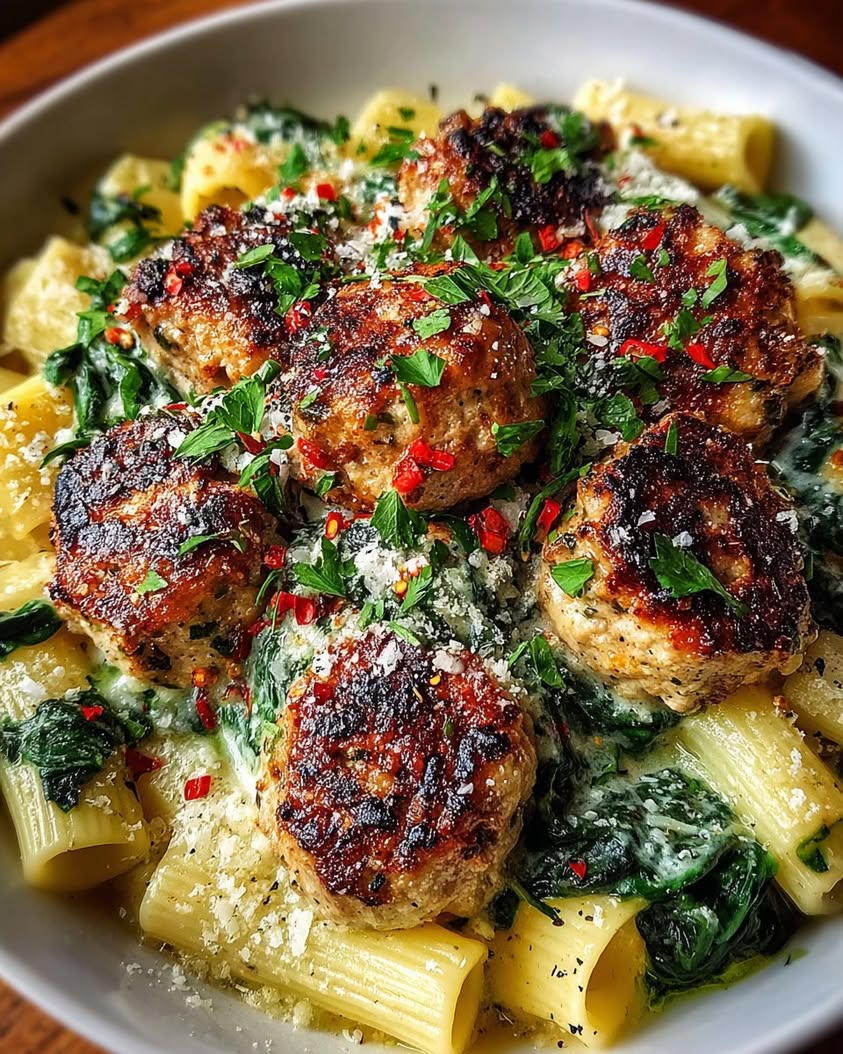
Zesty Turkey & Ricotta Meatballs with Garlic Spinach Rigatoni: A Lighter, Flavor-Packed Family Favorite
This Zesty Turkey & Ricotta Meatballs with Garlic Spinach Rigatoni recipe reimagines a classic comfort dish with a vibrant, modern twist. The meatballs, incredibly tender and moist from the ricotta, are packed with fresh herbs and a hint of lemon zest. They simmer in a simple, garlicky tomato sauce that perfectly coats every piece of al dente rigatoni. Meanwhile, fresh spinach wilts right into the mix, adding a pop of color and a nutritious boost. Ultimately, this dish delivers the soul-satisfying comfort of a traditional pasta dinner but feels remarkably fresh and light on the plate.
Creating this meal is surprisingly straightforward, making it an ideal choice for a busy weeknight or a relaxed weekend gathering. The process of mixing the meatball ingredients is simple and forgiving. You can even prepare the meatballs ahead of time for an even quicker assembly. As the meatballs brown and the sauce bubbles, your kitchen will fill with an irresistible aroma of garlic, herbs, and tomatoes. This Zesty Turkey & Ricotta Meatballs with Garlic Spinach Rigatoni recipe is a guaranteed crowd-pleaser that brings everyone to the table with eager anticipation.
Furthermore, this recipe offers a fantastic balance of lean protein, wholesome carbohydrates, and vegetables. The ground turkey provides a lighter alternative to beef or pork without sacrificing any flavor or satisfaction. The ricotta cheese is the secret weapon, ensuring the meatballs stay juicy and tender through the cooking process. Each forkful of rigatoni, tangled with spinach and coated in savory sauce, delivers a complete and delicious bite. This dish proves that eating well does not mean compromising on flavor or comfort.
Quick Recipe Highlights
- Flavor Profile: This dish features bright, zesty notes from lemon and parsley balanced by the savory depth of garlic, onion, and sweet tomato sauce. The ricotta adds a subtle creaminess that mellows the turkey’s leanness.
- Texture: Expect incredibly tender and moist meatballs that practically melt in your mouth, paired with perfectly firm rigatoni pasta. The wilted spinach adds a silky, delicate texture that complements the heartier elements.
- Aroma: As it cooks, your kitchen will be filled with the mouthwatering scents of sautéed garlic and onion, fragrant herbs like oregano and parsley, and the sweet acidity of simmering tomatoes.
- Visual Appeal: The dish is a feast for the eyes with vibrant red tomato sauce, deep green spinach, golden-brown meatballs, and sturdy rigatoni tubes. A final sprinkle of fresh parsley or grated cheese adds the perfect finishing touch.
- Skill Level Needed: This is a beginner-friendly recipe. The techniques involve basic mixing, browning, and simmering. No advanced culinary skills are required, making it accessible for cooks of all levels.
- Special Equipment: You only need standard kitchen tools: a large pot for boiling pasta, a large skillet or Dutch oven for the sauce and meatballs, a mixing bowl, and basic utensils. A baking sheet is optional if you prefer to bake the meatballs.
Recipe Overview
- Difficulty Level: We classify this Zesty Turkey & Ricotta Meatballs with Garlic Spinach Rigatoni recipe as easy. The steps are sequential and simple: mix, form, brown, and simmer. There is no complex knife work or tricky techniques. Even first-time meatball makers will find success with the straightforward instructions and forgiving nature of the ricotta-enriched mixture.
- Category: This recipe falls squarely into the main course category, ideal for dinner. It is a complete, one-pan meal featuring protein, starch, and vegetables. It can also be considered a comfort food recipe and a family-friendly weeknight dinner option due to its universal appeal and simple preparation.
- Cuisine: The dish is rooted in Italian-American culinary traditions, taking inspiration from classic meatball and pasta combinations. However, the use of turkey and ricotta, along with the addition of fresh spinach and lemon zest, introduces modern, health-conscious twists that update the classic for contemporary palates.
- Cost: This is a very cost-effective meal. Ground turkey is typically an affordable protein, and ingredients like canned tomatoes, dried pasta, and frozen spinach are pantry staples. Fresh herbs, garlic, and an onion round out the flavor profile without breaking the bank. You can easily feed a family of four for less than the cost of takeout.
- Season: This Zesty Turkey & Ricotta Meatballs with Garlic Spinach Rigatoni recipe is truly versatile year-round. It provides comforting warmth in the fall and winter. Conversely, the bright lemon and herbs make it feel light and appropriate for spring and summer evenings, especially when served with a crisp salad.
- Occasion: Perfect for casual weeknight family dinners, meal prep for lunches, or even for entertaining a small group in a relaxed setting. It is substantial enough to feel special but simple enough to not cause stress for the host. It is an excellent choice for a cozy date night at home as well.
Why You’ll Love This Recipe
First and foremost, the taste and texture of this dish are utterly delightful. The meatballs are the star, achieving a tenderness that is often elusive with lean ground turkey. The ricotta cheese works magic, creating a moist, almost creamy interior that contrasts beautifully with the lightly seared exterior. Each meatball soaks up the garlicky tomato sauce, while the rigatoni provides the perfect vehicle to scoop up every delicious component. The fresh spinach wilts into the sauce, adding a subtle earthiness and vibrant color that makes every bite visually and gastronomically appealing.
From a convenience standpoint, this Zesty Turkey & Ricotta Meatballs with Garlic Spinach Rigatoni recipe is a weeknight hero. The entire meal comes together in one large skillet or pot, minimizing cleanup. The steps are logical and flow easily from one to the next. You can multitask by boiling the pasta while the sauce simmers. Additionally, the meatball mixture is forgiving; you can mix it by hand in just minutes. This efficiency means you can have a wholesome, restaurant-quality meal on the table in under an hour, which is a huge win for busy households.
Nutritionally, this recipe offers significant advantages over traditional meatball pasta dishes. Using lean ground turkey drastically reduces the saturated fat content. Ricotta adds protein and calcium without overwhelming heaviness. The spinach packs in vitamins A, C, and K, along with iron and fiber, all while blending seamlessly into the dish. Using whole-wheat rigatoni is an easy swap to increase fiber further. Consequently, you get a meal that satisfies comfort food cravings while also fueling your body with better-for-you ingredients.
For social and entertaining value, this dish is a guaranteed crowd-pleaser. It is familiar enough to appeal to picky eaters but unique enough to impress guests with its bright flavors and tender texture. You can easily double the recipe to feed a larger group. Serving it family-style in a big bowl encourages sharing and conversation. It pairs wonderfully with a simple green salad and crusty bread, creating a complete and satisfying menu that feels generous and welcoming without requiring days of preparation.
Finally, the cost-effectiveness and accessibility of this recipe cannot be overstated. The ingredients are common and affordable, available at any standard grocery store. You likely have many of the dried herbs and spices in your pantry already. Ground turkey is a budget-friendly protein, and canned tomatoes are a kitchen staple. This makes the Zesty Turkey & Ricotta Meatballs with Garlic Spinach Rigatoni an economical choice for regular rotation in your meal plan. It delivers incredible flavor and satisfaction for a fraction of the cost of dining out or ordering in.
Historical Background and Cultural Significance
The story of meatballs spans cultures and continents, but the version most familiar in American kitchens has strong roots in Italian immigration. Italian immigrants arriving in the United States in the late 19th and early 20th centuries adapted their traditional recipes to new ingredients and economic realities. Polpette, small Italian meatballs, were often made with a mix of meats and breadcrumbs to stretch precious protein. In America, with greater access to affordable meat, these evolved into the larger, sauce-simmered meatballs we know today, commonly served with pasta—a combination that is less common in Italy itself, where meatballs might be served as a separate course.
The cultural importance of meatballs and pasta lies in their symbolism of home, family, and abundance. For many families, Sunday gravy—a long-simmered tomato sauce with meatballs, sausages, and other meats—was a weekly ritual that brought generations together. The act of making meatballs was often a communal family activity. This dish represented prosperity and care, a hearty meal that could feed many from relatively humble ingredients. It became a cornerstone of Italian-American identity and a beloved comfort food adopted broadly into American cuisine.
The evolution of the recipe to include turkey and ricotta reflects modern dietary trends and a desire for lighter, healthier versions of classic comfort foods. Ground turkey gained popularity in the late 20th century as a lean alternative to beef. Ricotta, while traditional in some Italian meatball recipes, is used here specifically to combat the dryness that can sometimes plague lean poultry. The addition of spinach directly to the pasta sauce is a contemporary twist that adds nutrition and color efficiently, aligning with today’s focus on incorporating more vegetables into everyday meals.
Regional variations of meatballs are fascinating. In Sweden, köttbullar are smaller, often served with cream sauce and lingonberry jam. In the Middle East, kofta are spiced with cumin, coriander, and parsley. Greek keftedes include mint and are often fried. The Italian-American version, simmered in tomato sauce, remains dominant in the U.S. This Zesty Turkey & Ricotta Meatballs with Garlic Spinach Rigatoni recipe is a direct descendant of that tradition, updated with modern ingredients and time-saving techniques while honoring the core principles of flavor, tenderness, and family-friendly appeal.
Ingredient Deep Dive
Ground Turkey: A lean protein that became a kitchen staple in the 1980s as health consciousness rose. Nutritionally, it is an excellent source of high-quality protein, B vitamins (especially niacin and B6), and minerals like selenium and zinc. When selecting ground turkey for meatballs, opt for a mix that is 93% lean/7% fat for the best balance of moisture and leanness. Store it in the coldest part of your refrigerator and use within 1-2 days of purchase, or freeze immediately. For substitution, ground chicken is a perfect swap. You can also use a 50/50 mix of ground pork and turkey for more traditional flavor.
Ricotta Cheese: This fresh, mild cheese is a cornerstone of Italian cooking, with origins dating back to ancient times. It is made from the whey leftover from cheesemaking, giving it a light, slightly grainy texture. Ricotta provides calcium, protein, and adds crucial moisture and tenderness to the meatballs, preventing them from becoming dry and dense. Look for whole-milk ricotta for the richest flavor and texture in this recipe. Drain any excess liquid before using. Store it tightly sealed and use by the date on the container. For a dairy-free version, a plain, unsweetened almond or cashew-based ricotta can work, though the texture may vary.
Rigatoni Pasta: This tube-shaped pasta hails from central and southern Italy. Its name comes from the Italian word “rigato,” meaning ridged, which helps sauce cling beautifully to both its exterior and interior. Rigatoni is made from durum wheat semolina, providing complex carbohydrates for sustained energy. Always cook pasta in a large pot of well-salted water until al dente—firm to the bite—as it will continue to cook slightly in the sauce. Substitute with penne, ziti, or another short, sturdy shape if needed. Store dried pasta in a cool, dry pantry indefinitely.
Canned Crushed Tomatoes: A pantry hero that captures peak tomato flavor for year-round use. They are typically picked and processed at their ripest, often containing more consistent flavor than off-season fresh tomatoes. They are a great source of lycopene, an antioxidant, especially when cooked. Choose a brand with no added sugars or excessive seasonings for the most control over your sauce. For a smoother sauce, use pureed tomatoes; for more texture, use diced. Store unused tomatoes in a non-reactive container in the fridge for up to a week. In a pinch, a high-quality marinara sauce can be used as a base.
Fresh Spinach: This leafy green has a history spanning Persia to Europe, celebrated for its nutritional density. It is loaded with vitamins A, C, and K, iron, folate, and antioxidants. In this recipe, it wilts down dramatically, adding nutrition, color, and a subtle earthy flavor without overpowering the dish. For best results, use pre-washed baby spinach for convenience and tenderness. You can also use frozen chopped spinach that has been thoroughly thawed and squeezed dry. Store fresh spinach in the refrigerator in its original bag or a container lined with a paper towel to absorb moisture.
Common Mistakes to Avoid
- Overmixing the Meatball Mixture: Combine the ingredients just until they are incorporated. Overmixing develops the proteins in the turkey, leading to tough, dense meatballs. Use a light hand or a fork to gently fold everything together.
- Using Cold Ingredients: Take your ground turkey, egg, and ricotta out of the fridge about 15-20 minutes before starting. Cold ingredients do not bind as well and can result in crumbly meatballs that fall apart during cooking.
- Not Tasting the Sauce Before Serving: Seasoning is key. Always taste your tomato sauce after it has simmered with the meatballs. You may need an extra pinch of salt, a crack of black pepper, or a pinch of red pepper flakes to balance the acidity and bring all the flavors to life.
- Crowding the Pan When Browning Meatballs: Give the meatballs plenty of space in the skillet. If they are too close together, they will steam instead of developing a flavorful, golden-brown sear. Cook them in batches if your pan is not large enough.
- Overcooking the Pasta: Cook the rigatoni to al dente, as it will continue to cook when added to the hot sauce. Mushy pasta can ruin the texture of the entire dish. Start checking for doneness a minute or two before the package instructions suggest.
- Adding Raw Garlic to the Sauce Too Early: Sauté the garlic just until fragrant, about 30 seconds to 1 minute. If you add it with the onions at the start or let it burn, it will become bitter and overpower the entire sauce.
- Not Reserving Pasta Water: Before draining your pasta, scoop out about a cup of the starchy cooking water. This liquid is gold for adjusting your sauce consistency. It helps the sauce cling to the pasta and brings everything together seamlessly.
- Skipping the Rest After Browning: Let the meatballs rest for a minute after browning before adding the sauce. This allows the exterior to set, helping them hold their shape better as they finish cooking in the simmering liquid.
Essential Techniques
Proper Meatball Formation: The goal is a tender, cohesive meatball. After gently mixing your ingredients, use a spoon or cookie scoop to portion the mixture for consistency. Lightly dampen your hands with water to prevent sticking, then roll each portion into a smooth ball without compacting it tightly. Applying too much pressure will make the meatballs dense. A light, quick roll is all you need to form a round shape that will hold together during cooking.
Building Flavor with the Sauté: This step is the flavor foundation. Start by sautéing the onion in olive oil over medium heat until it becomes soft and translucent, which takes about 5 minutes. This process sweetens the onion and develops its flavor. Then, add the garlic and cook just until its aroma is released, about 30 seconds. This sequence prevents the garlic from burning and turning bitter. These layers of cooked onion and fragrant garlic create a deep, savory base for your simple tomato sauce.
The Simmer: Simmering is a gentle cooking method where small bubbles occasionally break the surface. After adding the crushed tomatoes and browned meatballs to the pan, bring the sauce to a bubble, then immediately reduce the heat to low. A vigorous boil can cause the sauce to splatter and break down the tender meatballs. A gentle simmer allows the flavors to meld beautifully, the meatballs to cook through evenly, and the sauce to thicken slightly without scorching on the bottom of the pan.
Wilting Spinach: Adding fresh spinach to hot pasta and sauce is a quick-cook technique that preserves color and nutrients. The residual heat from the pasta and sauce is usually sufficient to wilt tender baby spinach. Simply stir it in until it just begins to collapse and turn bright green. If using larger, mature spinach leaves, you may need to chop them first and give them an extra minute over low heat. The key is to stop as soon as the spinach is wilted to avoid a mushy, overcooked texture.
Pro Tips for Perfect Zesty Turkey & Ricotta Meatballs with Garlic Spinach Rigatoni
First, for the most flavorful meatballs, toast your dried breadcrumbs in a dry skillet over medium heat for 2-3 minutes until lightly golden and fragrant before adding them to the mix. This simple step adds a nutty depth that elevates the entire dish.
Second, if you have time, cover the mixed meatball mixture and let it rest in the refrigerator for 30 minutes. This chilling period allows the breadcrumbs to fully absorb moisture and helps the proteins relax, resulting in meatballs that hold their shape better during cooking.
Third, use an ice cream scoop or a tablespoon measure to portion your meatball mixture. This ensures all your meatballs are the same size, which is crucial for even cooking. You will get a consistent result in every bite.
Fourth, do not skip browning the meatballs. That Maillard reaction—the browning—creates complex, savory flavors that you cannot achieve by simply simmering them raw in the sauce. That sear locks in juices and adds a wonderful textural contrast.
Fifth, when you add the crushed tomatoes to the pan, use a wooden spoon to scrape up any browned bits (fond) from the bottom where you cooked the onions and meatballs. Those bits are packed with flavor and will dissolve into your sauce, making it richer.
Sixth, reserve that pasta water. The starchy liquid is the secret to a restaurant-quality sauce that clings to every noodle. Add it a splash at a time when combining the pasta with the sauce and meatballs until you achieve a silky, cohesive consistency.
Seventh, finish the dish with a final flourish. Right before serving, drizzle a little extra virgin olive oil over the top and sprinkle with fresh parsley or basil. This adds a burst of fresh aroma and a touch of luxury that makes the meal feel special.
Eighth, let the finished dish rest for 5 minutes off the heat before serving. This allows the pasta to fully absorb the sauce and the flavors to settle, ensuring each component is perfectly integrated and at the ideal temperature for eating.
Variations and Adaptations
Regional Variations: For a Sicilian twist, add a tablespoon of toasted pine nuts and a handful of raisins to the meatball mixture. For a more Roman-inspired flavor, omit the ricotta and use a combination of ground beef and pork, adding a quarter cup of finely grated Pecorino Romano cheese to the mix. You could also swap the tomato sauce for a simple garlic, white wine, and butter sauce for a “white” version of the dish.
Seasonal Adaptations: In the summer, use fresh, ripe cherry tomatoes halved and sautéed until they burst instead of canned crushed tomatoes. Fold in fresh basil instead of parsley. In the fall, add sautéed mushrooms to the sauce along with the spinach for an earthy, hearty twist. A pinch of nutmeg in the meatball mixture complements the autumn flavors beautifully.
Dietary Modifications: For a gluten-free version, use certified gluten-free breadcrumbs or rolled oats pulsed into crumbs, and your favorite gluten-free pasta. To make it dairy-free, substitute the ricotta with a plain, unsweetened vegan ricotta alternative or use a soaked, blended mixture of raw cashews with a little lemon juice.
Flavor Variations: Add a teaspoon of fennel seeds to the meatball mixture for a sausage-like flavor. Incorporate a tablespoon of sun-dried tomato paste into the meatball mix for an extra punch of umami. For a spicy kick, add a teaspoon of crushed red pepper flakes to the onion while it sautés, or mix a finely chopped jalapeño into the meatballs.
Texture Modifications: For a smoother meatball, pulse the onion and garlic in a food processor before mixing. For a chunkier, more rustic sauce, use canned diced tomatoes instead of crushed. You can also bake the formed meatballs on a parchment-lined sheet at 400°F for 18-20 minutes instead of pan-searing, which yields a slightly firmer exterior all around.
Presentation Alternatives: Serve the meatballs and sauce over creamy polenta or mashed cauliflower for a low-carb option. Alternatively, serve the meatballs as an appetizer on their own with a side of marinara for dipping. For a fun “deconstructed” look, serve the components separately: a bowl of pasta, a bowl of meatballs in sauce, and a bowl of fresh spinach, allowing everyone to build their own plate.
Serving and Presentation Guide
Plating Techniques: For individual plates, use a pair of tongs to create a nest of rigatoni in the center of a shallow bowl or plate. Ladle the sauce and several meatballs over the top, allowing some to rest on the pasta and others to settle around the edges. This creates height and visual interest. For family-style service, combine everything in a large, wide serving bowl or a deep skillet. Toss gently to coat, then artfully arrange a few meatballs on top and scatter with fresh herbs.
Garnishing Ideas: Freshly chopped flat-leaf parsley or basil is a classic and vibrant finish. A generous sprinkle of freshly grated Parmesan or Pecorino Romano cheese adds salty richness. A light drizzle of high-quality extra virgin olive oil just before serving adds sheen and flavor. For a colorful accent, add a few thin slices of fresh red chili or a twist of lemon zest over the top.
Traditional Accompaniments: A simple green salad with a sharp vinaigrette (like red wine vinegar and olive oil) cuts through the richness of the pasta. Warm, crusty bread or garlic bread is essential for sopping up any remaining sauce on the plate. A side of roasted vegetables, such as broccoli or asparagus, can round out the meal for added nutrition.
Modern Serving Suggestions: Consider serving the dish in individual, pre-warmed cast iron mini skillets for a rustic, restaurant-style presentation. For a lighter meal, serve a smaller portion of the pasta alongside a larger, more substantial salad. You can also offer chili oil or infused olive oil on the side for guests who want to customize their heat level.
Temperature Considerations: Pasta is best served immediately, hot from the pan. Warm your serving bowls by rinsing them with hot water and drying them quickly before plating. If the dish sits for a few minutes, the pasta will continue to absorb the sauce; have a little reserved pasta water on hand to loosen it up again if needed before serving.
Portion Control Tips: A standard serving is about 1.5 to 2 cups of the combined pasta, sauce, and meatballs. Using a kitchen scale to portion the meatball mixture ensures even sizing and helps with calorie counting. To stretch the meal for more servings or for lighter appetites, increase the ratio of spinach and pasta slightly while keeping the meatball count the same.
Wine and Beverage Pairing
Wine Pairings: The bright acidity of the tomatoes and the savory, herbal notes of the meatballs call for a medium-bodied red with good acidity. A Chianti Classico or a Sangiovese from Italy is a classic and perfect match, as their cherry and earthy flavors complement the dish without overpowering it. A Barbera, with its low tannins and high acidity, is another excellent choice. If you prefer white wine, a fuller-bodied Pinot Grigio from Alto Adige or a Vermentino can work beautifully, especially if you emphasize the lemon zest in the meatballs.
Non-Alcoholic Alternatives: Sparkling water with a squeeze of lemon or lime is always a refreshing palate cleanser. For a more crafted option, try a tart cherry juice spritzer mixed with club soda and a fresh rosemary sprig. An Italian-style blood orange soda (like San Pellegrino Aranciata Rossa) provides sweetness and acidity that can stand up to the robust flavors of the sauce.
Coffee/Tea Pairings: After the meal, a dark roast espresso is a traditional Italian way to finish. The bitterness cuts through any residual richness. For tea, a cup of peppermint or ginger tea can aid digestion and provide a clean, refreshing finish. Avoid overly sweet or milky beverages immediately after, as they can clash with the tomato’s acidity.
Temperature Considerations: Serve red wines slightly below room temperature, around 60-65°F. White wines should be chilled but not ice-cold, around 50°F, so their flavors are not muted. Non-alcoholic sparkling drinks are best served very cold to maximize refreshment. Always have plenty of cool water on the table as well to cleanse the palate between bites.
Serving Suggestions: Pour wine into appropriate glassware to enhance the experience—a standard red wine glass for Chianti, a white wine glass for Pinot Grigio. For non-alcoholic options, use tall, ice-filled glasses for spritzers. Present beverages alongside the meal rather than as an afterthought, as the right drink significantly elevates the entire dining experience.
Storage and Shelf Life
Storage Methods: Allow the Zesty Turkey & Ricotta Meatballs with Garlic Spinach Rigatoni to cool completely to room temperature before storing, but do not leave it out for more than two hours. Transfer the pasta, sauce, and meatballs together into an airtight container. You can store components separately, with meatballs and sauce in one container and pasta in another, to better preserve pasta texture, though combining them is more convenient for reheating.
Temperature Requirements: Refrigerate leftovers promptly. The dish will keep safely in the refrigerator for 3-4 days when stored at 40°F or below. For longer storage, freezing is the best option. The high moisture content means it is not suitable for long-term pantry storage.
Container Recommendations: Use glass or BPA-free plastic containers with tight-fitting lids. For freezing, use heavy-duty freezer bags, pressing out as much air as possible, or freezer-safe containers. Portioning into single-serving containers before freezing makes for easy grab-and-go lunches.
Signs of Spoilage: Discard the food if you notice an off or sour smell, significant discoloration (like gray or green mold), or a slimy texture on the pasta or meatballs. If the sauce has separated abnormally and looks fizzy, it may have begun to ferment and should not be consumed.
Reheating Instructions: The best method is on the stovetop. Place the desired portion in a skillet or saucepan with a splash of water, broth, or reserved pasta water. Heat over medium-low, stirring gently, until steaming hot throughout. You can also use the microwave: place in a microwave-safe dish, cover loosely, and heat in 60-second intervals, stirring in between, until hot. Adding liquid is crucial to prevent drying out.
Freezing Guidelines: This dish freezes quite well for up to 3 months. Cool completely, then portion into freezer bags or containers. Thaw overnight in the refrigerator before reheating. Note that the texture of the pasta may become slightly softer upon thawing and reheating, but the flavor will remain excellent.
Make Ahead Strategies
Prep Timeline: You can prepare the entire meatball mixture up to 24 hours in advance. Simply cover the bowl tightly with plastic wrap and store it in the refrigerator. The flavors will actually meld and improve. You can also form the meatballs and arrange them on a parchment-lined baking sheet, cover, and refrigerate until ready to cook. The tomato sauce base (onions, garlic, crushed tomatoes) can also be made 1-2 days ahead and stored in the fridge.
Storage Between Steps: If prepping components separately, store the uncooked meatball mixture or formed meatballs in the fridge. Store the prepared sauce in a separate container. Keep cooked pasta tossed with a tiny bit of oil to prevent sticking if you must cook it ahead, though fresh is always best for texture.
Quality Impact Assessment: Making the meatball mixture ahead enhances flavor as the herbs and seasonings permeate the meat. Pre-formed meatballs may release a bit more moisture but will cook fine. Pre-made sauce often tastes better the next day. The only component that suffers noticeably is pre-cooked pasta, which can become gummy; it is best to cook pasta fresh when ready to serve.
Assembly Tips: On the day of serving, take your pre-made components out of the fridge about 30 minutes before cooking to take the chill off. Brown your pre-formed meatballs as directed, then add your pre-made sauce to the pan and simmer together to heat through and let the flavors marry. Cook your pasta fresh while the sauce and meatballs simmer.
Reheating Guidelines: If you fully cook the entire dish ahead, reheat it gently on the stovetop with added liquid as described in the storage section. Avoid boiling vigorously, as this can break down the meatballs and overcook the pasta further.
Fresh Element Additions: Regardless of make-ahead steps, always add the fresh spinach at the last minute when you are combining everything to serve. Also, add any fresh herb garnishes (parsley, basil) right before serving to preserve their vibrant color and aroma.
Scaling Instructions
Halving the Recipe: To serve two, simply divide all ingredient quantities by two. Use a medium skillet instead of a large one for browning the meatballs. Cooking times will remain roughly the same, though the sauce may come to a simmer slightly faster. Be precise with seasoning when halving; you may need slightly less than half the salt, so season to taste at the end.
Doubling or Tripling: For a crowd, multiply all ingredients consistently. You will need to brown the meatballs in multiple batches to avoid crowding; keep cooked batches on a plate tented with foil. Use a very large Dutch oven or stockpot for the sauce to accommodate everything. Simmering time may increase by 5-10 minutes to ensure the meatballs cook through in the larger, denser volume of sauce.
Equipment Adjustments: Scaling up requires larger equipment: a bigger mixing bowl, the largest skillet or pot you own, and a correspondingly larger pot for boiling more pasta. Consider using two pots to boil pasta if you do not have one large enough. For scaling down, standard kitchen equipment will suffice.
Timing Modifications: The prep time will increase linearly when scaling up, as you will have more meatballs to form and more vegetables to chop. The active cooking time for browning meatballs will also increase due to batch cooking. The simmer time may need a slight extension for larger batches to ensure even heating. When scaling down, times may shorten slightly.
Storage Considerations: A doubled or tripled recipe will yield more leftovers. Plan your storage containers accordingly. If you do not plan to serve it all immediately, consider freezing a portion before adding the pasta for best results, as pasta does not freeze as well as the meatballs and sauce alone.
Nutritional Deep Dive
Macro Breakdown: A serving of this Zesty Turkey & Ricotta Meatballs with Garlic Spinach Rigatoni provides a balanced macronutrient profile. The ground turkey and ricotta are excellent sources of lean protein, essential for muscle repair and satiety. The rigatoni supplies complex carbohydrates, offering sustained energy. The olive oil and the small amount of fat in the turkey and ricotta contribute healthy fats. This balance helps keep blood sugar stable and provides lasting fullness after the meal.
Micronutrient Analysis: This dish is rich in several key vitamins and minerals. Spinach delivers a powerhouse of Vitamin K for bone health, Vitamin A for vision, and folate. Tomatoes are a prime source of the antioxidant lycopene. Turkey provides B vitamins, particularly B6 and niacin, which are crucial for energy metabolism. Garlic contains allicin, a compound with noted health benefits. Together, they make this meal nutritionally dense.
Health Benefits: The lean protein supports metabolism and muscle maintenance. The fiber from the whole-wheat pasta option and spinach promotes digestive health. Lycopene from cooked tomatoes is linked to heart health. The dish is relatively low in saturated fat compared to traditional beef meatballs, supporting cardiovascular wellness. The antioxidants in the herbs, garlic, and vegetables combat oxidative stress.
Dietary Considerations: This recipe can be adapted for many dietary needs, as outlined in a dedicated section. As written, it is not suitable for gluten-free, dairy-free, or vegan diets without modifications. It is naturally nut-free. The sodium content can be controlled by using no-salt-added canned tomatoes and adjusting added salt to taste.
Port{“success”:true,”message”:”Recipe created successfully”,”post_id”:7836,”tasty_recipe_id”:7836,”shortcode”:” Print A light yet flavorful pasta dish featuring tender turkey meatballs enriched with ricotta, served over rigatoni tossed with garlicky sautéed spinach. You can customize the seasonings to taste.Zesty Turkey & Ricotta Meatballs with Garlic Spinach Rigatoni
Description
Ingredients
For the Crust:
Instructions
1. Prepare the Crust:
Notes

I’m Billy, a classically trained culinary school graduate from The Culinary Institute of America with over 12 years in the restaurant industry and over 19 years of cooking experience.