
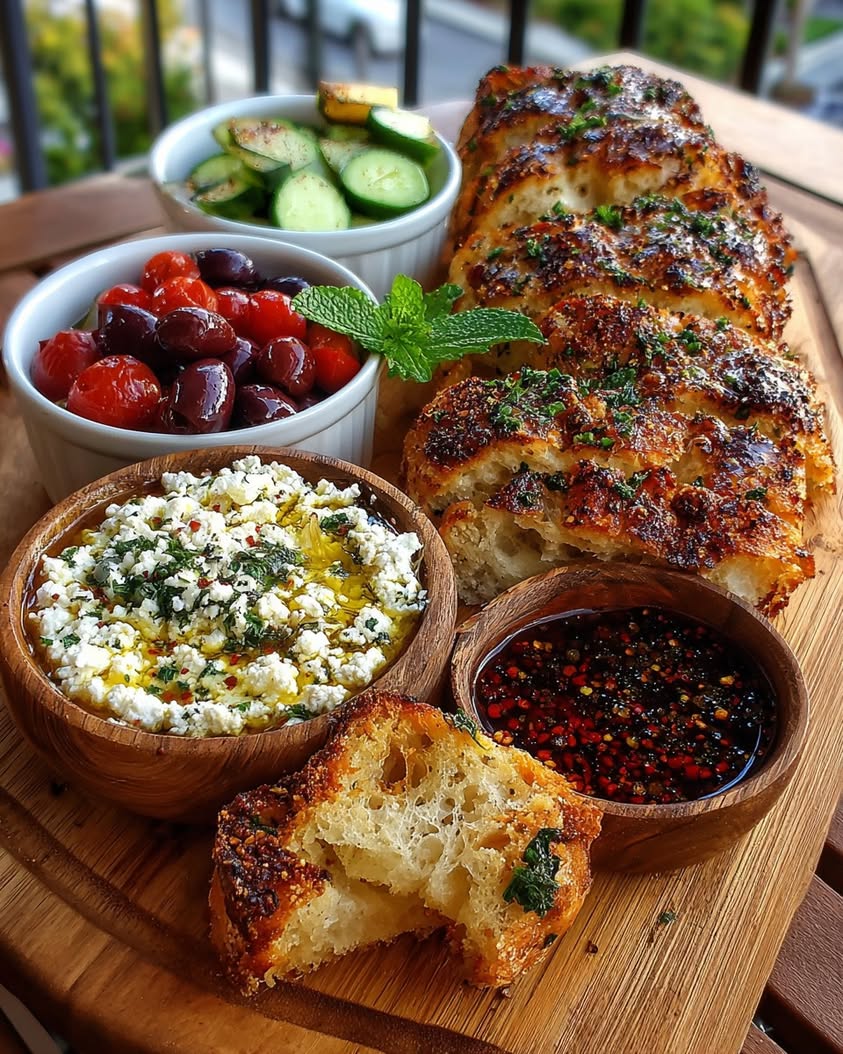
Rustic Mediterranean Bread and Feta Board: Your Ultimate Guide to Effortless Entertaining
Imagine the sun-drenched coasts of Greece and Italy converging on your table. This Rustic Mediterranean Bread and Feta Board captures that exact feeling of relaxed, flavorful abundance. Essentially, it is a stunning, no-cook centerpiece designed for sharing, conversation, and pure enjoyment. Moreover, it transforms simple, high-quality ingredients into a feast for the senses, making it the perfect solution for impromptu gatherings or planned parties.
The beauty of this Mediterranean Bread and Feta Board lies in its versatility and simplicity. You arrange artisanal bread, creamy feta, briny olives, and vibrant produce on a large board or platter. Consequently, you create an interactive dining experience that encourages guests to graze and explore different flavor combinations. Ultimately, this board celebrates the Mediterranean philosophy of food: fresh, communal, and deeply satisfying without requiring complex techniques or hours in the kitchen.
Furthermore, this board acts as a culinary canvas. You can tailor it to the seasons, your pantry, and your guests’ preferences. For instance, add marinated artichokes in spring or fresh figs in late summer. Therefore, every time you assemble this Mediterranean Bread and Feta Board, it can tell a slightly different story, all while delivering consistent, crowd-pleasing appeal. It is more than an appetizer; it is an experience.
Quick Recipe Highlights
- Flavor Profile: This board delivers a masterful balance of salty, creamy, tangy, and sweet notes. Specifically, the briny olives and feta contrast with sweet sun-dried tomatoes and honey, while fresh herbs add a bright, aromatic finish.
- Texture: You experience a delightful textural journey from the crunchy bread and crisp vegetables to the creamy, crumbly feta and the juicy give of marinated peppers. Additionally, nuts provide a satisfying crunch.
- Aroma: The board releases an inviting fragrance of fresh oregano or thyme, fruity olive oil, and the earthy scent of good bread. Notably, the aroma alone transports you to a Mediterranean marketplace.
- Visual Appeal: This is a feast for the eyes with a vibrant color palette of creamy white feta, deep red peppers, green olives, and golden bread. Strategically, arranging items in small groups creates a lush, abundant look.
- Skill Level Needed: Absolutely no cooking skills are required. Primarily, success relies on your ability to select quality ingredients and arrange them with an artistic eye. Basically, anyone can create an impressive spread.
- Special Equipment: You only need a large wooden board, slate, or platter as your foundation. Helpfully, a few small bowls or ramekins for dips and olives keep the board tidy and add height.
Recipe Overview
- Difficulty Level: We rate this recipe as easy because it involves zero cooking or baking. Essentially, the “work” is in thoughtful shopping and artful arrangement. Therefore, it is accessible to complete beginners yet offers enough creative freedom to engage experienced entertainers.
- Category: This Mediterranean Bread and Feta Board fits multiple categories beautifully. It serves as a spectacular appetizer, a light lunch, or a substantial snack. Sometimes, it can even anchor a casual dinner when paired with a simple soup or salad.
- Cuisine: The inspiration is firmly rooted in the coastal cuisines of Southern Europe. Specifically, it draws from Greek meze and Italian antipasti traditions, where sharing small plates of flavorful food is a cornerstone of social life.
- Cost: The cost is variable and depends entirely on your ingredient selections. Generally, you can create a beautiful board on a budget using store-brand olives and in-season produce. Alternatively, you can splurge on imported cheeses and artisanal charcuterie.
- Season: This board is truly a year-round star. However, it shines brightest in summer and early fall when produce like cucumbers, tomatoes, and grapes are at their peak. Conversely, in winter, you can focus on roasted vegetables, dried fruits, and preserved items.
- Occasion: It is perfect for almost any gathering. Obviously, it excels at parties, book clubs, and game nights. Similarly, it makes a romantic, shareable meal for two. Undoubtedly, it is a lifesaver for last-minute guests.
Why You’ll Love This Mediterranean Bread and Feta Board
First and foremost, you will adore the incredible taste and texture symphony. Each bite you compose offers a new discovery. For example, a piece of crusty bread slathered with creamy feta and topped with a salty olive creates a perfect mouthful. Meanwhile, a sweet date wrapped in prosciutto provides a rich, savory-sweet contrast. Consequently, eating from this Mediterranean Bread and Feta Board becomes an interactive, engaging experience that delights your palate with every combination.
Secondly, the convenience factor is unmatched. Since there is no cooking involved, you can assemble everything just minutes before your guests arrive. Importantly, you can even prep components ahead of time. Simply store chopped vegetables in water, place dips in their bowls, and have your cheese chilled. Then, when it’s time, you artfully arrange everything on your board. This strategy makes entertaining stress-free and allows you to enjoy your own party.
Furthermore, this board packs a nutritional punch. The Mediterranean diet is renowned for its health benefits, and this spread embodies its principles. You get healthy fats from olive oil and olives, protein from cheese and nuts, complex carbs from whole-grain bread, and a plethora of vitamins from fresh vegetables. Therefore, you can indulge feeling good, knowing you are serving food that is as wholesome as it is delicious.
Additionally, the social and entertaining value is immense. A beautifully presented Mediterranean Bread and Feta Board naturally becomes the focal point of any gathering. It encourages conversation as guests point out their favorite items and recommend pairings. It breaks the ice and creates a relaxed, communal atmosphere. Essentially, it is more than food; it is a tool for connection and shared enjoyment.
Finally, its cost-effectiveness and accessibility are major wins. You have complete control over the budget. You can scale it up or down based on your guest count. Also, you can use what you have on hand. For instance, swap almonds for walnuts, or use bell peppers if you don’t have peppadews. This flexibility ensures you can create a stunning Mediterranean Bread and Feta Board without a special trip to an expensive grocery store.
Historical Background and Cultural Significance
The concept of shared small plates has ancient roots around the Mediterranean Sea. Specifically, the Greek “meze” and Turkish “meze” tradition involves a variety of small dishes served with drinks. Originally, these were simple offerings like olives, cheese, and bread. The purpose was twofold: to stimulate the appetite and to promote conversation and community. Consequently, the modern Mediterranean Bread and Feta Board is a direct descendant of this age-old social dining practice.
Similarly, in Italy, the “antipasto” course serves a comparable role. Meaning “before the meal,” antipasti platters feature cured meats, cheeses, and marinated vegetables. They set the tone for the feast to come. Both traditions emphasize quality ingredients, seasonal produce, and the joy of eating together. Therefore, when you create this board, you are participating in a rich culinary history centered on hospitality and shared experience.
Over time, these traditions evolved and crossed borders. Immigrants brought their customs to new lands, and the “charcuterie board” became a global phenomenon. However, the Mediterranean version retains a distinct focus on freshness, vegetables, and briny, tangy flavors rather than just cured meats. The inclusion of items like feta cheese, Kalamata olives, and sun-dried tomatoes immediately signals its regional inspiration. This evolution shows how food traditions adapt while retaining their core identity.
Regional variations within the Mediterranean are also fascinating. A board from coastal Greece might highlight more seafood, like marinated octopus or anchovies. Conversely, an Italian version from the countryside could feature a wider variety of salumi and aged cheeses like Parmigiano-Reggiano. A North African influence might introduce harissa or preserved lemons. Your Mediterranean Bread and Feta Board allows you to explore these nuances by choosing ingredients that tell your preferred story.
Ingredient Deep Dive
Feta Cheese: Authentic feta is a protected designation of origin (PDO) cheese from Greece, made primarily from sheep’s milk or a sheep/goat blend. Its crumbly texture and tangy, salty flavor are iconic. Nutritionally, it is a good source of calcium and protein. When selecting feta, look for blocks stored in brine for the best flavor and texture. You can store it in its brine in the refrigerator for several weeks. For a dairy-free version, consider a firm tofu marinated in lemon juice and salt, or a vegan almond-based feta.
Kalamata Olives: These dark purple, almond-shaped olives hail from the Messinia region of Greece. They are typically harvested fully ripe, giving them a rich, fruity, and wine-like flavor with a meaty texture. They are packed with heart-healthy monounsaturated fats and antioxidants. Choose olives sold in brine or olive oil from the deli counter for superior taste over canned versions. Store them in their liquid in the fridge. For a different twist, you can substitute with green Castelvetrano olives for a buttery, mild flavor.
Rustic Bread: The bread acts as the vehicle and foundation. A crusty, airy loaf like ciabatta, baguette, or a sourdough boule is ideal. These breads have a sturdy crust that stands up to dipping and a soft, chewy interior. They provide complex carbohydrates and fiber, especially if you choose a whole-grain version. For the best experience, buy bread fresh on the day you plan to serve it. You can lightly toast slices for extra crunch. For a gluten-free Mediterranean Bread and Feta Board, use high-quality gluten-free crackers or bread.
Extra Virgin Olive Oil: This is the liquid gold of the Mediterranean. High-quality extra virgin olive oil (EVOO) has a distinct fruity, peppery flavor that elevates everything it touches. It is rich in antioxidants and anti-inflammatory compounds. Use it for drizzling over the feta or bread. Always choose an EVOO in a dark glass bottle to protect it from light, and store it in a cool, dark place. The flavor is irreplaceable, but in a pinch, a good quality avocado oil can provide a neutral fat for drizzling.
Common Mistakes to Avoid
- Overcrowding the Board: An overcrowded board looks messy and makes it difficult for guests to pick up items. Instead, leave some negative space. This technique makes the arrangement look more intentional and elegant.
- Serving Everything Cold: Taking cheese straight from the fridge is a common error. Cold cheese has muted flavors. Always take hard and semi-soft cheeses out at least 30-60 minutes before serving. This allows their full aroma and taste to develop.
- Using a Dull Knife: A dull knife will mash soft cheeses like feta instead of cutting them. Provide a sharp cheese knife or a small paring knife for the feta block. This ensures guests can serve themselves cleanly.
- Neglecting Texture Variety: A board with only soft textures feels monotonous. Ensure you include multiple crunchy elements like bread, crackers, nuts, and raw vegetables. This contrast is key to an engaging eating experience.
- Forgetting the “Anchor” Items: Place your largest items, like the bread loaf and cheese block, first. These anchors give your eye a place to rest and structure the rest of your arrangement around them.
- Letting Foods Run Together: Juicy items like marinated artichokes or olives can bleed into crackers or bread. Use small bowls or ramekins to contain wet ingredients. This keeps your board tidy and prevents sogginess.
- Ignoring Color Balance: A board with only beige and brown food is visually dull. Intentionally add pops of color with red peppers, green herbs, purple onions, or bright yellow lemon wedges.
- Skipping the Garnish: A final sprinkle of fresh herbs or a drizzle of olive oil and honey adds a professional, finished look. This simple step elevates the entire presentation of your Mediterranean Bread and Feta Board.
Essential Techniques
Composition and Arrangement: This is the most important technique for a stunning board. Start by placing your largest “anchor” items, like the bread and main cheese wedge, at different points on the board. Then, fill in the spaces with smaller items, grouping similar things together. For example, cluster all the olives in one area. Create visual flow by repeating colors and shapes. Use small bowls to add height and contain messier items. The goal is to look abundant yet organized, guiding the guest’s eye across the entire spread.
Cheese Preparation: How you present the cheese impacts both aesthetics and ease of eating. For a block of feta, you can present it whole with a knife, pre-crumble a portion into a bowl, or slice it into thick slabs. If using multiple cheeses, offer a different knife for each to prevent flavor mixing. For softer cheeses, scoring the top in a crosshatch pattern and drizzling with oil allows guests to easily scoop a portion. Proper preparation invites interaction and prevents a bottleneck at the cheese station.
Pro Tips for Perfect Mediterranean Bread and Feta Board
First, always taste your ingredients as you shop. Sample the olives from the deli case if possible, and choose a feta that has a pleasant tang without being overly salty. Secondly, incorporate something unexpected for memorable flair. For instance, a small dish of hot honey or a sprinkle of za’atar spice blend can wow your guests. Thirdly, consider dietary restrictions proactively. Label items or keep common allergens like nuts in a separate section to be inclusive.
Furthermore, use herbs as both garnish and ingredient. Sprigs of rosemary or thyme look beautiful and can be used to flavor bites. Next, pay attention to temperature. Serve crisp vegetables chilled for crunch, but let cheeses come to room temperature. Also, have a “refill station” ready in the kitchen. When the board starts to look sparse, you can quickly replenish items without disrupting the party. Finally, don’t be afraid to break the rules. The best Mediterranean Bread and Feta Board reflects your personal taste and creativity.
Variations and Adaptations
For regional variations, explore beyond Greece and Italy. Incorporate Spanish influences with manchego cheese, marcona almonds, and quince paste. Add a French touch with cornichons and Dijon mustard. For a Levantine twist, include hummus, baba ganoush, and pickled turnips. Seasonal adaptations are also simple. In spring, add fresh peas, radishes, and asparagus tips. In fall, feature roasted squash, pears, and pomegranate seeds. Winter calls for dried fruits, spiced nuts, and heartier breads.
Dietary modifications are straightforward. For a vegan Mediterranean board, use a high-quality vegan feta, omit honey, and ensure your bread is vegan. Load up on marinated vegetables, nuts, and bean dips. For a keto or low-carb version, focus on the cheese, olives, meats, and non-starchy vegetables. Replace the bread with endive leaves, cucumber slices, or keto-friendly crackers. Flavor variations can come from your choice of dip: try a whipped feta with herbs, a roasted red pepper spread, or a simple tzatziki.
Serving and Presentation Guide
Plating begins with choosing the right canvas. A large wooden board is classic, but slate, marble, or even a large ceramic platter works beautifully. Place your board on a stable surface, perhaps with a tea towel underneath to catch crumbs. Start building with your anchors, then fill in gaps. Remember to create height with small bowls and by stacking bread slices. Garnish generously with fresh herb sprigs, edible flowers, or lemon twists. Provide plenty of small plates, napkins, and cocktail forks for easy serving.
Traditional accompaniments include a small dish of high-quality olive oil for dipping bread, a bowl of mixed olives, and perhaps some cured meats like salami or prosciutto. Modern suggestions might include a dish of gourmet popcorn or spiced chickpeas for extra crunch. Serve the board at room temperature to maximize flavors. For portion control, a good rule of thumb is to plan for about 4-6 ounces of total food per person if the board is an appetizer.
Wine and Beverage Pairing
Wine pairings for a Mediterranean Bread and Feta Board should complement the salty, tangy, and herbal flavors. A crisp, acidic white wine like Assyrtiko from Greece or Sauvignon Blanc cuts through the richness of the feta. A light-bodied, fruity red like a Beaujolais or a Greek Xinomavro also pairs wonderfully, especially if you include charcuterie. For a non-alcoholic alternative, sparkling water with lemon or cucumber is always refreshing. Consider a minty iced tea or a pomegranate spritzer for more flavor.
If you prefer beer, a pale ale or a wheat beer with citrus notes complements the board’s flavors without overpowering them. For coffee or tea pairings, serve strong Greek coffee or mint tea after the meal as a digestif. The key to beverage pairing is to offer options that cleanse the palate between bites, allowing guests to fully appreciate each component of your Mediterranean Bread and Feta Board.
Storage and Shelf Life
Storage for board components is best done separately. Wrap leftover cheese tightly in new parchment or wax paper, then in plastic wrap, and store in the refrigerator. Keep olives and marinated items in their brine or oil in airtight containers in the fridge. Bread should be stored in a paper bag at room temperature for a day; for longer storage, freeze it. Discard any perishable items like cut vegetables that have been at room temperature for over two hours.
Signs of spoilage include mold on cheese (beyond natural rinds), an off or sour smell from dips, or slimy vegetables. Most components, if stored properly, will last 3-5 days. Do not attempt to re-freeze cheeses that have been fully thawed. For reheating, only the bread benefits from it; briefly warm slices in an oven to restore crunch. Most items on a Mediterranean Bread and Feta Board are best enjoyed fresh and at room temperature.
Make Ahead Strategies
You can prep almost every component of your Mediterranean Bread and Feta Board 1-2 days in advance. Chop vegetables like bell peppers and cucumbers, but store them submerged in water in the fridge to maintain crispness. Make any dips or spreads and keep them in sealed containers. Portion nuts and dried fruits into containers. Even the cheese can be pre-cut, though presenting a whole block is often more attractive. On the day of serving, simply arrange everything on your board.
This strategy minimizes last-minute stress and ensures you have time to focus on presentation. Add the most delicate fresh herbs and a final drizzle of oil just before guests arrive. If you need to assemble the entire board hours ahead, cover it loosely with plastic wrap and refrigerate. Then, pull it out 30 minutes before serving to take the chill off the cheeses. This make-ahead approach guarantees a stunning Mediterranean Bread and Feta Board with minimal day-of effort.
Scaling Instructions
Scaling this recipe is intuitive. For a smaller, intimate Mediterranean Bread and Feta Board for two, simply reduce quantities. Use a small cheese wedge, a mini baguette, and a handful each of olives and nuts. For doubling or tripling for a large party, do not just use one gigantic board. Instead, create multiple themed boards. For example, make one board focused on cheeses and another on dips and vegetables. This prevents overcrowding and creates multiple serving stations.
When scaling up, your equipment needs change. Ensure you have enough knives, small plates, and napkins for all guests. Timing remains the same, as assembly is quick. Storage considerations are more important for large batches; keep backups of popular items like bread and cheese in the kitchen for refills. The beauty of the Mediterranean Bread and Feta Board concept is its inherent flexibility to fit any gathering size.
Nutritional Deep Dive
A well-composed Mediterranean Bread and Feta Board offers a balanced macro profile. You get healthy fats from olive oil, olives, and nuts; protein from cheeses; and complex carbohydrates from whole-grain bread and vegetables. Micronutrient-wise, it is rich in calcium from dairy, vitamin C from fresh veggies, iron from olives, and antioxidants from herbs and olive oil. The combination of fiber, protein, and fat promotes satiety and steady energy release.
For dietary considerations, be mindful of sodium content from olives, feta, and cured meats. Balancing these with plenty of fresh, unsalted vegetables is key. Portion control is intuitive with a grazing board, as you can listen to your hunger cues. For weight management, focus on filling your plate with vegetable crudités and lean protein like cheese before moving to bread and higher-calorie items. This board naturally supports a balanced, mindful way of eating.
Dietary Adaptations
Gluten-Free: Easily adapt your Mediterranean Bread and Feta Board by using certified gluten-free crackers, bread, or crispbreads. Many stores carry excellent options. Ensure any dips or pre-marinated items are also gluten-free by checking labels for hidden wheat.
Dairy-Free/Vegan: Replace feta with a vegan alternative made from almonds, tofu, or coconut. Use vegan dips like hummus or baba ganoush. Omit honey and use maple syrup or agave for sweetness. Load the board with marinated vegetables, nuts, fruits, and vegan charcuterie.
Low-Carb/Keto: Focus on high-fat, low-carb items. Feature a variety of cheeses, olives, avocado slices, cured meats, and nuts. Replace bread with cucumber rounds, bell pepper strips, endive leaves, or keto-specific crackers.
Paleo: Follow similar guidelines to keto but avoid dairy. Use dairy-free cheese alternatives, and ensure all meats are sugar-free and uncured. Include plenty of vegetables, olives, avocado, and nuts.
Low-FODMAP: Choose lactose-free hard cheeses like aged cheddar. Use garlic-infused oil for flavor instead of whole garlic. Include low-FODMAP vegetables like cucumber, bell peppers, and carrots. Avoid artichokes, honey, and certain legumes like hummus.
Troubleshooting Guide
Board Looks Sparse: If your Mediterranean Bread and Feta Board looks underwhelming, fill gaps with inexpensive bulk items. Green grapes, bunches of radishes, or extra bread slices add volume and color without significant cost. Use herbs liberally to fill empty spaces.
Ingredients Drying Out: If you assembled the board too early and items like bread or vegetables are drying out, lightly mist vegetables with water. For bread, a quick brush with olive oil can revive it. Cover the board loosely with a damp paper towel until serving time.
Flavor is Bland: This usually indicates a need for more seasoning or acidity. Just before serving, drizzle everything with a flavorful extra virgin olive oil and a squeeze of lemon juice. Add a sprinkle of flaky sea salt and cracked black pepper.
Cheese is Sweating: If your cheese looks oily or is “sweating,” it likely got too warm. Briefly place it back in the refrigerator to firm up, then return it to the board. Serve cheeses at a cool room temperature, not warm.
Recipe Success Stories
Readers consistently share how this Mediterranean Bread and Feta Board has become their go-to entertaining solution. One home cook used it for her daughter’s graduation party, creating a “build-your-own-board” station with separate bowls of ingredients that was a huge hit. Another adapted it for a book club, using a literary theme with cheeses named after places in their novel.
Photography tips from our community are invaluable. Many recommend using natural light near a window for the best photos of your board. Shooting from directly above captures the full arrangement beautifully. Adding a few “in-progress” elements, like a hand reaching for an olive or a glass of wine in the corner, adds life and context to your food photography.
Frequently Asked Questions
Q: How far in advance can I assemble the board?
A: You can assemble the board 1-2 hours before serving. For best results, add delicate herbs and final drizzles right before guests arrive. You can prep all components 1-2 days ahead.
Q: What’s the best bread to use?
A: A crusty, rustic loaf like ciabatta, baguette, or sourdough is ideal. It should be sturdy enough for dipping and spreading but also have a soft, chewy interior.
Q: Can I make this board vegan?
A: Absolutely. Use a high-quality vegan feta, load up on hummus and vegetable dips, include nuts and fruits, and ensure your bread is vegan. It will be just as abundant and delicious.
Q: How much should I make per person?
A: As an appetizer, plan for 4-6 ounces of total food per person. If it’s the main focus of a meal, plan for 8-10 ounces per person, adjusting based on the other dishes served.
Q: What can I use instead of feta?
A: Halloumi, goat cheese, or a mild ricotta salata are excellent substitutes. For a different direction, a soft burrata or a firm aged cheese like Manchego also works well.
Q: How do I keep the bread from getting soggy?
A: Keep juicy items like marinated vegetables and olives in small bowls. Place bread slices away from these bowls, and consider serving the bread whole with a knife for guests to cut themselves.
Q: What are some must-have items for a basic board?
A: A cheese (like feta), a bread, olives, nuts, one fresh vegetable (like cucumbers), one dried or fresh fruit (like grapes), and a dip or spread (like hummus) form a perfect foundation.
Q: Is it expensive to make?
A: It can be tailored to any budget. Shop sales for cheese, use in-season produce, and buy olives from the bulk bin. A stunning Mediterranean Bread and Feta Board does not require expensive imports.
Additional Resources
For related recipes, explore our guides on homemade hummus, marinated feta, or easy flatbreads you can bake to accompany your board. If you enjoyed the technique of arranging a grazing board, try your hand at a dessert charcuterie board or a breakfast board for a weekend brunch.
For deeper dives into ingredients, we have articles on selecting the best extra virgin olive oil, a guide to Mediterranean cheeses beyond feta, and the health benefits of the Mediterranean diet. To build your entertaining toolkit, consider investing in a few quality wooden boards in different sizes, a set of cheese knives, and some versatile small bowls for dips and olives.
{“success”:true,”message”:”Recipe created successfully”,”post_id”:9316,”tasty_recipe_id”:9316,”shortcode”:”“}

I’m Billy, a classically trained culinary school graduate from The Culinary Institute of America with over 12 years in the restaurant industry and over 19 years of cooking experience.